What Does HMRC Stand For? A Guide to the UK Tax Authority
The query What does HMRC stand for refers to His Majesty’s Revenue and Customs, the non-ministerial department of the UK government responsible for the administration and collection of direct and indirect taxes.
Operating under statutory frameworks, this central authority regulates national financial compliance, customs boundaries, national minimum wage enforcement, and the distribution of specific state benefits like Child Benefit across all four UK nations.
What is HMRC?
HMRC is a central, non-political Crown agency responsible for administering and collecting both direct and indirect taxes across all four nations of the UK (England, Scotland, Wales, and Northern Ireland).
Established in 2005, it operates under strict statutory frameworks to regulate national financial compliance, monitor customs boundaries, and enforce the national minimum wage.
What Does HMRC Stand For?
The acronym HMRC stands explicitly for His Majesty’s Revenue and Customs. It operates as the unified tax collection and revenue administration agency for the United Kingdom under the following structural framework:
-
Unified Tax Authority: It manages the collection of both direct and indirect taxes across all four nations of the UK.
-
Non-Ministerial Status: It is organised as a non-ministerial government department to maintain strict operational and political neutrality.
-
Policy Execution: It acts independently of day-to-day political shifts to execute the fiscal guidelines and revenue strategies designated by HM Treasury.
Is HMRC an Independent Body?
Yes, HMRC functions as an independent, non-ministerial tax authority that operates free from day-to-day political shifts and legislative interference.
This institutional setup guarantees that tax administration remains entirely neutral, securing public revenue pipelines while preserving a balanced environment for sole traders, individual citizens, and registered enterprises.

What Does HMRC Actually Do?
HMRC functions as the core financial engine of the United Kingdom by executing four baseline structural tasks: revenue collection, border tariff enforcement, social welfare distribution, and systemic regulatory audits. Its overarching administrative goal is to secure the funds necessary to run the British state.
-
Revenue Collection: Processing individual monthly payrolls via the PAYE system, collecting Corporation Tax from businesses, and managing Value Added Tax (VAT).
-
Border Controls & Tariffs: Overseeing national customs boundaries via platforms like the Customs Declaration Service (CDS) to regulate trade and collect import duties.
-
Social Welfare Administration: Distributing targeted state benefits and financial support packages, such as Child Benefit and Tax Credits.
-
Regulatory Enforcement: Policing compliance by monitoring the UK national minimum wage, auditing multi-national corporate financial statements, and investigating financial crimes.
Why Is HMRC Important?
HMRC is vital because it collects the revenues required to fund the United Kingdom’s essential public infrastructure.
Without its enforcement and collection pipelines, the state could not fund core public services including:
-
The National Health Service (NHS)
-
State schooling and education systems
-
National transport networks, infrastructure projects, and emergency services
Beyond funding the state, HMRC is critical for maintaining an equal playing field in the British economy.
Its primary mandate focuses on narrowing the national tax gap, the structural variance between the theoretical total tax liability owed to the state and the actual revenue collected.
By deploying sophisticated data-matching artificial intelligence like the Connect system, it targets tax evasion and non-compliance, ensuring that individuals and corporations alike contribute their legal share to society.
The Connect artificial intelligence system scans billions of data points across UK bank accounts and property records to automatically flag anomalies.
This cross-referencing system makes it critical for individuals to accurately declare all investment income and notify HMRC of savings interest before automated red flags are triggered.
What Powers Does HMRC Have?
HMRC possesses extensive statutory collection and enforcement powers granted by UK law that significantly exceed the capabilities of standard corporate credit entities or civil debt collection firms.
These powers allow the department to bypass traditional court steps to secure unpaid public debts.
-
Direct Recovery of Debts: The legal right to extract unpaid tax directly out of a debtor’s bank accounts without needing an explicit court order.
-
Taking Control of Goods: The statutory power to enter commercial premises to seize assets and business stock for liquidation via public auction.
-
Automated Penalties: The authority to impose instant fixed fines and compounding statutory interest calculations on late submissions.
-
Criminal Investigations: The ability to execute search warrants, arrest suspects, and build formal prosecution cases for deliberate tax fraud.
What Happens If I Ignore HMRC?
Ignoring formal notices from HMRC triggers rapidly escalating automated penalties and immediate legal enforcement actions.
Failing to address correspondence accelerates collection protocols, shifting cases from minor administrative fines into aggressive asset seizures or forced corporate liquidations.
-
Day 1: An immediate, automated £100 fixed fine is issued the day after a Self Assessment deadline is officially missed.
-
3 Months: Cumulative daily £10 penalties begin accruing for up to a maximum of 90 days (£900 total cap).
-
6 Months: A further penalty of either £300 or 5% of the estimated tax due (whichever value is higher) is appended to the account.
-
Continued Non-Compliance: HMRC issues binding tax determinations, granting the state legal authority to initiate bankruptcy proceedings or winding-up orders.

What Does HMRC Stand For in Business and Accounting?
In commercial environments, exploring what does HMRC stands for means managing separate specialised tax compliance frameworks and digital reporting interfaces.
A business interfaces with distinct regulatory systems depending directly on its trading volume, workforce size, and legal corporate structure.
What is HMRC in VAT?
Value Added Tax (VAT) is a consumption tax levied on commercial goods and services across the United Kingdom.
Businesses act as collection agents for HMRC and must monitor their rolling 12-month turnover against fixed statutory registration benchmarks.
| Metric Type | Mandatory Statutory Threshold |
| Mandatory Registration Limit | £90,000 rolling 12-month turnover |
| Voluntary Registration Option | Available for businesses operating below £90,000 |
| Standard VAT Rate | 20% applied to most commercial goods and services |
| Reduced VAT Rate | 5% applied to domestic fuel and specific power supplies |
| Zero-Rated Categories | 0% applied to book publications, children’s clothing, and staple foods |
What is HMRC in UK Payroll?
In UK payroll, HMRC represents the regulatory destination for Pay As You Earn (PAYE) deductions, requiring employers to act as legal tax collection agents.
Businesses must mechanically calculate and deduct Income Tax and National Insurance Contributions (NICs) straight from employee wages during every single payroll cycle.
Failing to accurately process these deductions can lead to targeted, unannounced HMRC payroll checks to audit corporate payroll files.
Deciphering Commercial Tax Acronyms
To maintain clean bookkeeping records and communicate effectively with corporate accountants, business operators must recognise these specific terms:
-
HMRC SA: Self Assessment, the annual tax return system used by sole traders, partners, and high earners to declare untaxed income.
-
PSA: PAYE Settlement Agreement, allowing an employer to make a single annual payment to settle tax liabilities on minor employee benefits.
-
HMRC TPS: Taxpayer Protection Service, a specialist compliance unit focusing on historical fraud prevention and correcting support scheme errors.
-
HMRC CDS: Customs Declaration Service, the mandatory electronic portal used to record commercial goods entering or leaving the UK border.
-
HMRC NICO: National Insurance Contributions Office, the specific department tracking individual state pension qualification years.
The UK Small Business Tax Matrix
Managing corporate compliance requires monitoring separate tax liabilities throughout the financial year. The table below outlines the core direct and indirect obligations managed by the department.
| Tax Classification | Affected Entity Type | Statutory Deadlines and Payment Benchmarks |
| Self Assessment Income Tax | Sole Traders, Directors, Partners | Paper submissions due 31st October; Electronic filings and balancing payments due 31st January. |
| Corporation Tax | Active Limited Companies | Payment is due exactly 9 months and 1 day after the conclusion of the company’s accounting period. |
| Value Added Tax (VAT) | Registered Businesses (>£90k) | Submitted quarterly via Making Tax Digital software, due 1 calendar month and 7 days after quarter-end. |
| PAYE & Class 1 NICs | Employers with staff | Paid monthly by the 22nd day of the following tax month if using approved online digital transfer methods. |
Interacting with the Tax Office Safely
Interacting with the tax office safely requires verifying the source of all communications and using official encrypted portal infrastructure.
Because HMRC holds extensive regulatory authority, scammers frequently spoof their identity via malicious emails, letters, and text messages.
Why Do HMRC Write to You?
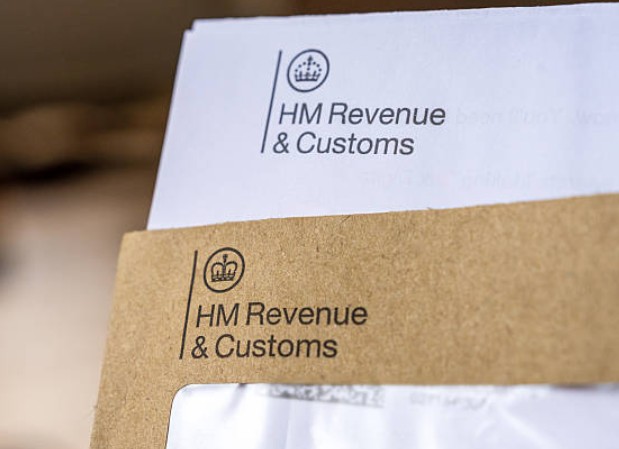
HMRC sends official physical letters to citizens and businesses primarily for routine, non-punitive administrative tasks, meaning that receiving correspondence does not imply that you are undergoing a fraud audit.
-
P800 Tax Calculation Forms: Sent to employment specialists and PAYE workers indicating an end-of-year tax overpayment or underpayment.
-
Notice to File: Standard administrative prompts distributed every April reminding taxpayers to complete their digital Self Assessment forms.
-
Simple Assessment PA302: Issued when the tax office holds enough external data to calculate a liability without requiring a formal return.
-
CC01 Compliance Notices: Official notifications that a specific return has been chosen for random or targeted verification checks.
Does HMRC Automatically Refund Overpaid Tax?
Yes, HMRC automatically refunds overpaid tax only for individuals paid via standard PAYE employee payrolls, using automated reconciliations to issue direct bank transfers or physical cheques.
Conversely, for self-employed individuals, partnerships, or limited companies filing via Self Assessment or Corporation Tax, refunds are never sent automatically.
Any overpaid balance remains locked as a rolling credit on the user’s digital statement of account.
To recover these funds, a business operator must manually log into their secure portal and trigger an electronic repayment request directly to their corporate bank account.
How to Safely Set Up Your Digital Accounts?
To manage your corporate or personal liabilities without friction, you must establish an official secure digital connection with the department.
-
Navigate directly to the official government portal at GOV.UK/HMRC to avoid malicious copycat websites.
-
Register for a secure Government Gateway user ID using a verified personal email address.
-
Complete the mandatory two-factor authentication using your mobile phone number.
-
Enter your personal identifiers, including your National Insurance Number or your company’s Unique Taxpayer Reference.
-
Select the specific tax services your business needs to manage, such as VAT, Corporation Tax, or Self Assessment.
-
Wait for an activation PIN code to arrive via physical post if required for high-security services, then enter it into the portal to fully unlock your digital tax account.
Final Compliance Checklist for UK Enterprises
To maintain a flawless compliance rating and eliminate administrative friction with the tax authorities, business operators should continuously follow this checklist:
-
Audit Digital Access: Validate that your secure Government Gateway logins remain active and that your corporate contact records are current.
-
Deploy Making Tax Digital Software: Utilise approved Making Tax Digital software pipelines to log raw business expenses and seamlessly submit mandatory quarterly returns in compliance with the latest government portal updates.
-
Isolate Tax Allocations: Keep collected VAT revenues and payroll PAYE deductions separate from standard corporate cash reserves by using dedicated business savings accounts.
-
Set Surcharge Reminders: Map out automated calendar notifications based around your specific Corporation Tax, VAT, and Self Assessment deadline schedules to prevent penalties.
Verified against official GOV.UK statutory tax guidance and current HM Revenue and Customs legislative frameworks.
FAQ about what does HMRC stand for?
What is the meaning of HMRC in UK tax?
It stands for His Majesty’s Revenue and Customs, which operates as the centralised department responsible for collection and compliance across the UK tax landscape.
Is the UK the most heavily taxed country in the world?
No, verified data from the Organisation for Economic Co-operation and Development confirms that countries like France, Denmark, and Belgium maintain higher tax-to-GDP ratios than the UK.
Do I have to pay HMRC?
Yes, if your personal earnings, investment gains, or company trading revenues exceed the statutory tax-free personal allowances established by UK fiscal law.
Who pays 20% tax in the UK?
Individuals whose taxable personal income falls within the basic rate bracket pay a 20% tax rate. This rate applies to earnings between £12,571 and £50,270 per year.
Who is the CEO of HMRC?
As of 2026, the department is led by Chief Executive John-Paul Marks, who manages the broader administrative operations and enforcement strategies of the civil service tax workforce.
What is the difference between HMRC and the Treasury?
The Treasury is a political ministry that creates economic strategy, designs new tax laws, and sets rates, whereas HMRC acts as the non-political delivery agency that enforces those laws.
What does PSA stand for HMRC?
It stands for PAYE Settlement Agreement, which allows employers to make a single annual payment to settle tax and National Insurance liabilities on minor or irregular employee expenses.
What does HMRC SA stand for?
It stands for Self Assessment, the official system through which individuals and self-employed professionals manually declare their untaxed income sources each year.
What does HM stand for in HMRC?
The letters HM stand for His Majesty, signifying that the department operates as a Crown agency under the authority of the reigning monarch, King Charles III.