HMRC Making Tax Digital Changes 2026: The Complete Compliance Roadmap for UK Small Businesses
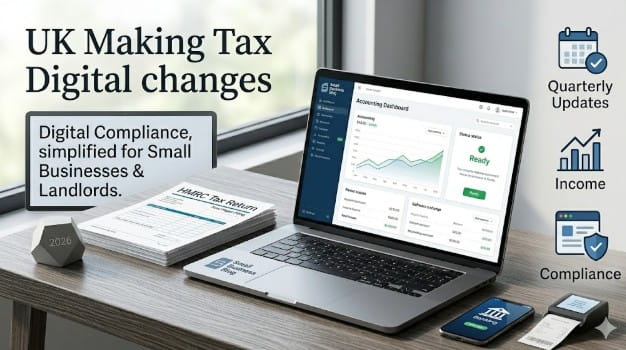
HMRC Making Tax Digital changes for Income Tax will officially begin on 6 April 2026. This mandatory shift requires self-employed individuals and landlords with a qualifying income over £50,000 to maintain digital records and submit quarterly updates to HMRC using compatible software, replacing the traditional annual Self Assessment.
We see this shift as more than just a paperwork exercise; it’s about moving away from the end-of-year scramble. By switching to periodic updates, HMRC aims to cut down on the billions lost to manual entry mistakes, while giving you a much clearer, real-time picture of exactly what you owe.
What is Making Tax Digital (MTD)?
Making Tax Digital (MTD) is the UK government’s initiative to modernise the tax system by moving away from manual, paper-based processes. It requires taxpayers to use HMRC-compatible software to keep digital records and submit real-time updates.
The goal is to reduce errors caused by manual entry and provide businesses with a clearer, ongoing view of their tax liabilities.
What are the key HMRC Making Tax Digital changes from 1st April 2026?
The primary change is the official launch of MTD for Income Tax Self Assessment (ITSA) on 1st April 2026. The most critical change is the shift from a single yearly filing to a 5-submission year, consisting of four quarterly updates and one final declaration.
Instead, you must:
- Maintain digital records of all business transactions.
- Submit four quarterly updates through HMRC-compatible software.
- Complete a final declaration by 31 January following the tax year.
Taxpayers must now use HMRC-compatible software to record every transaction digitally as it occurs, rather than reconciling accounts at year-end.
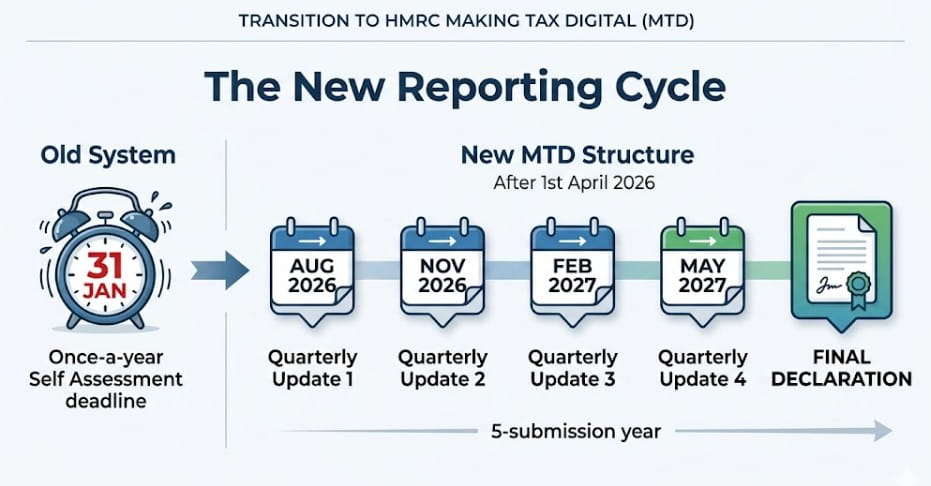
The shift from annual to quarterly reporting
The core objective of the 2026 transition is to modernise the tax system. Beyond just reporting, staying compliant also means understanding your list of tax codes, as the move to MTD will make it easier for HMRC to adjust these in real-time based on your quarterly data.
Under MTD, the quarterly updates provide a rolling estimate of tax due, which significantly improves cash flow management for small businesses.
Why does it matter?
Beyond simple compliance, MTD represents the most significant tax transformation in a generation. It matters because:
-
Real-Time Accuracy: It eliminates the end-of-year scramble by tracking tax throughout the year.
-
Reduced Errors: Automation helps cut down on the billions of pounds currently lost to preventable manual mistakes.
-
Improved Cash Flow: Quarterly updates provide rolling estimates of tax due, helping small businesses budget more effectively.
How does it affect sole traders and landlords?
The HMRC Making Tax Digital changes fundamentally shift how you interact with the Revenue. Instead of one yearly filing, you move to a 5-submission year:
-
Digital Record Keeping: Every transaction must be logged digitally as it occurs.
-
Four Quarterly Updates: A summary of your income and expenses sent to HMRC every three months.
-
Final Declaration: A year-end reconciliation to confirm your final tax position by 31 January.
Is Making Tax Digital compulsory in the UK?
Yes. MTD for VAT is already mandatory. From April 2026, MTD for Income Tax becomes a legal requirement for anyone exceeding the income thresholds. Failure to comply will lead to points-based penalties
If your qualifying income exceeds the threshold, you cannot opt out unless you qualify for a rare exemption. It is worth double-checking the current small business tax thresholds to see exactly where your turnover sits before the 2026 mandate kicks in.
From April 2026, HMRC Making Tax Digital changes will become a legal requirement for any sole trader or landlord with a qualifying income over £50,000.
This is the first of several phases, with the threshold set to drop to £30,000 in 2027, making digital compliance a priority for almost every small business owner in the UK.
How do I know if I am eligible for MTD?
You are eligible (and legally required) to join MTD if your combined gross income from self-employment and rental property exceeds the specified threshold in the relevant tax year.
Eligibility is determined by your gross qualifying income (total turnover before expenses) from self-employment and property. HMRC is implementing a phased rollout:
| Rollout Phase | Start Date | Income Threshold | Affected Group |
| Phase 1 | 6 April 2026 | Over £50,000 | High-earning sole traders & landlords |
| Phase 2 | 6 April 2027 | Over £30,000 | Mid-sized self-employed & landlords |
| Phase 3 | April 2028 | Over £20,000 | Most small businesses |
Who pays the Digital Services Tax?
Don’t let the similar names confuse you: the Digital Services Tax is a completely separate 2% levy aimed at global tech giants like search engines and social media platforms.
For the vast majority of our readers, the only digital tax change you need to prepare for is the MTD reporting mandate.
How to prepare for HMRC Making Tax Digital changes?
Registering for MTD is not automatic. Even if you already have a Government Gateway ID for Self Assessment, you must specifically sign up for the MTD for ITSA service through your chosen software or the GOV.UK portal.
To stay compliant and avoid 2026 penalties, follow these steps to ensure you’re on the right side of the 2026 deadline:
-
Calculate your qualifying income from the 2024/25 tax year.
-
Select and purchase HMRC-compatible software or a bridging tool.
-
Authorise your software to interact with your HMRC account.
-
Sign up for MTD for ITSA via the official GOV.UK website.
-
Receive your confirmation email from HMRC (usually within 72 hours).
-
Ensure your digital record-keeping begins on 6 April 2026.
-
Prepare for your first quarterly update deadline on 7 August 2026.
HMRC is currently running a voluntary testing program for MTD for ITSA. Joining early allows you to beta test your digital links and ensures your software is fully synced before the 2026 mandate becomes a legal requirement.
How do the new MTD penalty points work in 2026?
HMRC has replaced automatic £100 fines with a fairer points-based system.
- Missed Deadline: You receive 1 point.
-
Penalty Threshold: Once you reach 4 points, a £200 fine is triggered.
-
Resetting: Points expire after 24 months of full compliance.
In practice, HMRC has implemented a soft landing during the 2026/27 tax year, where points will not be applied to the first four quarterly updates to allow taxpayers time to adjust to the new software.

Will HMRC automatically refund overpaid tax?
One benefit of the HMRC Making Tax Digital changes is the speed of reconciliation. Because your software is linked to HMRC, any overpayments identified in your final declaration are processed faster.
While not always automatic, the digital link significantly reduces manual review time. If your quarterly data shows you’ve overpaid, the wait for an HMRC tax refund should be shorter than the traditional manual process.
Choose software for the new HMRC Making Tax Digital changes
The legislation requires digital links between your records and HMRC. This means you cannot simply type your totals into a box on the HMRC website. You must use software that uses an API (Application Programming Interface) to send the data.
-
Cloud Accounting Software: Tools like Xero, Sage, or QuickBooks provide a full suite of features, including automated bank feeds that match transactions to invoices.
-
Bridging Software: For those who prefer using spreadsheets, bridging software acts as a digital wrapper that takes your Excel data and sends it to HMRC in the correct format.
-
Mobile Apps: Many modern platforms allow landlords to snap photos of receipts, which are then automatically categorised for their quarterly updates.
Final Compliance Checklist for April 2026
We know that moving from one annual filing to five can feel like a heavy lift. However, the 2026 transition is a massive opportunity to digitise your messy shoebox of receipts and get a grip on your cash flow.
Check your 2024/25 income today. If you’re over that £50k mark, the time to choose your software is right now.
FAQ about HMRC Making Tax Digital Changes
What are the changes from 1st April 2026?
Self-employed people and landlords earning over £50,000 must switch to digital record-keeping and file four quarterly updates plus a final declaration, replacing the annual paper or online Self Assessment return.
When is the first MTD for ITSA deadline?
For those starting in April 2026, the first quarterly update is due by 7 August 2026.
Do I need to register for MTD?
Yes, if your combined gross income from self-employment and property exceeds £50,000 for the tax year ending April 2025, you are legally required to register before your first 2026 deadline.
Is Making Tax Digital compulsory in the UK?
Yes. For VAT-registered businesses, it is already compulsory. For Income Tax, it becomes mandatory in stages starting April 2026, based on your total qualifying income.
Is Income Tax going up in 2026 in the UK?
MTD is a change to the process of reporting tax, not the rate of tax. While the government may change tax bands separately, MTD itself does not increase the percentage of tax you owe.
What is the minimum income to not file a tax return?
If your total trading income is below the £1,000 Trading Allowance, you generally do not need to register for Self Assessment or MTD. However, keep in mind that other sources, such as tax on savings interest, can shift your total position and influence your MTD registration requirements.
How does Making Tax Digital work for landlords?
Landlords must report rental income and expenses quarterly. If you own property jointly, you only report your share, but both owners must comply if their individual shares exceed the threshold.
Can I still use a spreadsheet for my taxes?
Yes, but you must use bridging software to digitally transmit the data to HMRC. Manual data entry into the HMRC portal is no longer allowed under the new rules.