

Top 5 Percent Income UK Small Business Guide: HMRC Benchmarks, Salaries and Dividends
Hitting the top 5 percent income UK benchmark means crossing the 95th percentile threshold for individual taxpayers, tallied from gross pre-tax earnings spanning employment, freelance profits, rental properties, and dividends.
Achieving this milestone firmly places a working professional or company director within the upper tier of the nation’s taxpaying populace.
Key Takeaways
-
Reaching the top 5 percent individual income benchmark in the UK requires a gross total income of at least £93,600 before tax.
-
HMRC Survey of Personal Incomes data covers all taxable sources, whereas ONS full-time employee stats put the top 5% worker threshold at ~£82,000.
-
Limited company directors must balance director salaries against share dividend distributions to assess true personal earnings placement.
-
Crossing £100,000 triggers the Personal Allowance taper, creating an effective marginal income tax rate of 60 percent for high earners.
What Gross Income Puts a Small Business Owner in the Top 5 percent income UK?
Stepping into the 95th percentile of UK earners demands a gross annual income of at least £93,600, according to official HM Revenue and Customs figures.
For entrepreneurs, sole traders, and enterprise directors, gauging this milestone means tallying total taxable drawdowns across every commercial venture instead of relying on a standard monthly payslip.
| Percentile Rank | Gross Income Threshold | Plain English Description |
| 50th Percentile (Median) | £29,700 | The exact midpoint where half of UK taxpayers earn less. |
| 75th Percentile | £45,000 | Reaches the upper quarter of individual taxpayers. |
| 90th Percentile | £67,400 | Enters the top 10 percent of earners nationally. |
| 95th Percentile | £93,600 | The top 5 percent threshold; fewer than one in twenty reach this. |
| 99th Percentile | £207,000 | Represents the top 1 percent of individual earners. |
When reviewing decisions, self-employed operators frequently overlook how irregular revenue streams and retained business profits skew their personal tax calculations. Understanding how business structures handle these revenues clarifies true standing against national benchmarks.
How Do Limited Company Director Salaries and Dividends Count Toward the Top 5%?
Limited company directors frequently build their take-home pay by blending a modest director salary, usually pinned to the National Insurance primary threshold, with company dividend payouts.
HMRC calculates overall personal income by merging PAYE wages, director fees, dividends, and any outside property or investment returns.
-
Calculate the gross annual PAYE salary drawn through the company payroll system.
-
Add all gross dividend vouchers issued from company profits within the same tax year.
-
Include any director loans written off or benefits-in-kind reported on form P11D.
-
Factor in additional personal income sources, including buy-to-let rental profits or capital gains where applicable.
-
Deduct allowable business expenses and pension contributions made via employer relief at source.
-
Sum all figures to determine total gross taxable income before personal allowances.
-
Compare the final aggregate sum against the £93,600 national 95th percentile benchmark.
In practice, a director drawing a £12,570 salary and taking £82,000 in dividends reaches a total gross income of £94,570, successfully clearing the top 5 percent income UK household or individual threshold depending on spousal distribution strategies.

How Much Do Self-Employed Sole Traders Earn in the UK Top 5 Percent?
Sole traders operate under a different tax mechanism, declaring net business profits directly through Self Assessment rather than corporate dividend splits.
For unincorporated businesses, net profit equals gross business income minus allowable trading expenses. Reaching the top 5 percent tier requires net trading profits to exceed £93,600 before Class 4 National Insurance deductions.
A frequent trend among high-earning sole traders is cash-flow volatility, where one stellar tax year spikes net profits past the 95th percentile, only for subsequent years to dip due to changing market conditions.
Managing this volatility effectively often involves setting aside cash reserves or utilizing Best Business Savings Accounts to cushion against leaner trading periods.
Furthermore, this fluctuation makes multi-year earnings averaging essential whenever you apply for business financing or residential mortgages.
How Does the Top 5% Income Threshold Vary by Age for UK Entrepreneurs?
Earning power across the UK workforce shifts dramatically depending on career tenure and business maturity, peaking during mid-career management and scaling phases.
Enterprise owners typically see their personal drawings accelerate sharply between the ages of 40 and 59 as client networks solidify and business assets generate compounding returns.
-
Ages 18 to 29: The top 5 percent threshold sits lower, often achieved by high-growth tech founders or early-stage digital agency owners grossing upwards of £72,000.
-
Ages 30 to 39: Threshold requirements climb past £104,000 as small businesses transition into stable, VAT-registered enterprises with employed staff.
-
Ages 40 to 49: Represents peak commercial earning power across the UK, where top 5 percent business owners frequently clear £123,000+ in annual drawings.
-
Ages 50 to 69: Maintained high thresholds driven by mature business equity, asset sales, and established consultancy portfolios yielding consistent returns.
How Much Do You Need to Earn to Reach the Top 5 percent income UK in London vs. Regional UK Business Hubs?
Geographic location heavily distorts wage and enterprise revenue distribution across the United Kingdom.
Operating a small business in the capital involves higher overheads alongside a vastly inflated local economic ceiling.
| Region | Top 10% Gross Threshold | Top 5% Gross Threshold (95th Percentile) |
| London | £98,200 | £149,000 |
| South East | £80,000 | £111,000 |
| East of England | £72,900 | £100,000 |
| North West | £59,300 | £77,200 |
| Wales | £55,500 | £69,600 |
| North East | £55,700 | £71,000 |
A sole trader or company director based in the North East requires roughly £71,000 to enter the regional top 5 percent, whereas a London-based business owner must clear £149,000 to reach the exact same relative percentile.
What Is the Net Take-Home Pay for a Business Owner Earning the Top 5 percent income UK Threshold?
Gross business turnover or pre-tax drawings rarely show your actual purchasing power. Pushing past the 95th percentile threshold exposes business owners to sharp marginal tax brackets under current UK tax policy.
-
Income Tax Liability: On a £93,700 gross income, basic rate tax applies up to £50,270, while earnings above that threshold face the 40 percent higher-rate tax band.
-
National Insurance Contributions: Class 2 and Class 4 NICs (or employee/employer PAYE NICs for directors) reduce net cash flow by approximately £3,800 to £6,300 depending on the chosen business vehicle.
-
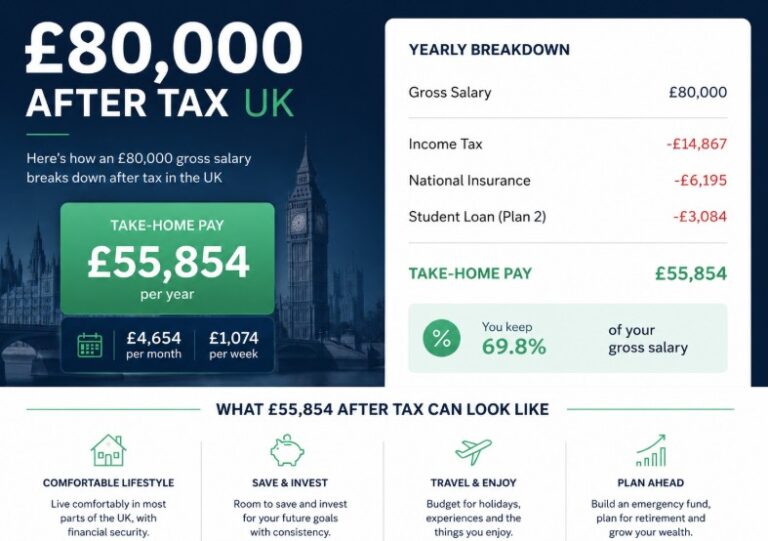
Net Take-Home Pay: An individual earning the £93,700 threshold retains an annual net take-home pay of approximately £64,900 (roughly £5,400 per month) before student loan repayments or workplace pension deductions.
How Do Small Business Household Incomes Compare to Individual Top 5 percent income UK Thresholds?
Evaluating wealth exclusively through individual tax returns misses the economic reality of multi-earner households. The top 5 percent income UK household benchmark combines the gross earnings of all occupants living at a single residential address.
Because many high-earning households feature dual-professional couples or co-directors sharing company shares, the threshold required to enter the top 5 percent of households exceeds £125,000 to £130,000 gross per year.

How Does Crossing the Top 5% Threshold Trigger the Personal Allowance Taper for Business Owners?
When a business owner’s adjusted net income exceeds £100,000, HMRC initiates the Personal Allowance taper. For every £2 earned above £100,000, exactly £1 of the standard £12,570 tax-free Personal Allowance is withdrawn.
This withdrawal mechanism creates a punishing 60 percent marginal income tax rate window for earnings between £100,000 and £125,140, catching many scaling entrepreneurs unaware as their business profits cross into high-earning territory.
How Do Reinvested Business Profits and Retained Earnings Affect Personal Income Percentiles?
A frequent point of confusion for limited company owners is the distinction between company turnover, retained profit, and personal income.
Retained earnings left inside a business bank account for future capital expenditure, equipment purchases, or cash reserves do not count toward personal income tax percentiles.
Only funds physically drawn as salary, director bonuses, or dividends register on HMRC’s Survey of Personal Incomes, meaning a company generating £500,000 in turnover can still have a director sitting below the top 5 percent threshold if profits are aggressively reinvested.
For entrepreneurs looking to diversify their wealth outside of primary company operations, exploring structured Passive Income Ideas can provide additional revenue streams that factor into broader household wealth calculations.
Conclusion
Assessing commercial success against national benchmarks requires separating gross business revenue from personal taxable drawings.
For UK small business owners, sole traders, and company directors, crossing the top 5 percent income UK threshold means achieving a gross taxable income above £93,600.
Monitoring director salary mixes, navigating the £100,000 personal allowance taper, and accounting for regional variations in London versus the broader UK regions ensures accurate financial planning and compliance
Disclaimer: This article is for informational purposes only and does not constitute formal financial, legal, or tax advice; consult a qualified accountant or HMRC-certified professional before making major business remuneration decisions.
FAQs
How much wealth do you need to be in the top 5% in the UK?
Entering the top 5 percent of household net worth in the UK requires accumulated assets (including unencumbered property equity, private pensions, and investments) exceeding £1.9 million, whereas the top 5 percent income flow requires an annual pre-tax income of £93,600.
What percentile is a 100k salary in the UK?
A gross annual salary of £100,000 sits comfortably within the top 5 percent nationally, representing roughly the 96th percentile of individual taxpayers filing returns with HM Revenue and Customs.
How much is the top 0.5% earning in the UK?
The top 0.5 percent of UK taxpayers start at an annual gross income of approximately £300,000, scaling rapidly past £800,000 for the top 0.1 percent of high earners.
What is the top 7 percent income in the UK?
While official HMRC tables report in fixed percentile increments, linear interpolation places the top 7 percent individual income threshold at approximately £83,000 to £85,000 in gross annual pre-tax earnings.
What is the difference between ONS employee data and HMRC taxpayer data?
ONS wage statistics track full-time PAYE employees only, whereas HMRC Survey of Personal Incomes data encompasses all taxpayers, including self-employed sole traders, landlords, and pensioners.
How does the High Income Child Benefit Charge affect top earners?
The High Income Child Benefit Charge clawback applies when an individual’s adjusted net income exceeds £60,000, taxing back child benefit sequentially until it reaches 100 percent withdrawal at £80,000.
Do pension contributions lower your income percentile rank?
Making employer or personal pension contributions via net pay arrangements or relief at source reduces adjusted net income, which can pull a business owner’s taxable earnings below higher-rate tax thresholds.
Is dividend income taxed differently than salary for top earners?
Dividends benefit from a £500 tax-free allowance as of 2026, but face higher dividend tax rates (8.75% basic, 33.75% higher, and 39.35% additional rate) compared to standard income tax brackets.




One Comment