
Best Business Savings Accounts UK: Top Rates and Cash Yield Guide for Small Businesses
Last Updated on
Small business owners in the UK can significantly increase returns on cash reserves by moving excess operational capital out of low-interest current accounts.
Transferring working capital into specialized business savings accounts allows company directors and sole traders to generate steady yields while preserving cash flow flexibility.
Finding the best business savings accounts strategy means balancing liquid cash with top returns.
UK company directors and sole traders achieve this by dividing capital between easy-access accounts for working capital, notice accounts for VAT, and fixed-rate deposit bonds for long-term reserves.
Key Takeaways
-
UK small businesses can access commercial savings interest rates reaching up to 4.70% AER on fixed deposit accounts as of 2026.
-
Banks pay business savings interest gross without deducting tax, meaning companies must report earnings on their CT600 return.
-
The Financial Services Compensation Scheme protects eligible small business deposits up to £85,000 per authorised banking licence.
-
Splitting cash between easy access, notice, and fixed accounts prevents early withdrawal penalties while maximizing overall yield.
What are the Types of Savings Accounts Available for Small Business Owners?
Discover the primary savings account types available for UK small businesses, from instant access floats to notice and fixed-term bonds, designed to maximize interest while matching cash flow timelines.
- Easy Access / Instant Access Accounts:
- How it works: Allows unlimited deposits and withdrawals at any time without penalty.
- Small Business Focus: Serves as the primary operational float (Tier 1). Perfect for managing unexpected cash flow pinches, emergency payroll, or immediate supplier payments. Rates are variable.
- Notice Accounts (30, 60, 95, or 180 Days):
- How it works: Requires you to notify the bank in advance before withdrawing funds.
- Small Business Focus: Ideal for short-to-medium commitments (Tier 2), such as quarterly HMRC VAT returns, PAYE liabilities, or upcoming scheduled invoice settlements. They offer higher interest rates than easy access accounts while discouraging impulse spending.
- Fixed-Term Deposit Bonds:
- How it works: Money is locked away for a set period (e.g., 6 months, 1 year, or 2 years) in exchange for a fixed interest rate. No withdrawals or early closures are permitted.
- Small Business Focus: Designed for long-term reserves (Tier 3), such as annual Corporation Tax bills or capital expenditure reserves for future expansion. It guarantees a set return regardless of broader economic interest rate cuts.
- Notice & Limited Access Hybrid Accounts:
- How it works: Offers high interest rates provided you stay under a strict limit of annual withdrawals (typically 1 to 3 per year).
- Small Business Focus: Fits businesses that don’t want a long-term lock-in but only need to draw down cash once or twice a year for major overheads or annual bonus payments.
What Are the Best Business Savings Accounts for UK Small Businesses?
Selecting a high-interest business savings account means weighing up representative AER rates, minimum deposit thresholds, and access terms. Small business owners should select accounts that fit their specific operational cash flow and HMRC tax schedules.
An effective commercial savings strategy categorises business cash into specific operational buckets: immediate working capital remains in instant access accounts, quarterly Value Added Tax (VAT) and Pay As You Earn (PAYE) reserves move into notice accounts, and annual Corporation Tax or retained expansion profits sit in fixed-rate deposit bonds.
Top 10 Best Business Savings Accounts in the UK
-
Allica Bank (Instant Access Savings)
-
Tide (Business Savings / Instant Saver)
-
Cynergy Bank (Business Saver)
-
Shawbrook Bank (Easy Access Business Account)
-
Kent Reliance (Business Savings Account)
-
Aldermore (95-Day Notice Account)
-
Hampshire Trust Bank (Easy Access SME Saver)
-
United Trust Bank (Business Limited Access Account)
-
Shawbrook Bank (1-Year Fixed-Term Deposit Bond)
-
UBL UK (1-Year Fixed-Rate Business Bond)
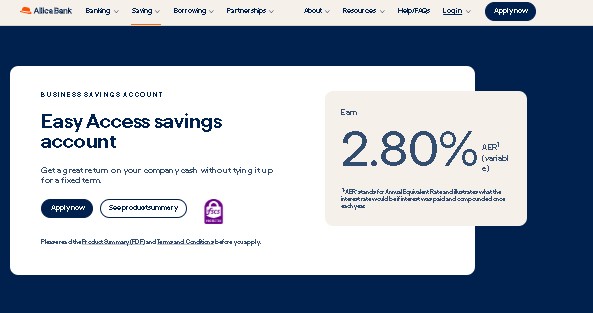
1. Allica Bank
Small business owners hunting for the ultimate combination of high variable yields and instant liquidity will find Allica Bank’s instant access account to be a premier choice for active working capital. It eliminates the friction of locked funds while keeping surplus operational cash working hard.
-
Interest Rate & Type: Up to 4.08% AER (Variable, includes bonus criteria).
-
Opening Threshold: Minimum opening deposit from £1 (supports balances up to £5 million).
-
Access & Support: Fully digital administration with dedicated UK telephone support and unlimited penalty-free withdrawals.
-
Safety Net: Protected up to the standard £85,000 limit by the Financial Services Compensation Scheme (FSCS).
2. Tide
Designed natively for micro-enterprises and sole traders, Tide embeds high-yield cash reserves directly inside a streamlined app-based financial ecosystem. It allows small businesses to partition spare float without navigating complex corporate paperwork.
-
Interest Rate & Type: Up to 4.00% AER (Variable, introductory boost for new members).
-
Opening Threshold: Nominal £1 minimum opening threshold.
-
Access & Support: Daily interest compounding and instant mobile-managed withdrawals with zero hidden management fees.
-
Safety Net: Fully FSCS protected via partnered banking institutions up to £85,000.
3. Cynergy Bank
Cynergy Bank provides a reliable online-managed haven for established small-to-medium enterprises carrying moderate liquid cushions. It delivers a steady variable growth stream suited for companies with medium-sized operational cash reserves.
-
Interest Rate & Type: 3.90% AER (Variable).
-
Opening Threshold: £10,000 minimum opening deposit requirement.
-
Access & Support: Monthly interest payout schedule to support corporate cash flow tracking without locking capital term limits.
-
Safety Net: Fully covered under the standard £85,000 FSCS protection boundary.
4. Shawbrook Bank
For companies requiring a fast-acting rolling buffer to manage unexpected expenditure swings, Shawbrook’s easy access option offers dependable agility. It guarantees rapid cash extraction capabilities without forfeiting competitive variable interest.
-
Interest Rate & Type: 3.86% AER (Variable).
-
Opening Threshold: £1,000 minimum opening balance.
-
Access & Support: Next-working-day online withdrawal processing with zero early access penalties.
-
Safety Net: Protected up to £85,000 per eligible UK business entity.
5. Kent Reliance
Kent Reliance balances digital administrative simplicity with strong variable performance, giving growing enterprises an efficient tool to park surplus corporate funds. It bridges the gap between high-yield performance and everyday accessibility.
-
Interest Rate & Type: 4.15% AER (Variable).
-
Opening Threshold: £1,000 minimum opening threshold.
-
Access & Support: Streamlined online portal management designed for quick enterprise bookkeeping integration.
-
Safety Net: Fully protected up to the £85,000 threshold under its specific UK banking licence.
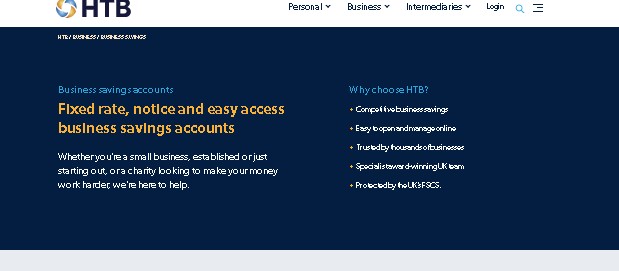
6. Hampshire Trust Bank (HTB)
This structured short-term liquid reserve vehicle offers a stable market parking ground for corporate capital awaiting deployment. It keeps medium-sized cash blocks insulated from standard current account depreciation.
-
Interest Rate & Type: 3.91% AER (Variable).
-
Opening Threshold: £5,000 minimum opening requirement.
-
Access & Support: Fully digital administration framework coupled with unlimited withdrawal flexibility.
-
Safety Net: Protected up to £85,000 per authorised banking licence.
7. United Trust Bank
United Trust Bank delivers a hybrid solution tailored for businesses that maintain steady reserve balances and only draw down funds on rare, scheduled occasions. It rewards structural patience with top-tier variable interest.
-
Interest Rate & Type: 4.15% AER (Variable).
-
Opening Threshold: £5,000 minimum deposit.
-
Access & Support: Capped at a maximum of two penalty-free withdrawals per calendar year before yield scaling adjustments apply.
-
Safety Net: Protected up to the £85,000 FSCS threshold.
8. Shawbrook Bank (1-Year Fixed-Term Deposit Bond)
When absolute yield certainty is paramount for annual Corporation Tax bills or expansion capital, Shawbrook’s 1-year fixed bond locks in market-leading returns. It completely insulates core reserves from unpredictable broader interest rate cuts.
-
Interest Rate & Type: 4.70% AER (Fixed).
-
Opening Threshold: £5,000 minimum opening tier.
-
Access & Support: Strictly locked for a 12-month duration with zero early withdrawal allowances permitted.
-
Safety Net: Fully protected up to £85,000 under the FSCS scheme.
9. UBL UK
UBL UK provides a secure, medium-term fixed yield option that allows smaller corporate surpluses to capture maximum guaranteed returns. It offers complete immunity from macroeconomic volatility over a fixed annual horizon.
- Interest Rate & Type: 4.68% AER (Fixed).
- Opening Threshold: Low £2,000 minimum opening deposit.
- Access & Support: Full 12-month term lock preventing any intermediate access or penalty adjustments.
- Safety Net: Covered up to the £85,000 FSCS protection limit.
10. Aldermore
Aldermore’s notice account is engineered to introduce structural discipline, protecting quarterly tax liabilities and overhead funds from accidental spending. By trading away immediate liquidity, businesses secure enhanced variable returns.
- Interest Rate & Type: 4.00% to 4.15% AER (Variable).
- Opening Threshold: £1,000 minimum deposit.
- Access & Support: Mandatory 95-day written notice period for all outgoing cash transfers.
- Safety Net: Eligible for full £85,000 FSCS deposit insurance protection.

How to Choose the Best Business Savings Accounts for Small Businesses?
When evaluating options, focus on how the account parameters fit your business’s operating requirements:
- Map Your Cash Flow Timelines (The 3-Tier Strategy): Categorise your business capital into immediate payroll/operational costs, quarterly tax obligations, and long-term profit reserves. Match each bucket to an instant, notice, or fixed account respectively.
- Review Minimum Opening Deposits: Challenger banks frequently pay top-tier rates but often require minimum deposits ranging from £1,000 to £20,000. Choose an account threshold that matches your spare reserves without starving daily operations.
- Verify FSCS Protection Limits: Confirm the provider is covered by the Financial Services Compensation Scheme (FSCS), which protects up to £85,000 per business entity per banking licence. If your business holds cash reserves over £85,000, consider spreading deposits across multiple distinct banking groups to remain 100% protected.
- Check Withdrawal Penalties and Rules: Review penalty terms carefully. Some accounts forfeit 30 to 95 days of accumulated interest if emergency access is needed, while fixed bonds prohibit early withdrawals entirely.
- Evaluate Platform Management Features: Determine whether the account can be managed online or via a mobile app, and if it integrates with your primary accounting software (e.g., Xero, QuickBooks) to simplify bookkeeping and tax preparation.
How Does FSCS Deposit Protection Work for Small Business Accounts?
The Financial Services Compensation Scheme safeguards business deposits held in UK-authorised financial institutions if a banking firm becomes insolvent. The scheme provides compensation up to £85,000 per business, per authorised banking licence.
Understanding the specific application of deposit protection rules across different business legal structures is critical for maintaining financial safety.
Protection Rules by Company Structure
-
Limited Companies (LTDs): Because a limited company possesses a distinct legal personality under UK law, its deposit protection is separate from the personal accounts of its directors or shareholders. A director holding £85,000 in a personal savings account and £85,000 in a business savings account at the same bank receives full protection for both balances.
-
Sole Traders: A sole trader and their business are legally the same entity under UK law. Because of this, personal deposits and commercial savings held within the same banking group share a single £85,000 FSCS coverage limit.
-
Partnerships: Standard partnerships are usually treated as a single entity, receiving one £85,000 limit across all partnership accounts at a single financial institution.
For businesses carrying cash balances over £85,000, spreading funds across multiple independent banking licences maintains full FSCS protection.
When applying this multi-licence strategy, confirm that selected banks operate under separate Prudential Regulation Authority (PRA) banking authorisations rather than sharing a single parent licence.
What are the Tax Rules on Business Savings Interest?
Tax treatment for savings interest varies based on whether your firm operates as an incorporated entity or an unincorporated business under HM Revenue & Customs guidelines.
Corporation Tax on Savings Interest for Limited Companies
Under the Corporation Tax Act 2010, interest earned on business deposits by a limited company is classified as non-trading loan relationship income. UK banking institutions pay all commercial interest gross, meaning no tax is withheld prior to payout.
Limited companies must declare all gross interest earned during an accounting period on their annual CT600 Company Tax Return.
Company directors often ask, do I have to notify HMRC of Savings Interest separately throughout the financial year, but for incorporated entities, standard corporate reporting rules cover these earnings.
This interest is subject to standard Corporation Tax rates between 19% and 25%, depending on the firm’s overall profit bracket.
Income Tax for Sole Traders and Partnerships
Sole traders receive business interest gross, but report this income via individual Self Assessment returns.
Understanding how HMRC collects tax on Savings Interest helps self-employed individuals plan ahead for tax adjustments via their PAYE coding notices or annual tax bills.
Interest earned contributes directly to personal Income Tax liabilities and utilizes available Personal Savings Allowance (PSA) limits (£1,000 for basic-rate taxpayers and £500 for higher-rate taxpayers). Earnings above these thresholds are taxed at standard personal income rates.
How to Open a Business Savings Account as a Small Business Owner?
Setting up a commercial savings product requires meeting regulatory Anti-Money Laundering (AML) standards and providing company registration details. Follow these essential steps to open an account smoothly.
-
Verify Company Status: Ensure your business is registered with Companies House and your confirmation statement and annual accounts are fully up to date.
-
Select Account Structure: Match your liquidity needs with account terms, deciding between instant access, notice periods, or fixed bonds based on cash flow timelines.
-
Assemble Corporate Documentation: Gather your Companies House registration number, proof of official business address (such as a corporate utility bill under three months old), and primary director details.
-
Complete Identity Verification: Provide photo identification (valid passport or UK driving licence) and complete biometric checks for all directors and ultimate beneficial owners holding 25% or more equity.
-
Link Your Primary Current Account: Nominate an existing UK business current account held in the company’s exact legal name. All future deposits and interest withdrawals must route through this linked account.
-
Execute Opening Deposit: Transfer funds from your linked current account via Faster Payments or CHAPS within the bank’s initial funding window (typically 14 calendar days).

Conclusion
Maximizing return on small business cash reserves requires a structured approach to treasury management. Leaving operational funds in non-interest-bearing current accounts exposes cash reserves to inflationary erosion.
By assessing cash flow cycles, business directors can divide reserves into immediate working capital, medium-term tax liabilities, and long-term expansion funds.
Placing these allocations across Easy Access, Notice, and Fixed-Term accounts ensures optimal yield, adequate liquidity, and full regulatory protection under FSCS limits.
Disclaimer: This guide is for informational purposes only and does not constitute formal financial, tax, or legal advice; small business owners should consult a qualified financial adviser or accountant before opening or transferring accounts.
FAQS
What are the best high-yield business savings accounts?
Top high-yield options for UK businesses currently include Allica Bank for easy access deposits (4.08% AER variable), Aldermore for 95-day notice accounts (4.00% AER variable), and Shawbrook Bank for 1-year fixed deposit bonds (4.70% AER fixed).
Is business savings interest tax-free in the UK?
No, interest earned on commercial savings accounts is taxable. Banks pay interest gross without deducting tax at source. Limited companies must declare interest on their CT600 return for Corporation Tax, while sole traders report earnings via Self Assessment.
Are business savings accounts protected by the FSCS?
Yes, eligible small business deposits are protected by the Financial Services Compensation Scheme up to £85,000 per business entity, per authorised banking licence. Limited companies receive an £85,000 allowance separate from their directors’ personal accounts.
Can a limited company open multiple business savings accounts?
Yes, a limited company can open multiple savings accounts across different financial institutions. Spreading cash reserves across multiple distinct banking licences allows businesses with over £85,000 in cash to maintain full FSCS protection across all balances.
Why are business savings rates different from personal savings rates?
Commercial savings rates reflect wholesale money market conditions and corporate liquidity needs rather than retail consumer promotional campaigns. Business accounts generally allow larger deposit limits than high-yield personal regular saver accounts, which usually cap monthly contributions.
Can sole traders use business savings accounts?
Yes, sole traders can open business savings accounts using their official National Insurance number and proof of self-employment address. However, personal and business savings held with the same banking group share a single £85,000 FSCS coverage cap.
What happens if I withdraw funds early from a fixed business bond?
Fixed-term business deposit accounts strictly lock funds for the agreed term. Most providers do not permit early withdrawals under any circumstances, while others impose heavy interest penalties that forfeit accrued returns.






One Comment