80k After Tax UK: Complete Take-Home Pay Breakdown, Tax Rates, and Regional Differences
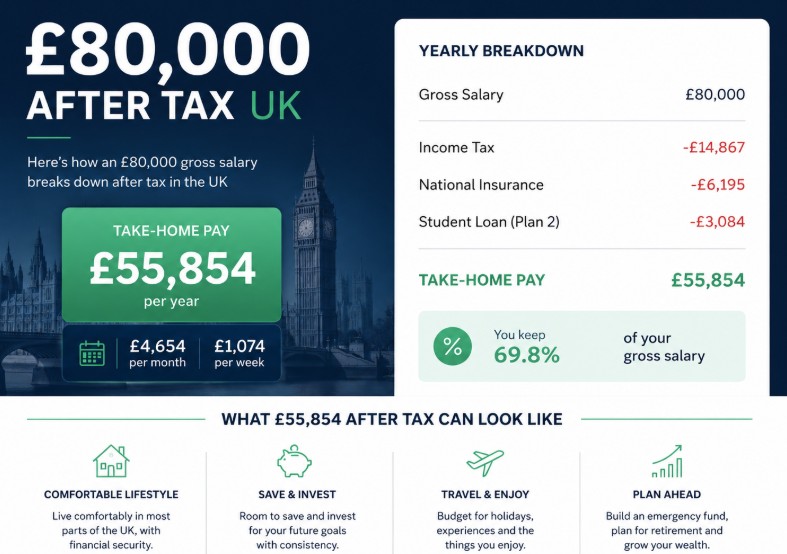
For standard tax residents in England, Wales, and Northern Ireland, an 80k after tax UK salary yields an approximate net annual take-home pay of £56,957.
This breaks down to roughly £4,746 per month or £1,093 per week after standard income tax and employee National Insurance deductions are applied by HMRC.
Key Takeaways
-
An £80,000 gross salary in England, Wales, and Northern Ireland yields an approximate net annual take-home pay of £56,957 under standard tax codes.
-
Monthly take-home earnings on an £80,000 salary average around £4,746.45 after standard income tax and employee national insurance deductions.
-
While moving up from an average £50k After Tax UK income shows what mid-level earners keep, earnings between £50,271 and £80,000 fall squarely into the higher-rate tax band, where income is taxed at 40 percent rather than the basic 20 percent rate.
-
Workplace pension auto-enrolment and student loan repayments under Plan 2 or Plan 4 will further modify final net monthly bank deposits.
What Is the Net Take-Home Pay of 80k after tax UK?
For tax residents in England, Wales, and Northern Ireland, an £80,000 gross salary yields a net annual take-home pay of £56,957.40, a net monthly income of £4,746.45, and a weekly take-home total of £1,093.59 after standard income tax and National Insurance deductions.
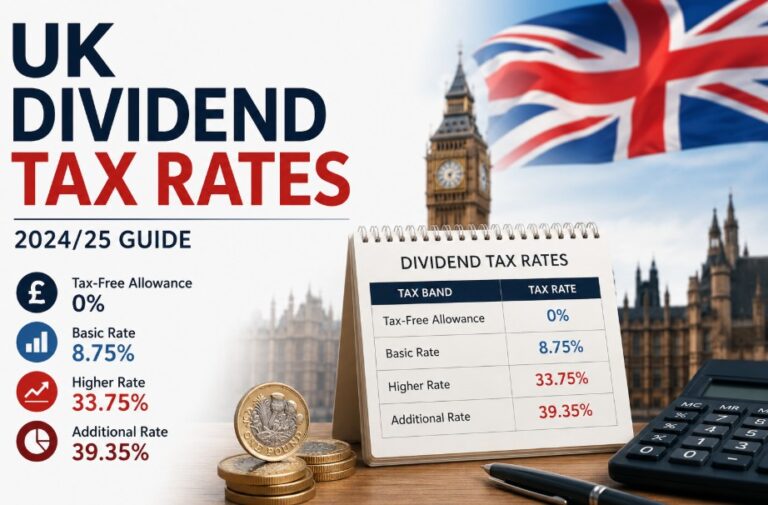
Income tax is structured around progressive tiers governed by the standard 1257L tax code. The initial £12,570 of yearly income is entirely tax-free via the Personal Allowance.
Earnings between £12,571 and £50,270 are subject to a 20 percent basic rate, while the remaining balance from £50,271 up to £80,000 faces the 40 percent higher-rate charge.
When combining income tax obligations with Class 1 National Insurance contributions (NICs), calculated at 8 percent for earnings between the primary threshold and the upper earnings limit, an individual with no workplace pension deductions takes home the figures outlined below.
Daily, Hourly Breakdown
| Pay Period | Gross Income | Income Tax | National Insurance | Net Pay |
| Daily (5-day week) | £307.69 | £63.20 | £16.76 | £218.73 |
| Hourly (37.5-hour week) | £41.03 | £8.43 | £2.23 | £30.37 |
Yearly, Monthly, Weekly Breakdown
| Pay Period | Gross Income | Income Tax | National Insurance | Net Pay |
| Yearly | £80,000.00 | £16,432.00 | £4,357.60 | £56,957.40 |
| Monthly | £6,666.67 | £1,369.33 | £363.13 | £4,746.45 |
| Weekly | £1,538.46 | £316.00 | £83.80 | £1,093.59 |
Note: Calculations reflect standard 1257L tax codes with zero workplace pension contributions and no active student loan debt.

How Does Scotland’s Tax System Alter an £80,000 Salary?
Taxpayers residing in Scotland face higher tax liabilities on an £80,000 salary, reducing net annual take-home pay by approximately £800 to £1,200 compared to the rest of the UK due to devolved progressive tax bands.
Earning £80,000 means Scottish taxpayers hit the higher and advanced brackets much earlier than peers down south. Because of those devolved rates, the overall tax bill on the exact same paycheck ends up noticeably higher north of the border.
How is the income tax calculated?
Income tax is charged progressively on specific slices of earnings rather than as a flat rate across the entire salary, resulting in a total gross tax due of £19,432.00 before personal allowance integration.
Income Tax Calculation: England, Wales, and Northern Ireland
Income tax is charged progressively on specific slices of earnings rather than as a flat rate across the entire salary.
| Tax Band | Income Slice | Tax Rate | Tax Due on Slice |
| Personal Allowance | £0 to £12,570 | 0% | £0.00 |
| Basic Rate | £12,571 to £50,270 | 20% | £7,540.00 |
| Higher Rate | £50,271 to £80,000 | 40% | £11,892.00 |
| Total Gross Tax Due | Full £80,000 Income | — | £19,432.00 |
Note: Total income tax due before standard PAYE coding adjustments is £19,432.00. Standard personal allowance integration brings the net annual figure to £16,432.00.
Regional Income Tax Comparison: Scotland
Scotland uses a separate six-tier progressive structure. Because higher marginal rates kick in earlier and climb to 42% and 45% across the £50,000 to £80,000 segment, Scottish taxpayers face higher liabilities on identical earnings.
| Scottish Tax Band | Income Band Range | Tax Rate | Impact on £80,000 Salary |
| Starter & Basic Rates | Up to £16,956 | 19% – 20% | Fully absorbed in lower salary tiers. |
| Intermediate Rate | £16,957 to £31,092 | 21% | Applies to mid-level slice. |
| Higher Rate | £31,093 to £62,430 | 42% | Reached much earlier than the rest of the UK. |
| Advanced Rate | £62,431 to £125,140 | 45% | Applies to earnings from £62,431 up to £80,000. |
| Annual Difference | Compared to England/Wales | — | Roughly £800 to £1,200 more in total annual tax. |
Employee Class 1 National Insurance (NI) Contributions
National Insurance contributions on an £80,000 salary total £4,357.60, calculated using an 8% rate on standard earnings between £12,570 and £50,270, and a 2% rate on earnings above £50,270 up to the upper limit.
| Earnings Band | Income Slice | NI Rate | NI Contribution Due |
| Below Primary Threshold | £0 to £12,570 | 0% | £0.00 |
| Standard Earnings Limit | £12,570 to £50,270 | 8% | £3,016.00 |
| Above Upper Earnings Limit | £50,270 to £80,000 | 2% | £594.60 |
| Total Employee National Insurance | Full £80,000 Income | — | £4,357.60 |
What is the tax code for 80k Salary?
The default tax code for a standard £80,000 salary with no secondary income or taxable benefits is 1257L, which grants an initial £12,570 of tax-free personal allowance.
The numbers in a tax code represent the tax-free personal allowance divided by 10. Therefore, 1257 translates to £12,570 of tax-free earnings. The letter L denotes that the individual is entitled to the standard tax-free Personal Allowance.
| Tax Code Component | Value / Meaning | Impact on £80,000 Salary |
| 1257 | £12,570 allowance | Exempts the first £12,570 from income tax entirely. |
| L | Standard entitlement | Applies basic personal allowance conditions under PAYE. |
Key Factors That Modify the Number:
-
Company Benefits: If you receive taxable workplace benefits, such as private medical insurance or a company car, HMRC reduces your tax-free allowance to collect this tax automatically through your payroll.
-
Untaxed Secondary Income: If you earn minor untaxed income elsewhere (like part-time earnings or untaxed savings interest above your allowance), your tax code number is lowered so you pay the correct tax via your main job.
-
Underpaid Tax from Previous Years: If you owe tax from a previous tax year, HMRC may reduce your allowance (K codes or adjusted numbers) to collect what you owe incrementally.

How HMRC Decides the Letters in Your Tax Code?
The letter at the end (or beginning) of your tax code signals your specific employment status, geographical tax region, or lifestyle adjustments:
| Letter Prefix/Suffix | What HMRC Is Factoring In |
| L | You are entitled to the standard tax-free Personal Allowance (e.g., 1257L). |
| S | Your income is taxed using Scottish income tax rates and bands (e.g., S1257L). |
| C | Your income is taxed using Welsh income tax rates and bands (e.g., C1257L). |
| M / N | You have either received or transferred a portion of your partner’s allowance under the Marriage Allowance rules. |
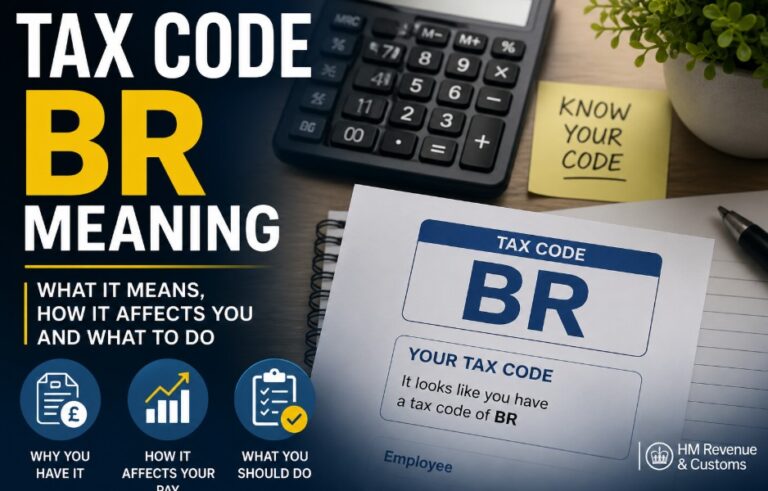
| BR / D0 / D1 | You have a secondary job or pension, meaning all income from that specific source is taxed under a Tax Code BR structure at a flat basic (20%), higher (40%), or additional (45%) rate without a personal allowance. |
| K | Your deductions (like company benefits or unpaid tax) are greater than your overall personal allowance, effectively acting as a negative allowance. |
| NT | You are not paying any tax on this specific stream of income. |
How Does HMRC Communicate and Update Your Code?
-
Automatic Issuance: HMRC issues your tax code directly to your employer or pension provider electronically through a PAYE coding notice so they know how much income tax to deduct before paying you.
-
Dynamic Updates: If your circumstances change, such as starting a new job, getting a pay rise, reporting a new benefit, or changing address, HMRC automatically recalculates your code and sends an updated notice to your employer.
-
Your Responsibility: While HMRC calculates the code, you are legally responsible for checking your payslips against the official List of Tax Codes or via your online Personal Tax Account (Government Gateway/HMRC app) to ensure accuracy.
How Do Workplace Pensions and Student Loans Impact an £80,000 Income?
While standard tax calculations provide a baseline take-home figure, workplace pension auto-enrolment and mandatory student loan repayments reduce final monthly net bank deposits.
Workplace Pension Deductions
Under automatic enrolment rules, employers deduct workplace pension contributions. When structured through a net pay arrangement or salary sacrifice scheme, these contributions are taken before income tax is assessed.
While reducing immediate monthly net pay, this approach lowers overall tax liabilities and builds long-term retirement capital.
Student Loan Repayments
Graduates managing active loans experience further deductions depending on their specific plan type:
-
Plan 2 and Plan 4: Graduates contribute 9 percent of earnings exceeding the respective repayment thresholds. For an £80,000 earner, this creates a substantial monthly deduction.
-
Postgraduate Loans: Borrowers with postgraduate master’s or doctoral loans face an additional 6 percent deduction on income above the postgraduate threshold.
How Does an £80,000 Salary Compare Across UK Regions and Socioeconomic Markers?
Pulling in £80,000 puts you well clear of the national median, landing you comfortably in the upper tier of earners. Even so, local living costs change how far those pounds actually go.
Regional Purchasing Power Comparison
-
London and the South East: High living expenses, property prices, and rental markets in the capital mean an £80,000 salary provides a comfortable individual lifestyle, but homeownership in central districts requires significant accumulated capital.
-
The Midlands, Northern England, Wales, and Scotland: Outside major economic hubs, an £80,000 income yields significantly higher purchasing power. Housing affordability, discretionary spending, and lifestyle flexibility expand noticeably.
Comparative Salary Benchmarks Table
| Economic Indicator / Tier | Annual Gross Salary | Regional Context & Status |
| UK Median Full-Time Wage | ~£35,000 – £38,000 | National benchmark across all full-time workers. |
| The £80,000 Bracket | £80,000 | Upper-quartile professional earnings nationwide. |
| Top 5% UK Threshold | ~£85,000 – £90,000 | Enters the top tier of individual UK income distribution. |
| London Top 1% Threshold | £150,000+ | Elite earning tier concentrated in financial and corporate sectors. |
How do hidden deductions affect the take-home pay?
Hidden or contractual deductions such as pension auto-enrolment, student loan thresholds, and Benefit-in-Kind (BiK) tax adjustments can alter your expected monthly net salary.
-
Workplace Pensions: Auto-enrolment rules require minimum contributions, and many professionals voluntarily contribute 5% or more. Under salary sacrifice arrangements, this lowers gross taxable pay, reducing income tax liabilities while building long-term wealth.
-
Student Loans: Graduates holding Plan 2 or Plan 4 loans contribute 9% of earnings above the repayment threshold, which can introduce a substantial monthly reduction on an £80,000 salary. Postgraduate loan borrowers face an additional 6% deduction.
-
Benefit-in-Kind (BiK): Company cars, private medical insurance, or cycle-to-work schemes alter your effective tax code (e.g., changing from 1257L to a lower allowance code), meaning HMRC collects extra tax through your monthly payroll to cover these perks.
What Financial Strategies Help Optimise an £80,000 Income?
Managing tax exposure efficiently at the higher-rate threshold involves structured financial planning around pensions, allowances, and tax codes.
-
Review tax codes annually via official government gateways to ensure correct application of allowances.
-
Maximise pension contributions via salary sacrifice to reduce taxable income exposure.
-
Evaluate employer-backed employee benefit schemes, such as cycle-to-work initiatives or green vehicle programs.
-
Assess savings interest against Personal Savings Allowance limits (£500 for higher-rate taxpayers).
-
Monitor dividend distributions carefully if operating a limited company structure, keeping basic and higher-rate thresholds in view.
Conclusion
Making sense of an £80,000 salary means keeping a close eye on tax brackets, national insurance, and any chunk coming out for student loans or workplace pensions.
While higher-rate tax bands apply to earnings above £50,270, a net take-home pay of roughly £56,957 provides robust financial flexibility across most regions of the United Kingdom.
Strategic planning around workplace pensions and allowances ensures maximum financial efficiency.
Disclaimer: This article is for informational purposes only and does not constitute professional financial or legal advice; consult HMRC or a certified accountant for individual guidance.
FAQ
What is 80k after tax UK a year?
In England, Wales, and Northern Ireland, an £80,000 gross salary yields approximately £56,957 in net annual take-home pay under a standard tax code without pension deductions or student loans.
How much is £80k a month after tax?
A gross income of £80,000 divides into a monthly gross of £6,666.67. Following PAYE income tax and employee national insurance deductions, the net monthly take-home pay is roughly £4,746.45.
What tax band does an £80k salary fall into?
An £80,000 salary spans multiple bands. The first £12,570 is tax-free (Personal Allowance), earnings up to £50,270 incur a 20 percent basic rate, and income from £50,271 to £80,000 falls into the 40 percent higher-rate tax band.
Does Scotland pay more tax on an £80,000 salary?
Yes. Scotland’s progressive income tax structure results in higher tax liabilities on an £80,000 salary, reducing net annual take-home pay by approximately £800 to £1,200 compared to the rest of the UK.
Is 80k a good salary in the UK?
Yes. An £80,000 salary sits well above the UK median full-time wage, placing an individual in the upper tier of earners nationwide and providing strong financial stability outside high-cost metropolitan centres.
How much is 100k after tax in the UK?
An annual gross salary of £100,000 results in an approximate net take-home pay of around £67,500 in England, Wales, and Northern Ireland, before accounting for student loans or workplace pension deductions.
What is the 60% tax trap?
When adjusted net income exceeds £100,000, the standard Personal Allowance tapers away at a rate of £1 for every £2 earned, creating an effective marginal tax rate of 60 percent between £100,000 and £125,140.