UK Tax Brackets 2025: Complete Income Tax Bands and Thresholds Guide
The UK tax brackets for the 2025/26 tax year set out the income tax rates and thresholds for earnings across England, Wales, Northern Ireland and Scotland.
Operating from 6 April 2025 to 5 April 2026, these tax bands determine how much business owners and employees pay based on taxable income, starting with a tax-free Personal Allowance of £12,570.
Key Takeaways
-
The standard UK Personal Allowance remains frozen at £12,570 for the 2025/26 tax year.
-
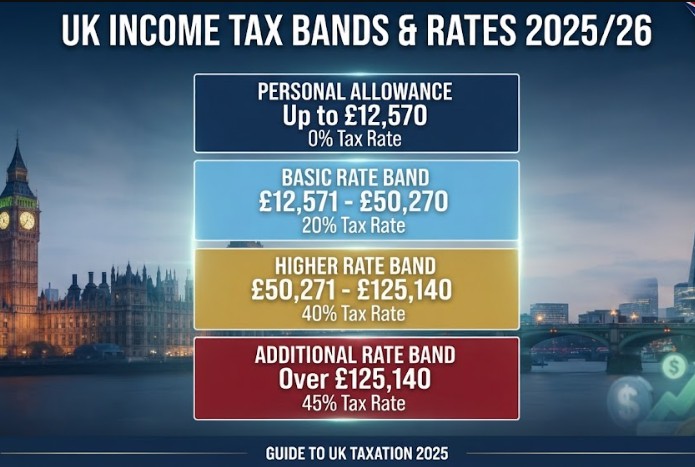
Basic rate tax is charged at 20% on taxable income between £12,571 and £50,270 in England, Northern Ireland, and Wales.
-
Scotland enforces a separate six-tier income tax structure starting with a 19% starter rate and stretching up to a 48% top rate.
-
Small business owners using a mix of salary and dividend income need to work out their tax across different rate thresholds.
What are the UK tax brackets 2025?
The UK tax brackets 2025 set out the main limits used to work out income tax across the country for the current tax year. Understanding these thresholds helps small business directors, sole traders and employees estimate their take-home pay and manage their finances under HMRC rules.
In practice, the amount of tax you pay depends on where you live in the UK, as Scottish tax rates differ from those used elsewhere. The baseline tax-free allowance remains fixed at £12,570 for most taxpayers, meaning no income tax is due on earnings up to this threshold.
While England, Wales, and Northern Ireland share a unified income tax structure, Scotland has devolved powers to set its own income tax bands and rates.
England, Wales, and Northern Ireland Tax Brackets
| Tax Band | Taxable Income Range | Tax Rate |
| Personal Allowance | Up to £12,570 | 0% |
| Basic Rate | £12,571 to £50,270 | 20% |
| Higher Rate | £50,271 to £125,140 | 40% |
| Additional Rate | Over £125,140 | 45% |
Scottish Tax Brackets
Scotland uses a progressive tax system with rates ranging from a 19% starter rate to a 48% top rate.
| Tax Band | Taxable Income Range (Scotland) | Tax Rate |
| Personal Allowance | Up to £12,570 | 0% |
| Starter Rate | £12,571 to £14,876 | 19% |
| Scottish Basic Rate | £14,877 to £26,561 | 20% |
| Intermediate Rate | £26,562 to £43,662 | 21% |
| Higher Rate | £43,663 to £75,000 | 42% |
| Advanced Rate | £75,001 to £125,140 | 45% |
| Top Rate | Over £125,140 | 48% |
(Note for high earners across all regions: The standard Personal Allowance of £12,570 is reduced by £1 for every £2 earned above £100,000 and is fully phased out once income reaches £125,140.)
How to manage employer National Insurance and corporation tax deductions?
Managing employer liabilities involves planning the timing of salary payments, bonuses and allowable business expenses to reduce taxable profits before the year-end.
Limited companies can deduct allowable business expenses, such as staff training, travel, equipment and employer pension contributions, from their profits, which can reduce the Corporation Tax bill.
Employer pension contributions can be tax-efficient because they can count as an allowable business expense for Corporation Tax and do not attract personal National Insurance.
Businesses may also be able to use the Employment Allowance to reduce their annual employer National Insurance bill, provided they meet HMRC’s eligibility rules.
How much can I earn before I pay 40% tax in the UK?
Taxpayers in England, Wales, and Northern Ireland reach the higher-rate threshold once their total taxable income exceeds £50,270. Any earnings above this threshold are taxed at 40%, reducing the amount you take home from additional income or profit.
Working out the tax correctly is particularly important for limited company directors who receive both a PAYE salary and dividends.
-
Total all annual gross income from employment, self-employment, property rentals, and savings interest.
-
Deduct allowable business expenses, pension contributions, and charitable Gift Aid donations to determine adjusted net income.
-
Subtract the standard £12,570 Personal Allowance from the adjusted figure to establish total taxable income.
-
Apply the 0% rate to income up to £12,570.
-
Apply the 20% basic rate to taxable earnings falling between £12,571 and £50,270.
-
Work out any remaining income above £50,270.
-
Apply the 40% higher rate exclusively to that surplus portion.
-
Submit the final calculation through Self Assessment or make sure it is accounted for through the correct PAYE tax code before the deadline.
How does a small business owner pay less tax legally in the UK?
Small business owners can use careful planning around how they pay themselves to help preserve working capital.
Combining a low director salary with dividends can help limited company owners reduce National Insurance costs while keeping their income within lower tax bands.
-
Setting director salaries around the Lower Earnings Limit or National Insurance Primary Threshold.
-
Utilizing employer pension contributions, which qualify as allowable business expenses and reduce corporate tax liability.
-
Transferring income-generating assets between spouses or civil partners to make use of unused Personal Allowances.
-
Distributing profits via dividends to benefit from the tax-free dividend allowance before higher rate bands apply.
Can I pay more into my pension to avoid the 40% tax trap?
Yes, putting surplus business profits or personal earnings into a registered pension scheme can help reduce adjusted net income below key tax thresholds.
Employer pension contributions made directly from a limited company bypass both corporation tax and personal income tax, provided they meet the wholly and exclusively test administered by HMRC.
When a director’s earnings approach the £50,270 higher-rate threshold or the £100,000 Personal Allowance taper point, pension contributions can help reduce taxable income.
What is the best way to avoid higher taxes in retirement as a business owner?
Business owners need to plan carefully when taking retained company profits in retirement to avoid unnecessary tax charges.
Spreading capital withdrawals over several tax years can help prevent large lump sums from pushing total income into the 45% additional rate band, while also taking account of the rules around UK state pensioners income tax.
Using available allowances, including Individual Savings Accounts alongside pension drawdowns, can help keep retirement income tax-efficient.
Advice from a qualified chartered accountant can help with company buyouts, share disposals or a Members’ Voluntary Liquidation when closing a company.
Does anyone pay 60% tax in the UK?
People with an adjusted net income between £100,000 and £125,140 can face an effective 60% marginal tax rate because their Personal Allowance is withdrawn.
HMRC reduces the £12,570 Personal Allowance by £1 for every £2 earned above £100,000, which can result in an effective 60% marginal rate for some higher earners.
| Income Bracket | Effective Marginal Tax Rate | Mechanism |
| £100,000 to £125,140 | 60% | 40% income tax plus 20% recovery of lost Personal Allowance |
| £125,140 and above | 45% | Additional rate applies; Personal Allowance fully exhausted |
| £50,270 to £100,000 | 40% | Standard higher rate income tax |
What are the tax rules for UK tax brackets 2025 self-employed?
Sole traders and freelancers who operate outside a limited company usually work out their income tax through the annual Self Assessment system. Business profits are added to other sources of income before the standard income tax bands are applied.
Class 4 and Class 2 National Insurance contributions apply alongside income tax based on annual net profits generated by the enterprise.
Keeping accurate records of allowable business expenses means sole traders pay tax on their actual profits rather than their gross turnover.

How to balance salary and dividends for tax efficiency?
Balancing a low director salary with dividends remains one of the most common ways for limited company owners to manage their overall tax bill.
Because salaries attract both employee and employer National Insurance contributions (NICs) while dividends do not, drawing a modest salary up to the National Insurance Primary Threshold or Lower Earnings Limit preserves a full qualifying year for state pension purposes, especially important for individuals reviewing state pensioners pre-1959 income tax implications, without triggering excessive tax or NIC charges.
The remaining company profits are then distributed as dividends. Dividends benefit from a dedicated tax-free dividend allowance (£500), and subsequent dividend income is taxed at lower rates (8.75% for basic rate taxpayers, 33.75% for higher rate taxpayers) than standard earned income.
Accountants typically calculate the optimal split annually based on changing corporation tax rates and personal tax bands to ensure total income stays safely below higher-rate thresholds where possible.
How to prepare for Making Tax Digital (MTD) for income tax?
Preparing for Making Tax Digital (MTD) for Income Tax Self Assessment requires sole traders, freelancers, and unincorporated landlords to transition away from manual bookkeeping toward HMRC-compatible digital software.
Under MTD regulations, qualifying business owners must maintain digital records of all business income and expenses and submit quarterly summaries directly to HMRC rather than filing a single annual return.
To ensure a smooth transition, business owners should adopt cloud-based accounting software (such as Xero, QuickBooks, or FreeAgent) that integrates directly with HMRC systems.
Establishing a disciplined routine of scanning receipts, categorizing transactions weekly, and running test submissions well ahead of statutory deadlines prevents compliance errors and administrative bottlenecks.
Conclusion
Navigating the UK Tax Brackets 2025 framework is essential for protecting your revenue, whether you are managing payroll, optimizing director dividends, or filing Self Assessment as a freelancer.
Because HM Revenue and Customs thresholds shift continuously, proactive planning remains your strongest tool for minimizing tax liabilities.
By aligning remuneration strategies, tracking allowable expenses, and preparing for Making Tax Digital, you can preserve working capital and maintain compliance. Always consult a certified accountant or GOV.UK for tailored financial guidance.
Disclaimer: This article is for informational purposes only and does not constitute formal legal or financial advice; consult a certified accountant or HMRC for specific guidance.
FAQs
Is it better to earn 50k or 55k in the UK?
Earning £55,000 results in a higher net take-home pay than earning £50,000, despite the portion above £50,270 falling into the 40% tax bracket. Higher tax rates only apply to earnings exceeding the threshold, not total income.
Who pays 20% tax in the UK?
Individuals with taxable income falling between £12,571 and £50,270 in England, Northern Ireland, and Wales pay the basic 20% income tax rate on earnings within that specific bracket.
How are UK tax brackets 2025 monthly calculations handled for payroll?
PAYE payroll software divides annual tax thresholds and personal allowances into twelve equal monthly allocations, deducting the exact income tax liability from employee wages each month.
Where can I find the official gov uk tax brackets 2025 portal?
Official rates, tax codes, and thresholds are published directly on the GOV.UK website under guidance maintained by Her Majesty’s Revenue and Customs.
What is the emergency tax code for UK employees?
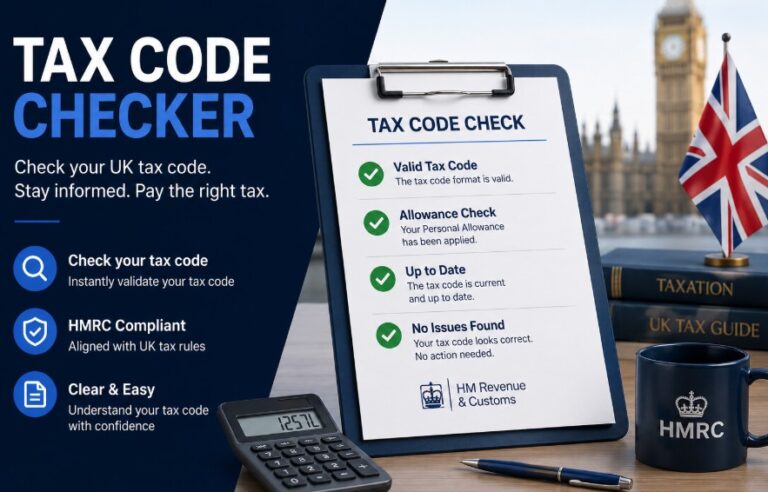
The emergency tax code for the 2025/26 tax year is 1257L on a W1, M1, or X basis, which ensures standard tax-free allowances apply provisionally before formal employment records update.
How do dividends affect UK tax brackets?
Dividend income benefits from a dedicated £500 tax-free allowance, after which dividends are taxed at 8.75%, 33.75%, or 39.35% depending on whether total income falls into basic, higher, or additional rate bands.
Can personal allowance be transferred between spouses?
Yes, Married couples and civil partners may be able to transfer £1,260 of their Personal Allowance through the Marriage Allowance, provided the higher earner is not a higher-rate taxpayer.
How does student loan repayment interact with tax brackets?
Student loan repayments are based on a percentage of income above the relevant statutory threshold. They are separate from income tax but can reduce your overall take-home pay.