How to Advertise Your Business in the UK: Proven Strategies, Costs, Legal Rules
Learning how to advertise your business in the United Kingdom requires balancing immediate digital visibility with sustainable local promotion.
British enterprises build brand awareness by establishing verified Google Business Profiles, leveraging localized social media content, and running targeted digital ad campaigns that comply with national consumer protection standards.
Key Takeaways
-
Establishing a verified Google Business Profile provides immediate organic visibility across regional Google Maps and local search queries without upfront costs.
-
Balancing modern tactics with the foundational 4Ps of marketing alongside the 40-40-20 rule ensures equal focus on audience targeting, value propositions, and creative asset execution across campaigns.
-
Regional television advertising via digital streaming platforms like ITVX offers targeted local entry points starting from modest campaign budgets.
-
All UK commercial marketing must strictly adhere to Advertising Standards Authority regulations and UK GDPR rules regarding customer data protection.
How to Advertise Your Business UK for Immediate Visibility?
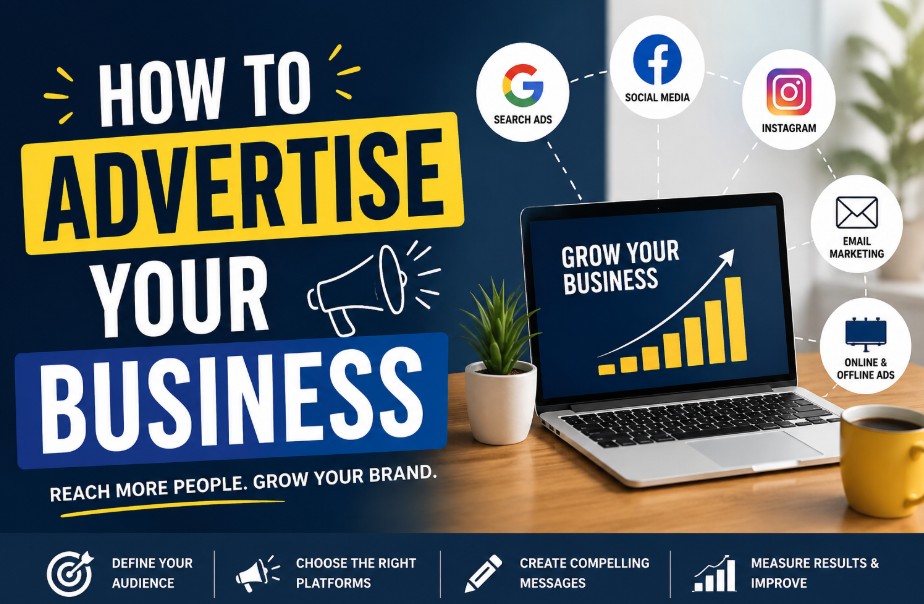
To gain immediate visibility for your UK business, optimize your Google Business Profile, launch high-intent Pay-Per-Click (PPC) ads, and deploy targeted local social media campaigns.
1. Google Business Profile Optimization
-
Claim, verify, and regularly update your free local listing to dominate regional Google Maps searches.
-
It acts as your digital storefront for local intent, putting your address, opening hours, and phone number directly in front of nearby customers searching for your services.
-
Upload high-resolution photos weekly, collect Google reviews consistently, and post regular business updates to maintain high local pack visibility.
2. Pay-Per-Click (PPC) Advertising
-
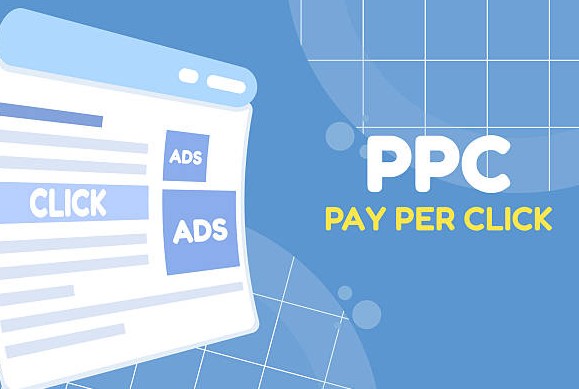
Pay-per-click advertising captures immediate, high-intent buyer traffic using Google Ads or Microsoft Advertising.
-
You only pay when a potential customer actively clicks your ad, allowing you to bypass organic SEO wait times and appear at the very top of search engine result pages.
-
Target high-intent, long-tail commercial keywords (e.g., emergency plumber near me) and direct traffic to a dedicated, high-converting landing page.
3. Social Media Paid Campaigns
-
Social media paid campaigns deploy targeted image, carousel, and video ads on platforms like Meta (Facebook/Instagram) and LinkedIn.
-
Advanced demographic, geographic, and behavioral targeting lets you put your brand directly in front of users based on their specific interests and online habits.
-
Use video-first creative formats that stop the scroll within the first 3 seconds and pair them with clear call-to-action buttons.
4. Local Print and Community Media
-
Local print and community media advertise in regional newspapers, community magazines, or local event sponsorship programs.
-
It builds high local trust and reaches demographics that may rely less on digital platforms, especially in smaller towns and regional communities.
-
Secure ad space in trusted local publications or sponsor community sports teams to embed your brand locally.
5. Broadcast and Video-on-Demand (VOD)
-
Broadcast and video-on-demand run localized 30-second commercial spots via streaming platforms like ITVX or regional TV.
-
Modern regional ad targeting allows even small businesses to harness the massive brand authority of television starting from modest entry budgets.
-
Produce a high-impact, story-driven 30-second visual asset focused on a single core customer pain point.
6. Strategic Partnerships and Cross-Promotion
-
Strategic partnerships and cross-promotion partner with complementary local businesses to cross-refer clients and pool marketing resources.
-
It allows you to tap into an already established, trusted audience without paying for cold advertising space.
-
Find non-competing businesses that target the exact same customer profile (e.g., an estate agent partnering with a local removal company) and build a mutual referral incentive.
7. Direct Mail and Leaflet Drops
-
Direct mail and leaflet drops utilize Royal Mail’s door-to-door distribution services for hyper-targeted physical coupon or flyer campaigns.
-
Physical mail delivers high tactile engagement, standing out in an era where consumers are constantly bombarded with digital notifications.
-
Include a high-value incentive or exclusive discount code on the flyer to accurately track response rates and conversions.
8. Influencer and Micro-Influencer Marketing
-
Influencer and micro-influencer marketing collaborates with regional creators who hold trusted influence within your specific niche.
-
Micro-influencers often boast hyper-engaged local communities with much higher trust levels than traditional macro-celebrities.
-
Gift products or sponsor content creators who match your brand values to review your services authentically for their local audience.

9. Customer Referral Programs
-
Customer referral programs incentivize your existing customer base with discounts or rewards for bringing in new clients.
-
Referred customers have a significantly higher lifetime value and convert faster because trust is pre-established by a friend or colleague.
-
Implement an easy-to-use digital referral system that rewards both the referrer and the new referee automatically.
10. Networking and Local Trade Events
-
Networking and local trade events attend regional UK Chamber of Commerce meetings, trade shows, and community networking hubs.
-
Face-to-face relationship building creates immediate interpersonal trust that digital channels take much longer to cultivate.
-
Prepare a crisp, 30-second elevator pitch and collect business cards to follow up with potential partners or clients within 48 hours.
Why Advertising Your Business is Important?
Advertising acts as the primary growth engine for any commercial enterprise, bridging the gap between superior products and the customers actively searching for them.
Without a deliberate promotional strategy, even the highest-quality businesses struggle to gain traction in competitive markets.
-
Accelerates Brand Awareness: Consistent advertising elevates your business out of obscurity, ensuring local prospects recognize your brand name before they even reach the point of purchase.
-
Drives Predictable Inbound Revenue: Unlike passive waiting, active advertising channels (such as targeted search engine ads or local listings) generate a steady, scalable stream of high-intent customer leads.
-
Outpaces Market Competition: In crowded UK industries, your competitors are actively bidding for consumer attention; effective advertising prevents them from capturing your target audience by default.
-
Stabilizes Cash Flow: Diversifying your promotional mix across proven digital and local channels protects your business from seasonal downturns, maintaining reliable sales volume year-round.
Strategic Marketing Frameworks for UK Businesses
Applying established strategic frameworks and mapping out a solid marketing plan prevents budget waste and ensures commercial messaging aligns with proven consumer response behaviors.
The 40-40-20 Rule in Advertising
The 40-40-20 rule dictates that campaign success is driven by three distinct components:
-
40% Target Audience: Reaching the exact demographic or business profile with a genuine need for the offering.
-
40% Offer Value: Presenting a compelling proposition, competitive price point, or risk-free incentive.
-
20% Creative Execution: Designing attractive visuals, persuasive ad copy, and engaging call-to-action buttons.
The 70/30 Rule in Marketing
The 70/30 rule offers a practical model for allocation of resources:
- 70% Core Operations: Proven marketing channels (SEO, Meta Ads, Local Directories)
- 30% Growth Testing: Experimental channels (Emerging platforms, Micro-influencers, Local Events)
In practice, spending 70% of the marketing budget on proven, predictable conversion channels maintains steady revenue generation.
Allocating the remaining 30% to testing new ad formats, emerging social channels, or experimental creative concepts fuels long-term growth without exposing the business to financial risk.
3-3-3 Messaging Rule
The 3-3-3 messaging rule dictates how prospects process commercial messaging:
-
3 Seconds: Capture immediate visual or textual attention in a crowded feed or search result page.
-
3 Minutes: Deliver a clear value proposition, demonstration, or customer proof point that builds interest.
-
3 Days: Execute systematic retargeting or follow-up communications before the prospect’s buying intent cools down.
It aligns your commercial messaging directly with how modern prospects process information, combatting short attention spans while keeping conversion momentum alive.
Build attention-grabbing hooks for the first 3 seconds of video or ad text, deliver a clear proof-point or demonstration within a 3-minute video or landing page overview, and automate follow-up retargeting sequences within 3 days before buyer intent cools.
How Much Does Advertising Cost for a Small Business in the UK?
Advertising costs in the UK vary widely based on chosen channels, target demographics, geographic scope, and competitive bidding levels.
Digital Channel Benchmarks
Small UK businesses using pay-per-click (PPC) platforms like Google Ads typically see average cost-per-click (CPC) ranging between £1.00 and £4.50 for standard commercial keywords, though competitive sectors like legal or finance can exceed £15.00 per click.
Social media advertising on Meta platforms generally operates on a cost-per-thousand-impressions (CPM) model, averaging £5.00 to £12.00 in the UK market.
Broadcast Channel Benchmarks
Broadcast media pricing depends on regional reach and viewing time slots. For instance, running a how much is a 30-second advert on ITV evaluation reveals that regional video-on-demand spots via ITVX or Planet V can start from as little as £1,000 for localized geographic targeting.
Conversely, national linear television slots during peak broadcast hours command figures between £10,000 and £30,000+ per 30-second transmission.
Comparing UK Advertising Channels
| Advertising Channel | Typical Upfront Cost | Time to Initial Results | Ideal Business Type |
| Google Business Profile | £0 | 2 – 4 Weeks | Local service providers, retail shops, trades. |
| Organic Social Media | £0 (In-house effort) | 1 – 3 Months | E-commerce, creative services, lifestyle brands. |
| Google Search Ads (PPC) | £300 – £1,500+ / month | 24 – 48 Hours | High-intent services, emergency repairs, B2B. |
| Meta Ads (Facebook/IG) | £200 – £1,000+ / month | 3 – 7 Days | Visual consumer goods, local events, lead generation. |
| Regional Broadcast / VOD | £1,000 – £5,000+ / campaign | 2 – 4 Weeks | Established regional brands, larger service radius. |

What UK Legal Rules and Compliance Must You Follow When Advertising?
All commercial promotions in the UK must adhere to strict regulatory standards enforced by statutory bodies to maintain market fairness and protect consumer rights.
Advertising Standards Authority (ASA) Compliance
The ASA enforces the UK Code of Non-broadcast Advertising and Direct & Promotional Marketing (CAP Code). Key rules include:
-
Truthful Pricing: All displayed prices must be accurate, inclusive of non-optional taxes (VAT), and clear regarding delivery fees.
-
Substantiation: Claims such as UK’s Number 1 or Lowest Price Guaranteed must be backed by verifiable objective evidence.
-
Clear Identification: Promoted content, sponsored posts, or affiliate links must be clearly labeled as advertisements using markers like #ad or Paid Partnership.
GDPR and Privacy Laws
The UK General Data Protection Regulation (UK GDPR) and the Privacy and Electronic Communications Regulations (PECR) govern direct marketing:
-
Opt-in Consent: Businesses must secure explicit opt-in consent before sending marketing emails or SMS messages to individual consumers.
-
Clear Unsubscribe Options: Every electronic marketing communication must include a straightforward, free mechanism for recipients to opt out.
-
Data Storage Security: Customer databases must be stored securely with access restricted strictly to authorized personnel.
Step-by-Step UK Advertising Execution Plan
Launching a balanced advertising campaign requires a structured approach to minimize financial risk while maximizing audience reach.
-
Verify Your Digital Footprint: Complete your Google Business Profile registration, verify address details, and ensure consistent business details across core UK web directories.
-
Audit Target Audience Touchpoints: Identify whether your ideal UK customers spend more time searching on Google, browsing social feeds, or reading local media.
-
Establish Clear Budget Parameters: Set a monthly marketing expenditure benchmark (commonly 5% to 10% of gross revenue for growing businesses) split between low-cost foundation channels and test campaigns.
-
Develop Primary Creative and Copy: Craft ad copy adhering to the 40-40-20 rule, ensuring pricing is transparent, and disclaimers meet ASA compliance standards.
-
Launch Controlled Paid Campaigns: Deploy initial paid search or social ad sets with strict daily budget caps to measure conversion costs before scaling expenditure.
-
Set Up Conversion Tracking: Implement analytics tools on your business website to measure phone calls, form submissions, or online orders generated by specific ad sources.
-
Review and Optimize Channel Performance: Shift ad spend away from underperforming channels towards methods delivering the lowest customer acquisition cost.
Conclusion
Successfully advertising a business in the United Kingdom requires a dual strategy: building zero-cost organic trust signals while running disciplined, trackable paid acquisition campaigns.
Start by claiming your Google Business Profile and establishing presence on major UK directories. Once your organic foundation is secure, test targeted paid channels using clear budgets and strict conversion tracking.
Ensure all promotional copy complies with national ASA guidelines and UK GDPR privacy regulations to build a sustainable, reputable commercial brand.
Disclaimer: This article is for informational purposes only and does not constitute formal legal or financial advice; consult professional regulatory bodies for specific compliance requirements.
FAQ
How can I advertise my UK business for free locally?
Set up a Google Business Profile, list your company on Bing Places and Yell, engage in local community social media groups, and request verified reviews from satisfied local customers.
How do I advertise my business with no money?
Focus on organic channels: publish helpful service content on your website, explore low-cost models like affiliate marketing, build an active presence on social media platforms, leverage local networking groups, and set up free directory profiles.
What is the cheapest way to advertise your business?
Organic search engine optimization and direct customer referral programs carry the lowest ongoing monetary costs while delivering long-term customer acquisition benefits.
How do I attract customers to my business quickly?
Targeted pay-per-click advertising via Google Ads or localized Meta ad campaigns can generate inbound customer inquiries within 24 to 48 hours of campaign launch.
What is the most successful way to advertise a small business in the UK?
Combining long-term organic local search visibility with controlled, high-intent pay-per-click ad campaigns yields the most reliable and scalable acquisition results.
Is digital marketing legal in the UK without a trade license?
Yes, digital marketing is legal for any registered UK business, provided campaigns comply with ASA truth-in-advertising guidelines and UK GDPR data privacy laws.
How much should a small UK business spend on advertising per month?
Most established small UK businesses allocate between 5% and 10% of their gross revenue to marketing, starting with modest test budgets of £300 to £500 per month.