Companies House Beta Search Guide: How to Find UK Business Records & Director Data
Companies House Beta (now fully integrated into Companies House Services – CHS) is the official, free UK government database hosted on GOV.UK.
It provides public access to real-time company registration numbers (CRN), filing histories, annual accounts, officer details, and Persons with Significant Control (PSC) records across all UK-registered entities without requiring an account.
Key Takeaways
-
Digital public records are hosted directly on official government portals following the retirement of legacy testing subdomains and older search applications.
-
Basic company searches, director histories, and historical PDF document downloads remain completely free without requiring user account registration.
-
Corporate transparency mandates require businesses to maintain current registered office locations and verified email addresses on public databases.
-
Advanced researchers and developers can automate data retrieval and compliance tracking using official application programming interfaces and bulk feeds.
What is Companies House Beta UK?
Companies House Beta UK refers to the cloud-based digital search testing phase launched in 2015 by the UK registrar of companies. It modernized public access to corporate records by replacing paid legacy software with a free, open-access web database on GOV.UK.
Launched as a testing ground, this service marked a pivotal shift from paper registers and outdated software toward a flexible, cloud-backed public repository.
When searching for corporate data, financial histories, or officer details on the official public register, understanding how these digital systems evolved ensures accurate navigation of UK business records.
Understanding the Transition from Legacy Tools to Cloud Infrastructure
The legacy search tools relied on outdated server technology and text-heavy interfaces that struggled to scale with millions of active corporate entities.
By introducing a streamlined digital interface, the registry enabled rapid public searches, faster document downloads, and improved mobile responsiveness.
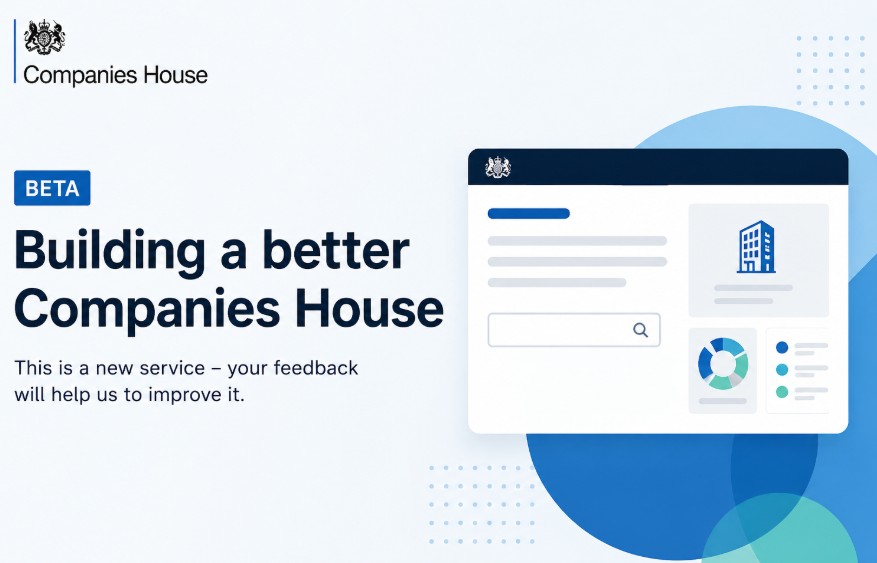
Following successful user trials, the beta label was retired, and the underlying technology integrated fully into Companies House Services (CHS).
How Did the Platform Evolve?
The UK corporate registry evolved across three key eras: from legacy paid portals (WebCheck/CH Direct), through a free testing platform (Companies House Beta), to today’s unified GOV.UK cloud infrastructure processing millions of daily queries.
- Legacy Infrastructure (WebCheck & CH Direct): Paid subscription services with limited search speeds, fixed-hour database maintenance windows, and fee-based PDF document downloads.
- The Beta Testing Phase (2015–2021): As recorded in Companies House official historical roadmaps, beta.companieshouse.gov.uk was deployed to operate in parallel to legacy software before full integration. This introduced open, free access to basic filings and company records, establishing a simplified user experience.
- Full GOV.UK Integration & Cloud Scale (Current): Migration off testing subdomains onto find-and-update.company-information.service.gov.uk. The current system processes tens of millions of queries daily, backed by cloud microservices and real-time validation pipelines.
Why Legacy URLs Redirect to Unified GOV.UK Gateways?
Attempting to access historical web addresses or old testing subdomains results in an automatic redirection to the secure GOV.UK domain. This consolidation protects users from phishing attempts, ensures data integrity, and unifies all statutory filings under a single regulatory umbrella.
According to official government modernization announcements, centralizing digital services reduces operational maintenance costs while improving cybersecurity defenses across public administrative data layers.
How to Perform a Companies House Beta Search for UK Entities?
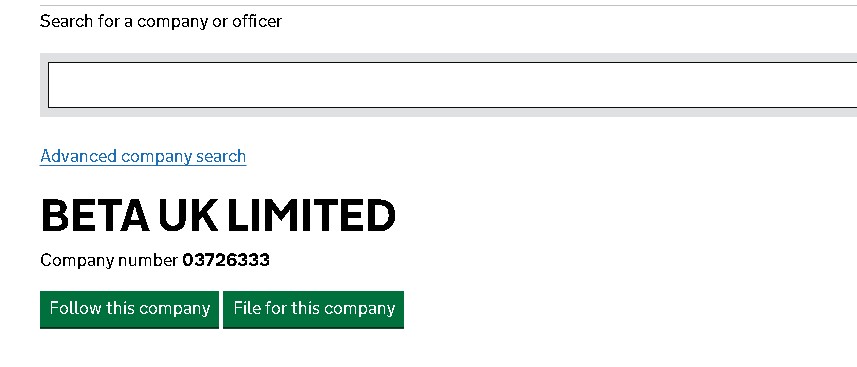
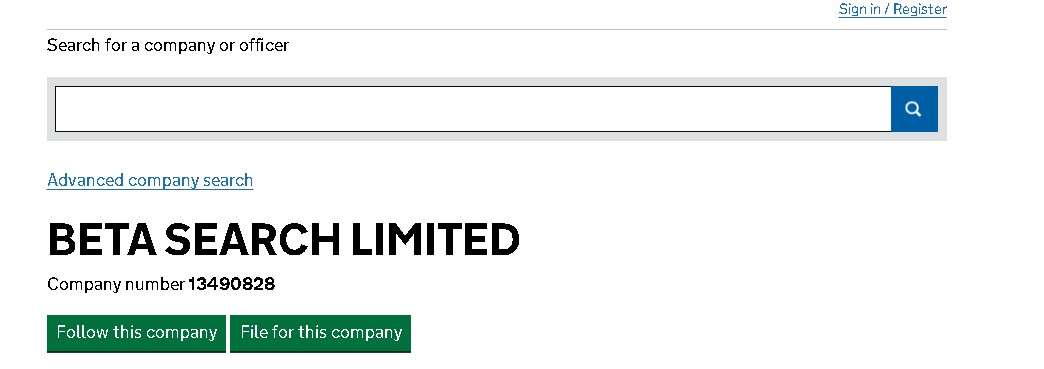
To perform a Companies House search, visit the official GOV.UK Find and update company information page, enter a company name or 8-digit Company Registration Number (CRN), select the company profile, and view or download public records for free.
Step-by-Step Guide to Navigating the Modern Search Portal
-
Navigate directly to the official GOV.UK Find and update company information portal using a secure web browser.
-
Enter the exact company name, partial phrase, or the unique 8-character Company Registration Number (CRN) into the search query box.
-
Review the primary search results page, which displays matching active companies, dissolved entities, and historical name changes.
-
Click on the relevant corporate title to open the main overview dashboard and verify the current trading status.
-
Use the navigation tabs at the top of the company profile to inspect the filing history, registered office addresses, and active officer lists.
-
Download required annual accounts, confirmation statements, or incorporation documents directly as secure PDF files for offline review.
-
Utilize sidebar filters to isolate specific corporate entity types, such as limited liability partnerships, private limited companies, or charitable incorporations.
What Core Data Elements Are Available on the Register?
The public Companies House register provides free access to core entity attributes, including Company Registration Numbers (CRNs), active/dissolved trading statuses, SIC activity codes, director appointment histories, filing archives, and Persons with Significant Control (PSCs).
Key Data Categories Found on Company Profiles
-
Registration Identifiers: The unique 8-character alphanumeric CRN assigned upon incorporation.
-
Corporate Status: Real-time indicators showing whether an entity is active, dormant, undergoing liquidation, or dissolved.
-
Standard Industrial Classification Codes: Numerical classifications defining the primary commercial activities of the business.
-
Filing History Archive: A chronological timeline of submitted annual accounts, confirmation statements, and capital alteration documents.
-
Officer Appointments: Public records of active and resigned directors, corporate secretaries, and managing partners.
Summary of Available Register Data & Public Visibility
While financial and officer data are fully public, personal contact details like residential home addresses and registered company email addresses are legally protected from public viewing.
| Data Attribute | Purpose on Register | Accessibility Level |
| Registered Office | Official legal address for statutory notices | Publicly viewable by anyone |
| Filing History | Historical record of financial compliance | Free PDF downloads for all users |
| Persons with Significant Control (PSCs) | Identifies individuals holding over 25% stake/votes | Publicly viewable to ensure transparency |
| Registered Email Address | Official channel for registrar communications | Private (Internal use only) |
How Do Users Access Companies House Login and WebFiling Portals?
Accessing official filing portals requires logging into secure GOV.UK authentication gateways using personal identification credentials, distinct from the read-only public search database.
Navigating Secure Digital Portals for Business Administration
Business owners frequently search for legacy portal names when updating corporate records or filing their annual Companies House confirmation statement. However, actual administrative submissions now take place strictly through secure GOV.UK authentication gateways.
When evaluating corporate administration workflows, compliance officers must distinguish clearly between public search tools and secure administrative dashboards:
-
Identity Verification: In practice, a director managing multiple entities must link their digital identity to individual authentication codes issued by the registry.
-
Security Standards: Multi-step security protocols prevent unauthorized alterations to corporate registers.
-
API Integration: Corporate secretaries and accounting practices utilize integrated software connected via official developer APIs to automate bulk statutory submissions.
What Are the Rules for Managing Registered Email Addresses and Privacy?
Under current UK law, every registered company must provide a valid registered email address for official registrar communications, while personal director residential addresses are strictly kept off public view.
Compliance Standards for Registered Emails and Officer Addresses
-
Mandatory Registered Email: Every UK corporate entity must maintain an appropriate registered email address capable of receiving official correspondence from the registrar. This email remains strictly private and is never displayed on the public search index.
-
Dual Address System: Directors must supply both a service address (publicly viewable correspondence address) and a residential address (held securely and hidden from general public view).
-
Historical Data Suppression: Directors who face verified risks of violence, harm, or intimidation can apply formally to Companies House to suppress historical personal residential data from older statutory filings.
Can I Add or Update Information on Companies House?
Yes. Authorized company officers (directors, corporate secretaries, or registered agents) can update company details online by authenticating through secure GOV.UK administrative filing gateways.
What Data Can Be Updated Online?
-
Annual Confirmation Statements (CS01): Verifying shareholding structures, SIC codes, and business activities annually.
-
Officer Appointments & Resignations: Filing AP01 (director appointment) or TM01 (director termination) forms.
-
Address Updates: Updating registered office addresses and directors’ correspondence (service) addresses.
-
Financial Accounts: Submitting annual financial accounts directly or through integrated accounting software to avoid costly late filing penalties.
Note on Public vs. Private Data: Information added to the register generally becomes visible to the public within minutes of acceptance. However, private attributes, such as residential home addresses or registered email addresses, are kept secure and hidden from standard public views.
How to Register with Companies House?
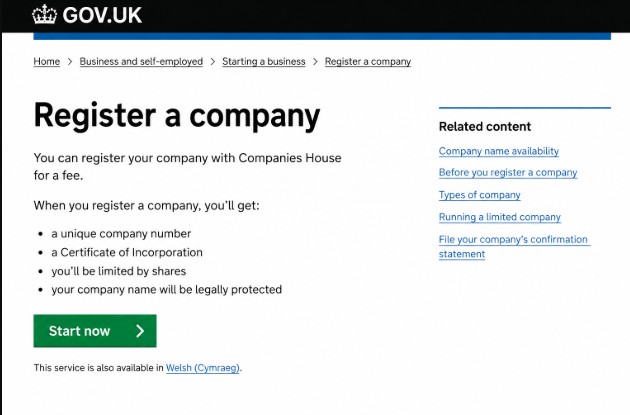
Incorporating a new UK company requires completing identity verification via GOV.UK One Login, selecting an available business name, appointing directors and PSCs, providing a physical registered office, and paying the official incorporation fee.
Steps to Register a New Company
-
Verify Identity: Complete individual identity verification using the GOV.UK One Login system to obtain a unique personal code.
-
Select Business Structure: Choose between a private company limited by shares, limited by guarantee, or an LLP.
-
Choose Company Name: Ensure the requested company name is available and complies with statutory naming rules.
-
Appoint Officers & PSCs: Provide details for at least one director and identify Persons with Significant Control (holding over 25% ownership or voting rights).
-
Set Registered Office & Email: Supply an appropriate physical office address (no PO Boxes permitted) and an appropriate registered email address.
-
Adopt Constitutional Documents: Submit the Memorandum and Articles of Association.
-
Pay Incorporation Fee: Complete the required statutory fee (£100 standard digital filing fee as set by official GOV.UK Companies House fee schedules). Once approved, the registrar issues an official Certificate of Incorporation.
Upcoming Changes in Companies House UK
As part of the ongoing regulatory company crackdown driven by the Economic Crime and Corporate Transparency Act (ECCTA), Companies House has implemented mandatory identity verification, expanded querying powers, software-only account filings, and stricter registered office rules.
ECCTA Reform Checklist
-
Mandatory Director & PSC Identity Verification: All directors, Persons with Significant Control, and document filers must complete mandatory identity verification checks using GOV.UK One Login or Authorised Corporate Service Providers (ACSPs).
-
Enhanced Querying Powers: Companies House has expanded powers to query, reject, or remove inaccurate, false, or suspicious filings, backed by criminal sanction enforcement.
-
Transition to Software-Only Filing: The traditional WebFiling portal for annual accounts is gradually being phased out in favor of direct software-only digital filings to ensure data accuracy and standard formatting.
-
Removal of Abbreviated Accounts: Micro and small entities will no longer be permitted to file abridged/abbreviated accounts, requiring full profit-and-loss balances to be recorded.
-
Strengthened Registered Address Rules: Companies must maintain a physical office address where documents can be acknowledged; virtual addresses without physical receipt mechanisms and PO Boxes are strictly disallowed.
Conclusion
Navigating UK corporate records no longer requires specialized legacy software or outdated testing links.
By utilizing the unified GOV.UK digital infrastructure, businesses and researchers can maintain high standards of due diligence, verify compliance, and access transparent financial data efficiently.
Disclaimer: This article is for informational purposes only and does not constitute legal, financial, or professional corporate compliance advice.
FAQ
Can I access Companies House beta uk free of charge?
Yes. Basic company searches, director lookups, and historical PDF document downloads are completely free and do not require any subscription or payment.
Where can I find the official GOV.UK Companies House portal?
All official services are hosted directly on the GOV.UK domain under the Find and update company information service, replacing all older beta subdomains.
Do I need an account to run a Companies House search?
No. Anonymous public searching is fully supported for all basic entity lookups, filing history reviews, and document retrievals without requiring a login.
How do I check a company registered email address?
Registered email addresses required under recent legislation are maintained securely for administrative communication and are not displayed on public search pages.
What is a Person with Significant Control on the register?
A Person with Significant Control is an individual or eligible entity holding more than 25 percent of shares or voting rights within a registered company.
Can I access data programmatically using an application interface?
Yes. Developers and corporate researchers can utilize official application programming interfaces and bulk data products provided through the corporate developer hub.
How often is the public corporate database updated?
The public register updates in real time as companies submit digital filings and statutory changes through secure online administrative portals.
What happened to legacy search tools like WebCheck?
Legacy tools have been retired and fully replaced by the unified digital infrastructure of Companies House Services and modern GOV.UK portals.