
How Much Tax Do You Pay on Dividends? UK Rates, Allowance and Corporation Tax Rules
Dividend tax is the UK income tax charge that applies once a limited company distributes its post-tax profit to shareholders as a dividend, rather than a fresh tax on the company itself. For the 2026/27 tax year, the rate is 10.75%, 35.75% or 39.35% depending on income band, above a £500 tax-free allowance.
Key takeaways
- Dividend tax for 2026/27 is 10.75%, 35.75% or 39.35% by income band, above a £500 tax-free allowance, unchanged in structure since the last Budget adjustment.
- Companies do not pay Corporation Tax on dividends, since dividends come from profit already taxed at the corporate level.
- From 2025/26, close company directors must report their own company’s dividends separately from other dividend income on their Self Assessment return.
How much tax do you pay on dividends as a company owner?
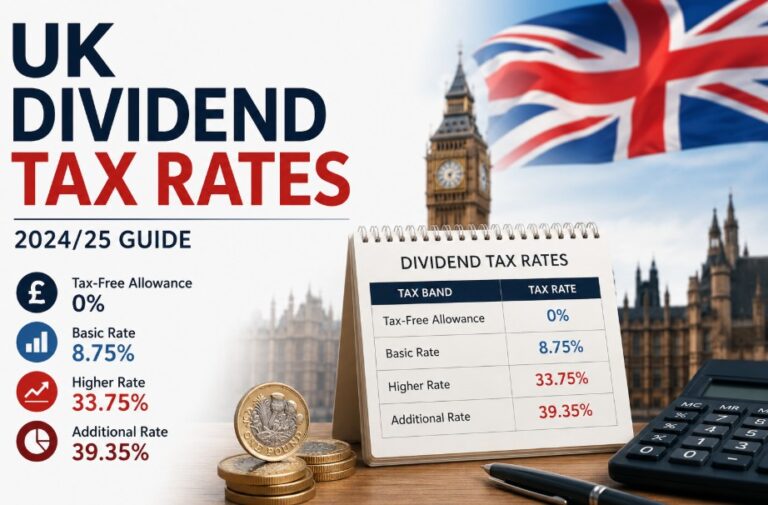
The dividend tax rate that applies depends on which income tax band a shareholder’s total income falls into, not simply on the size of the dividend received. For the 2026/27 tax year, three rates apply above the £500 dividend allowance.
| Income tax band | Taxable income | Dividend tax rate 2026/27 |
|---|---|---|
| Basic rate | £12,571 to £50,270 | 10.75% |
| Higher rate | £50,271 to £125,140 | 35.75% |
| Additional rate | Over £125,140 | 39.35% |
Rates apply once income exceeds the personal allowance and dividend allowance combined.
These rates rose by 2 percentage points at basic and higher rates from 6 April 2026, following the Autumn 2025 Budget from HM Treasury. The additional rate stayed unchanged at 39.35%. For a director drawing dividends within the basic rate band, that increase adds roughly £20 of tax for every £1,000 taken as dividends.
Whether tax is actually due at all depends on how much of the £500 allowance and the personal allowance remain unused for the year.
When do you actually start paying tax on your dividends?
Directors can receive dividend income tax-free until two allowances are used up: the £500 dividend allowance, and whatever remains of the £12,570 personal allowance after other income.
You only start paying tax once both allowances are used up. Here is how they apply to your income:
-
Dividend income covered by any unused personal allowance is tax-free.
-
The next £500 of dividend income is covered by the dividend allowance, regardless of total income.
-
Dividend income beyond both allowances is taxed at the rate matching the income tax band it falls into.
The dividend allowance is a £500 nil-rate band that applies to dividend income only, on top of the personal allowance.
Every UK taxpayer receives it regardless of income level, though it cannot be carried forward into a later year, and it does not apply to dividends already sheltered inside a Stocks and Shares ISA, whatever the size of the portfolio.
A shareholder whose only income is dividends will not owe any tax until total dividend income passes £13,070, the personal allowance and dividend allowance combined. Someone with salary or other income first uses up their personal allowance there, leaving less of it available to shelter dividends.
Do you pay corporation tax on your dividends too?
No, dividends aren’t subject to Corporation Tax, because they’re paid from profit already taxed. The two charges apply to different entities at different stages, so you aren’t being taxed twice on the exact same money.
-
A company earns profit and pays Corporation Tax on it first.
-
What remains afterwards becomes distributable, retained profit, the pool dividends are paid from.
-
When a dividend is declared, no further Corporation Tax applies, since it isn’t a deductible business expense either.
-
The shareholder receiving the dividend then pays personal dividend tax on it, at the rates set out above.
Companies House holds the filed accounts confirming whether a company genuinely has distributable reserves to pay a dividend from. A dividend declared without sufficient reserves is unlawful, regardless of the shareholder’s personal tax position, and can be clawed back by the company later.
How to calculate dividend tax?
Working out a dividend tax bill means applying the bands above in order, once both allowances have been used. To get a clearer picture of the mechanics behind these payments, it helps to review how dividends Work before crunching the numbers.
Take a generic illustration: on £30,000 of dividend income, with no other income in the year, £12,570 is covered by the personal allowance and a further £500 by the dividend allowance. That leaves £16,930 taxable, all within the basic rate band. At 10.75%, that produces a dividend tax bill of £1,819.98.
Higher earners work through the same steps, but more of their dividend income falls into the 35.75% or 39.35% bands, because HMRC treats dividend income as the final slice of total income; salary and other earnings use the lower bands first.
Anyone with salary, savings interest, and dividends together needs to total all three before applying the bands, since dividend tax depends on overall income, not on dividend income viewed in isolation.
Additionally, dividend income counts towards your total adjusted net income. If your combined income pushes past £100,000, your £12,570 Personal Allowance is reduced by £1 for every £2 over the threshold, which significantly increases your effective tax rate before you even reach the additional dividend tax band.
Who needs to tell HMRC and what has changed?
Whether HMRC needs to be told depends on how much dividend income was received in the year.
- Dividend income under £500: usually no need to contact HMRC, unless already filing a return for another reason.
- Dividend income between £500 and £10,000: tell HMRC directly, by adjusting a tax code or including it on a Self Assessment return.
- Dividend income over £10,000: a Self Assessment return is compulsory, with registration due by 5 October after the tax year ends.
A change catching directors off guard applies from 2025/26: directors of close companies, those controlled by five or fewer people, must now report dividends from their own company separately from other dividend income, including its name, registration number and shareholding percentage, per guidance from the Low Incomes Tax Reform Group, an initiative of the Chartered Institute of Taxation.

Can you legitimately reduce what you pay?
Some legitimate planning can reduce a dividend tax bill, without needing to change how much profit a company distributes in the first place.
- Holding shares inside a Stocks and Shares ISA removes dividend income from tax entirely, regardless of amount received.
- Timing dividend declarations across two tax years, where cash flow allows, can make use of two separate £500 allowances instead of one.
- Balancing salary against dividends changes your overall tax and National Insurance position. Because the optimal mix shifts as rates and allowances change, this is a standard review a qualified accountant should carry out for you annually.
None of these steps change the dividend tax rates themselves. They change how much falls due and when it falls due. None of it requires speculative planning, as each option already sits safely within HMRC’s published rules.
Conclusion
Dividend tax for 2026/27 runs at 10.75%, 35.75% or 39.35% by income band, above a £500 tax-free allowance, and applies identically everywhere in the UK.
It sits separately from Corporation Tax already paid on company profit. Getting the newer close-company reporting rules right matters as much as knowing the rate itself.
Disclaimer: Dividend tax rates and thresholds reflect the rules published for the 2026/27 tax year. Individual circumstances vary, and confirming current figures with HMRC or a qualified accountant before making decisions is recommended.
FAQ
Do you pay National Insurance on dividends?
No. Dividend income is exempt from both employee and employer National Insurance contributions. This is one reason many director-shareholders combine a modest salary with dividends, since salary above the National Insurance threshold attracts NI in a way dividends never do.
Is dividend tax different if you live in Scotland?
No. Scottish income tax sets its own bands for salary and pension income, but dividend tax rates and thresholds are set by Westminster and apply identically across the whole of the UK, Scotland included.
What happens if you don’t report dividend income over the allowance?
HMRC can charge penalties and interest on unpaid tax, calculated from the date it was originally due. Directors who miss the newer close-company reporting requirement risk the same penalties as those who fail to declare dividend income at all.
Can a company pay dividends without making a profit?
No. Dividends can only be paid from distributable reserves, accumulated, realised profit after tax and expenses. A dividend paid without sufficient reserves is unlawful, regardless of the shareholder’s personal tax position.