UK Government Bank Account Tax Collection: Rules and Rights
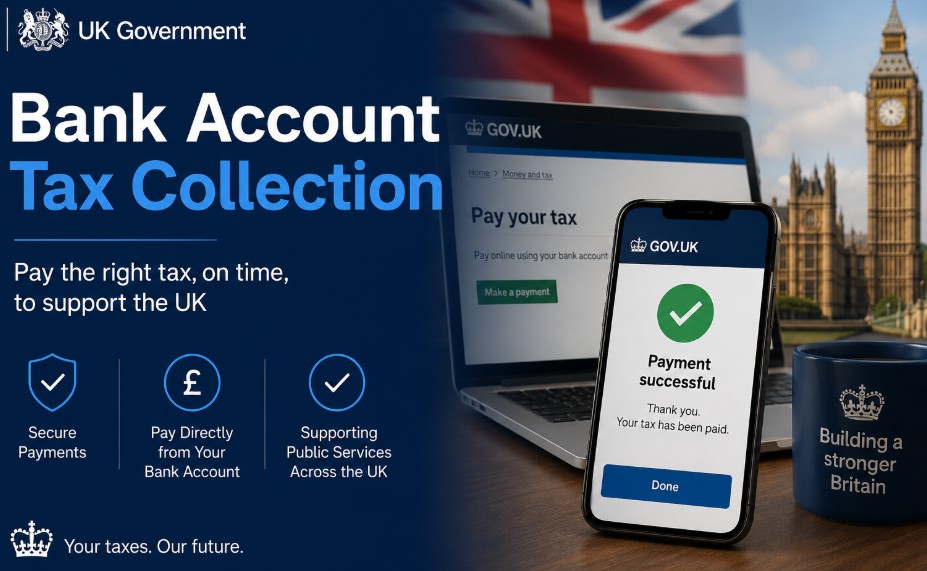
UK government bank account tax collection allows HMRC to recover unpaid liabilities directly via voluntary Direct Debits or forced administrative enforcement under the Direct Recovery of Debts scheme.
This legal power permits direct account deductions without a court order, subject to strict statutory preconditions and minimum debt thresholds.
How Much Income Tax Does the UK Government Collect?
The scale of public financing in the United Kingdom underpins the rigid nature of state collection systems.
According to the HMRC Annual Report and Accounts, total UK tax receipts reached £828.9 billion per fiscal year, with income tax contributing a record £276.1 billion to the public purse.
The collection of these vast sums relies heavily on automated digital banking infrastructure. For small businesses and self-employed individuals, this fiscal pressure means that compliance windows are non-negotiable.
Because the government manages such large-scale capital flows, HMRC deploying automated debt-tracking algorithms across all sectors to flag outstanding balances and coordinate collection efforts is a standard operational reality.
How does the UK Government Bank Account Tax Collection happen?
UK government bank account tax collection happens through three distinct mechanisms: voluntary bank transfers, collection at source via Pay As You Earn (PAYE) adjustments, and forced administrative seizures via the Direct Recovery of Debts (DRD) scheme.
The chosen method depends entirely on whether a taxpayer actively engages with automated notifications or continuously ignores payment deadlines.
Voluntary UK Government Bank Account Tax Collection Methods
The vast majority of tax revenue is processed smoothly through digital banking infrastructure:
-
Direct Debits: Pre-authorised, automated schedules set up via your HMRC online account for recurring liabilities (VAT, PAYE, Self Assessment).
-
Manual Transfers: Taxpayer-initiated electronic payments via Faster Payments, CHAPS, or Bacs sent directly to HMRC’s official Barclays accounts using a unique 11-character payment reference.
Collection at Source (PAYE Adjustment)
For smaller personal debts, outstanding interest, or pensioners, HMRC avoids direct access to accounts. Instead, they alter your tax code to instruct your employer or pension provider to deduct the outstanding tax directly from your gross income.
Conversely, when these automatic coding adjustments result in a surplus, earners frequently check if HMRC automatically refunds overpaid tax through the same dynamic payroll systems.
Forced UK Government Bank Account Tax Collection via DRD Enforcement
If a taxpayer ignores repeated warnings regarding an established debt of £1,000 or more, HMRC can bypass standard permission and seize funds directly from personal or business bank accounts using a strict, multi-step pipeline:
-
The In-Person Check: A mandatory, face-to-face visit by an HMRC field agent is required to assess vulnerability and offer a final opportunity to negotiate an installment plan (Time to Pay agreement).
-
The Asset Freeze: HMRC issues a Hold Notice to your bank, freezing the debt amount. By law, this action must leave at least £5,000 untouched across your accounts to cover immediate living costs or payroll.
-
The Final Transfer: The taxpayer has a statutory 30-day window to object. If no resolution is reached, a Deduction Notice compels the bank to release the frozen funds directly to the state.

Can HMRC Take Money From My Bank Account Without Permission?
Yes, HMRC can legally take money from your bank account without your permission or a prior court order under the Direct Recovery of Debts (DRD) statutory framework.
This enforcement policy permits the state to secure unpaid tax and customs liabilities directly from your personal or business checking and savings balances.
In practice, this mechanism is reserved exclusively for non-compliant debtors who have ignored repeated attempts at communication. HMRC cannot simply access an account because a single deadline was missed; a lengthy, multi-step statutory collection process must occur first.
Understanding HMRC Direct Recovery of Debts Powers
The Direct Recovery of Debts administrative power allows HMRC to recoup tax debts directly from bank and building society accounts, including joint accounts.
This policy applies to individuals, sole traders, and limited companies in England, Wales, and Northern Ireland. Equivalent summary warrant processes exist within the Scottish legal system to achieve identical outcomes.
Can the Government Take Your Money From Your Bank Account in a Crisis in the UK?
No, the UK government cannot arbitrarily confiscate or take money from your private bank account to fund state deficits during economic or macroeconomic crises.
Legitimate bank account deductions are strictly bound to individual, quantified tax debts or court-mandated civil judgments, rather than generalized state financial emergencies.
Legal Pre-conditions for Official HMRC Bank Account Withdrawals
Before HMRC can issue an official administrative order to a financial institution to release your funds, they must legally satisfy five strict statutory preconditions. If any of these legal criteria are unmet, the attempted bank account withdrawal is unauthorized and unlawful.
-
Minimum Debt Threshold: The taxpayer must owe a confirmed, undisputed tax or customs debt of £1,000 or more.
-
Formal Notice Sequence: HMRC must have officially generated an assessment and issued multiple formal demands for payment via post.
-
Mandatory Field Agent Check: A formal face-to-face identification and debt-review visit must be conducted by an HMRC field agent to check for personal vulnerability.
-
Absence of Alternative Resolution: The debtor must have failed or refused to arrange a viable alternative payment resolution, such as a Time to Pay agreement.
-
Protected Asset Buffer: The attempted collection action must legally leave a total balance of at least £5,000 untouched across the debtor’s combined accounts to cover essential food, housing, and operational costs.
Can the Government Check Your Bank Account in the UK HMRC?
Yes, the UK government can actively check your bank account records through automated data-gathering powers granted under Schedule 23 to the Finance Act 2011.
This statutory framework legally mandates financial institutions to share customer data with HMRC to ensure systemic tax compliance.

How does the UK Taxing Bank Accounts System monitor interest and Balances?
The automated system for UK taxing bank accounts monitors interest and balances by extracting automated annual data feeds directly from high street banks and building societies.
This continuous financial tracking pipeline reveals exactly how HMRC collects tax on savings interest when yields accumulate outside of standard tax wrappers.
Discrepancy Flags
By law, domestic financial institutions must submit comprehensive annual reports to HMRC detailing all interest payments earned by account holders.
While many savers wonder whether they must notify HMRC of savings interest manually, any omission of this automated bank data from a Self Assessment tax return will instantly trigger central processing discrepancy flags for a formal compliance audit.
Data Sharing Between UK Financial Institutions and HMRC
Under the Common Reporting Standard (CRS) and domestic legislation, data sharing is continuous. Financial institutions must provide balance details and transaction footprints when requested via formal Information Notices.
When reviewing decisions regarding tax inquiries, investigators regularly compare an individual’s declared lifestyle outgoings against their actual account cash flow to discover hidden revenue streams.
Can Debt Collectors Access Your Bank Account in the UK?
No, private debt collection agencies working on behalf of commercial creditors cannot access, freeze, or take money from your bank account without first obtaining a County Court Judgment (CCJ) followed by a Third Party Debt Order.
They do not share the immediate administrative powers held by state agencies.
Crown Creditor Privileges
In contrast, HMRC acts as a Crown creditor with administrative enforcement powers, meaning they do not require a prior court order to initiate account actions if their internal statutory preconditions are fully met.
What Are the UK Pensioners Bank Rules for Tax Deductions?
UK pensioners are subject to the same underlying tax collection laws as standard earners, but specific administrative protections apply to protect retirement funds from sudden financial instability.
HMRC guidelines prioritize automated source adjustments over aggressive account enforcement for older demographics.
Understanding the UK Pensioners HMRC Deduction Over 65
For individuals over the age of 65 receiving the State Pension alongside private pensions, income tax is rarely collected directly from a bank account via enforcement. Instead, HMRC utilizes the Pay As You Earn system to adjust the individual’s tax code.
By applying the deduction directly at the source, such as through a private pension provider or an annuity fund, the government collects the required tax before the net income ever arrives in the consumer’s bank account.
Safeguards Protecting Retiring and Elderly Taxpayers
If a pensioner incurs a direct tax debt (for instance, via complex investment yields or property income), HMRC’s Debt Management and Banking unit is subject to strict public sector equality duties.
As of 2026, operational guidelines mandate that agents assess whether a taxpayer is classified as vulnerable before initiating any account freezing actions.
If vulnerability is established, the case is routed to an internal extra-support team to negotiate manageable installment plans.
How Much Money Can I Keep in My Bank Account Without Tax in the UK?
There is no legal limit on the total volume of capital you can hold within a standard UK bank account. Tax is levied exclusively on the income or interest generated by that capital, not on the static balance itself.
Key Methods to Minimize Your Bank Account Tax Exposure
To maximize your liquid savings and legally protect your bank account assets from unexpected tax bills, utilize the following statutory allowances:
-
Utilize Your Personal Allowance: Ensure your total annual income from all sources remains within the £12,570 tax-free personal allowance threshold.
-
Maximize the Personal Savings Allowance: Basic-rate taxpayers can earn up to £1,000 in bank account interest entirely tax-free each year.
-
Understand Higher-Rate Caps: Higher-rate (40%) taxpayers see their tax-free interest allowance reduced to £500 per annum.
-
Leverage Cash ISAs: Deposit up to £20,000 annually into an Individual Savings Account where all growth and interest remain completely exempt from UK tax.
-
Monitor Business Dividends: Separate personal savings from retained business profits to prevent cross-contamination of tax liabilities.
-
Track Premium Bond Holdings: Consider National Savings and Investments (NS&I) Premium Bonds up to £500,000, as all prize winnings are tax-exempt.
Current Account Limits vs Taxable Interest Thresholds
While you can hold hundreds of thousands of pounds in a standard current account, doing so outside of a tax wrapper risks incurring an unexpected tax bill if the account pays interest.
High street banks automatically calculate interest yields and report them directly to the state, meaning any yield above your Personal Savings Allowance (PSA) will be taxed at your marginal rate.
Is It Safe to Have More Than £85,000 in a Bank in the UK?
From a capital security standpoint, the Financial Services Compensation Scheme (FSCS) protects deposits up to £85,000 per person, per authorized financial institution.
If a banking institution fails, the state guarantees reimbursement up to this threshold. Any capital held in a single institution above £85,000 lacks statutory protection and could be subject to bank bail-in resolutions during an insolvency event.
Legitimate HMRC Collections vs Fraud Seizures
Distinguishing between valid state collection activity and criminal cyber-fraud is essential for small business security. The following table contrasts legitimate administrative actions against common fraudulent tactics.
| Operational Feature | Legitimate HMRC DRD Action | Fraudulent Phishing / Scam Attempt |
| Initial Contact Method | Formal postal letters and physical agent visits. | Unexpected SMS texts, automated WhatsApp messages, or urgent emails. |
| Required Court/Legal Notice | Requires formal 14-day statutory warnings and face-to-face review. | Demands immediate payment within minutes under threat of imminent arrest. |
| Minimum Collection Debt | Restricted to outstanding tax debts of £1,000 or higher. | Can target arbitrary amounts, often requesting strange, unverified fees. |
| Destination Bank Account | Only to official, verified HM Revenue and Customs bank accounts. | Directs funds to random, shifting personal or overseas clearing accounts. |
| Minimum Protected Account Buffer | Legally required to leave at least £5,000 untouched in your accounts. | Attempts to drain the entirety of the financial asset balance instantly. |
Protecting Your Business Cash Flow from Forced Collections
The most effective legal shield to protect your business cash flow from forced account collections is immediate, proactive engagement with HMRC’s Debt Management and Banking teams, the moment a liability becomes unpayable.
The Danger of Silence
A common pattern among small firms facing cash flow strain is ignoring communications from state tax teams.
This silence does not delay the process; instead, it accelerates the escalation toward automated enforcement, hold notices, and direct account seizures under the DRD scheme.
Implementing Time to Pay Arrangements
To protect your enterprise from sudden account disruptions, maintain an audit-ready trail of all incoming and outgoing capital.
If an unexpected tax bill threatens your operational viability, contact HMRC immediately to establish a formal Time to Pay (TTP) arrangement before the collection reaches the enforcement stage.
By demonstrating an active commitment to compliance and utilizing these available statutory protections, you can maintain full control over your business banking infrastructure.
Verified against official HM Revenue and Customs (HMRC) operational debt management frameworks and Schedule 23 statutory data-gathering powers.

FAQ
What happens if you put a large amount of money in your bank account?
The bank will log the transaction and cross-reference it against your known economic profile. Under anti-money laundering regulations, unexplained cash deposits may trigger a Suspicious Activity Report (SAR) to the National Crime Agency, which HMRC can access during an audit.
Can banks seize your money if the economy fails in the UK?
Under the Banking Act 2009, failing UK banks can utilize bail-in mechanisms to stabilize their balance sheets by converting uninsured deposits over £85,000 into equity. Sums below the £85,000 FSCS threshold remain fully protected by the state.
How does a Time to Pay agreement stop an active bank withdrawal?
Securing an official Time to Pay agreement instantly halts ongoing Direct Recovery of Debts actions. Once HMRC formally accepts an installment plan, the statutory debt collection process is suspended, provided you consistently maintain the newly agreed monthly payment schedules.
Can HMRC freeze a business bank account without notice?
No, HMRC cannot freeze an account without prior notice. Under the strict DRD operational guidelines, the state must issue a formal warning and attempt to resolve the debt via phone, post, or physical field visits before a freeze notice is served to a bank.
Does HMRC collect tax directly from joint bank accounts?
Yes, HMRC can access joint accounts during collection actions, but they must calculate the debtor’s specific share of the equity. If the non-debtor partner can prove the funds belong exclusively to them, those assets are legally excluded from seizure.
What is the absolute minimum amount HMRC must leave in your account?
HMRC must leave a guaranteed minimum balance of £5,000 across your liquid financial accounts. This buffer is legally protected to ensure that an individual or business owner can meet essential living costs, food purchases, and immediate payroll obligations.
Can HMRC view my daily debit card transactions?
HMRC does not monitor individual daily transactions in real time. However, if your business is selected for a formal tax inquiry, investigators can demand full, itemized bank statements covering years of history to verify the legitimacy of your business expenses.