How to Secure a Short Term Business Loan for Your UK Small Business
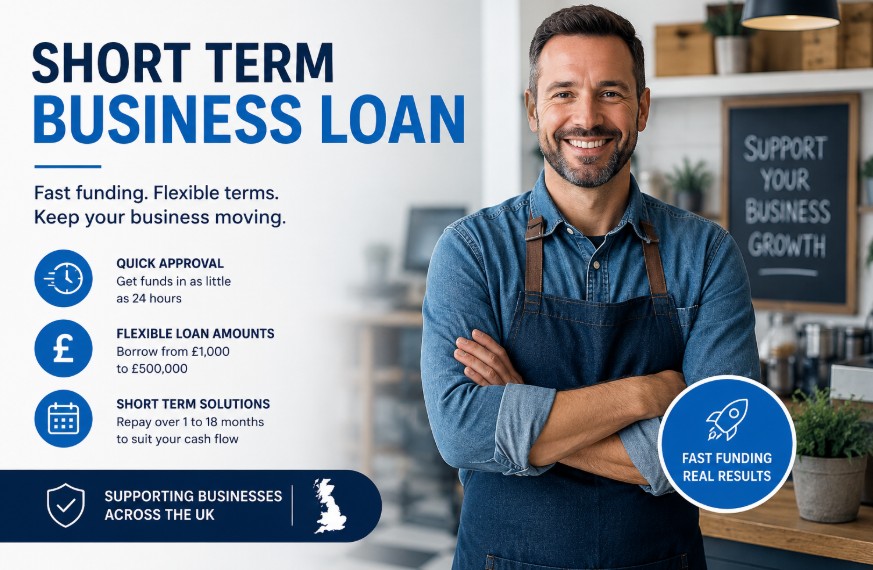
A short term business loan is a fast, flexible commercial finance facility built to give UK small and medium-sized enterprises instant working capital, featuring streamlined digital applications and rapid repayment windows stretching from three to eighteen months.
As of 2026, UK small business owners navigating fluctuating economic conditions, seasonal stock demands, and sudden tax liabilities frequently look to short-term commercial finance as a practical alternative to rigid, long-term bank lending.
Key Takeaways
-
Short-term business loans provide UK companies with working capital over compressed repayment schedules spanning three to eighteen months.
-
Alternative digital lenders frequently quote monthly interest rates ranging from 1.5% to 3.9% per month rather than standard annual percentage rates.
-
Most short-term commercial facilities require a Personal Guarantee from company directors, legally binding personal assets in the event of default.
-
Common business drivers include bridging cash flow gaps, fulfilling seasonal inventory requirements, and managing unexpected HM Revenue and Customs liabilities.
What is considered a short term business loan?
For small business owners, a short term business loan is defined as a commercial finance facility that provides a fast injection of working capital with an accelerated application process and a compressed repayment window, typically spanning three to eighteen months.
Unlike rigid five-year bank loans or multi-year commercial mortgages, these facilities are built specifically for agility.
Fintech lenders leverage open banking data and live digital accounting feeds to review a company’s financial health in minutes, allowing funds to land in a business bank account within 24 hours.
They function as a tactical instrument rather than a permanent capital structure, deployed primarily when immediate liquidity is needed to maintain daily operations or when scaling past the foundational funding secured via UK Start Up Loans.

How does it work for UK small businesses?
Once approved, funds can land in a business bank account within 24 hours. Borrowers then repay the principal amount plus agreed interest or flat fees through regular automated debits.
| Facility Type | Typical Term | Security Required | Cost Structure | Speed of Funding |
|---|---|---|---|---|
| Short-Term Business Loan | 3 to 18 months | Personal Guarantee | 1.5%–3.9% per month | Within 24 hours |
| Merchant Cash Advance | 3 to 12 months | Card terminal redirection | Fixed factor rate (1.1 to 1.5) | 24 to 48 hours |
| Business Overdraft | Open / Renewable | Unsecured or asset-backed | Base rate + 3% to 8% margin | On-demand access |
| Invoice Finance | Until invoice settlement | B2B outstanding invoices | 1.5%–3.5% service fee per 30 days | 2 to 5 business days |
How long is a short term business loan?
Repayment schedules for short-term commercial finance usually range from 3 months to 1.5 years (18 months).
-
Ultra-Short Facilities (3 to 6 months): Frequently utilized by small business owners to bridge sudden cash flow gaps, pay quarterly VAT or corporation tax bills to HMRC, or fund immediate inventory purchases.
-
Extended Short-Term Facilities (6 to 18 months): Suited for larger working capital requirements, smoothing out seasonal trading dips, or managing extended client payment terms without putting pressure on baseline operations.
Is a short-term loan a good idea?
Taking out a short-term loan is a good idea when used as a tactical, revenue-generating tool rather than a patch for chronic, long-term unprofitability.
-
When it works well: It is an effective strategy when the return on investment clearly outpaces the cost of borrowing, such as purchasing bulk inventory at deep wholesale discounts ahead of peak trading seasons, fulfilling a lucrative corporate contract, or clearing an urgent tax bill to dodge severe HMRC penalties.
-
When to avoid it: It is generally a poor idea if your business is experiencing structural revenue declines or if you cannot accurately forecast the cash flow required to meet compressed monthly instalments. Always audit your short-term liquidity projections before committing to a facility.
Is a business loan tax deductible in the UK?
In the UK, the rules regarding business loans and tax relief are split between the capital borrowed and the cost of borrowing:
-
Capital Repayments Are Not Tax-Deductible: The physical lump sum you receive when the loan lands in your account is not counted as taxable income, and paying back the principal amount does not reduce your taxable profit.
-
Interest and Fees Are Tax-Deductible: The interest charged on the loan, along with associated lender arrangement fees, is generally allowable business expenses for Corporation Tax or Income Tax purposes, provided the borrowing is used wholly and exclusively for business purposes.
Tip: Always keep detailed records of how the borrowed funds are deployed across your business operations to ensure full compliance with HMRC guidelines.
What are the eligibility criteria for a short term business loan?
Alternative digital lenders focus heavily on current trading performance and monthly revenue generation rather than strict legacy asset hurdles. To qualify, small business owners typically need to meet the following criteria:
-
Active Business Registration: The entity must be actively registered with Companies House as a limited company or LLP, or operating with a recognized sole trader status within the UK.
-
Trading History: Demonstrate a minimum trading history, usually ranging from 3 to 6 months depending on the lender’s risk appetite.
-
Consistent Turnover: Prove a reliable monthly turnover, frequently set at a threshold between £4,000 and £10,000 through business bank accounts or merchant card terminals.
-
Personal Guarantee: Provide a Director’s Personal Guarantee (PG), binding a majority shareholder or director to take personal responsibility for the debt if the business defaults.
-
Digital Verification Capability: Submit recent business bank statements securely via open banking APIs for rapid automated credit scoring.
What is the easiest small business loan to get approved for?
For small business owners seeking the path of least resistance, unsecured digital Small Business Loans and merchant cash advances (MCAs) are generally the easiest to get approved for.
-
Why they are accessible: Rather than demanding physical collateral or exhaustive historical paperwork, online lenders evaluate real-time performance through automated open banking feeds and digital accounting software.
-
Merchant Cash Advances: Particularly easy to secure if your retail or hospitality business processes a high volume of card terminal transactions, as repayments scale automatically as a fixed percentage of your daily card sales rather than a fixed monthly bill.
-
Key Caveat: While approval is fast and lenient regarding historical credit scores, the trade-off for accessibility is a higher cost of capital compared to mainstream high-street bank loans.
How much do short-term business loans cost?
Short term business loan typically cost between 1.5% and 3.9% per month in interest, which can compound into an effective annual percentage rate (APR) exceeding 40% to 50%, alongside potential upfront arrangement fees and transfer charges.
1. The Trap of Monthly vs. Annual Interest
Alternative digital lenders typically quote interest every month(e.g., 1.5% to 3.9% per month) rather than an Annual Percentage Rate (APR).
-
The Illusion: A 2% monthly rate sounds small and manageable at first glance.
-
The Reality: When you compound that monthly rate over a 12-month period, the effective APR can easily skyrocket past 40% to 50% (or even higher). Always calculate the annualized cost before signing, so you know exactly how much extra capital you are returning to the lender.
2. Common Hidden Fees to Watch For
Beyond the headline interest rate, commercial loans often carry additional charges embedded in the terms and conditions. Look out for:
-
Arrangement / Underwriting Fees: A one-off administrative fee charged by the lender for setting up the facility, often deducted directly from the loan amount before it hits your account.
-
Electronic Transfer Charges: Fees for expedited or same-day fund disbursements.
-
Early Repayment Penalties: Fees charged by traditional lenders if you try to pay off the principal balance ahead of schedule. (Note: Look for progressive fintech platforms like Iwoca or Cubefunder that explicitly waive these penalties, allowing you to save money by clearing your debt early).
-
Default or Late Payment Fees: Heavy financial penalties triggered if an automated repayment fails due to a temporary cash flow dip.
3. Commercial Lending vs. Consumer Protection
Unlike consumer loans, which are tightly regulated by bodies like the Financial Conduct Authority (FCA) with strict caps and transparent disclosures, commercial lending operates under different rules.
Because business loans assume the borrower is acting in a professional capacity, pricing models can vary wildly from lender to lender, similar to how alternative consumer funding products require careful comparative evaluation, like exploring structured Loans Like Best Egg. Always look at the total repayable amount rather than just the monthly interest rate.
Always look at the total repayable amount rather than just the monthly interest rate. Ensure that the return on investment generated by the borrowed capital significantly outweighs the overall cost of the facility before committing your business to any agreement.
What are the pros and cons of short term business loan?
Evaluating commercial finance requires balancing the need for speed against the total cost of borrowing. Business owners should weigh the following advantages and disadvantages before signing a facility agreement:
| Pros (Advantages) | Cons (Disadvantages & Risks) |
|---|---|
| Rapid Access to Capital: Automated underwriting allows approvals in minutes, with funds hitting your account within 24 hours. | Compressed Repayment Pressure: Short windows demand frequent, larger instalments (monthly/weekly) that can strain tight budgets if sales dip. |
| Minimal Paperwork: Direct integration with open banking and software like Xero replaces exhaustive multi-year business plans. | Higher Cost of Borrowing: Monthly interest rates (1.5% to 3.9%) can compound into a high effective APR compared to traditional bank loans. |
| Fewer Formal Collateral Requirements: Facilities are typically unsecured, avoiding the need to tie up commercial real estate or physical property. | Personal Liability Risk: Lenders require a Director's Personal Guarantee, legally binding your personal assets if the business enters default. |
| Repayment Flexibility: Progressive lenders often waive early repayment penalties, letting you clear balances early to reduce total interest. | Strict Eligibility & Turnover Hurdles: To qualify for these terms, you must prove consistent monthly revenue and a minimum trading history (usually 3 to 6 months). |
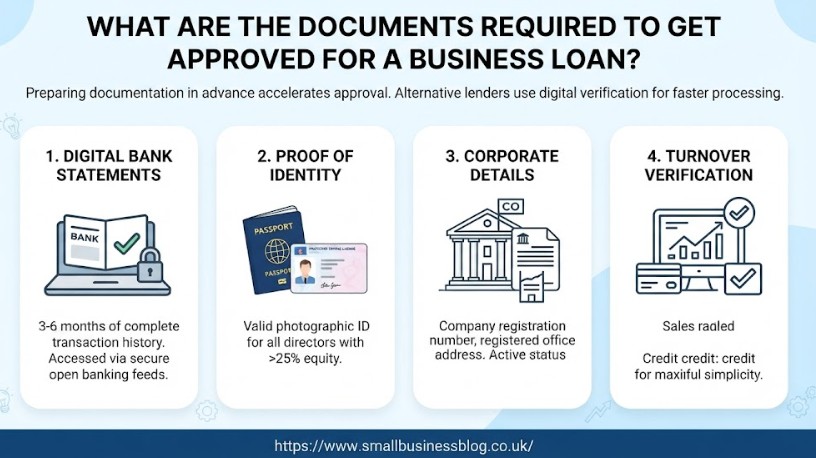
What are the documents required to get approved for a business loan?
Preparing documentation in advance accelerates the underwriting process, transforming a multi-day wait into a same-day disbursement. Alternative lenders require minimal paperwork compared to traditional institutional lenders, focusing heavily on digital verification.
-
Digital Bank Statements: Three to six months of complete business bank transaction history accessed via secure open banking feeds.
-
Proof of Identity: Valid photographic identification (passport or photocard driving licence) for all directors holding over 25% equity.
-
Corporate Details: Company registration number, registered office address, and confirmation of active status via Companies House.
-
Turnover Verification: Recent merchant card processing statements or digital accounting software summaries (such as Xero or QuickBooks reports) if requested by the underwriter.
How to apply for short term business loan as a small business owner?
Applying for short-term commercial finance has evolved from a tedious weeks-long ordeal into a streamlined digital process. By leveraging open banking and automated underwriting, small business owners can typically complete the application and secure funding within 24 hours.
Follow this step-by-step guide to navigate the application process efficiently:
-
Audit Cash Flow: Calculate your exact funding need and verify your revenue can handle compressed repayments.
-
Gather Digital Docs: Prepare 3–6 months of bank statements, director IDs, and accounting reports (Xero/QuickBooks).
-
Compare Lenders: Shop around via digital platforms and connect your account securely through open banking APIs.
-
Review Total Cost: Calculate the total repayable amount rather than focusing solely on monthly rates.
-
Get Funded: Complete the quick online form, sign the Personal Guarantee, and receive funds within 24 hours.
Tips to improve your short-term business loan
To maximize your chances of approval, secure lower interest rates, and optimize your borrowing experience, small business owners should follow these practical steps:
-
Clean Up Your Open Banking Data: Ensure your business bank accounts reflect clean, consistent cash flow patterns for at least 3 to 6 months prior to applying, avoiding unarranged overdrafts or bounced payments.
-
Prepare Digital Documents in Advance: Have your company registration number, digital accounting reports (Xero or QuickBooks summaries), and ID verification ready to sync via open banking to trigger instant underwriting.
-
Shop Around via Specialized Brokers: Compare multiple direct alternative lenders using comparison platforms rather than settling for the first offer, ensuring you find a facility matching your exact trading cycle.
-
Prioritize Lenders with No Early Settlement Fees: Opt for forward-thinking providers (such as Iwoca or Funding Circle) that do not penalize you for paying off your balance early, allowing you to save significantly on total interest if your cash flow surges.
Conclusion
Short term business loans mean structured, rapid liquidity solutions for UK enterprise directors navigating 2026 economic shifts, matching compressed repayment terms directly against verified cash flow projections to prevent operational strain.
Reviewing multiple direct lenders and specialist brokers ensures access to the most competitive working capital terms suited to the enterprise’s financial profile.
Disclaimer: This article is for informational purposes only and does not constitute financial or legal advice; always consult a qualified advisor or check official regulatory guidance before entering into any commercial credit agreement.
FAQS
Can I get a loan for 3 months to cover a temporary cash flow gap?
Yes, numerous alternative finance providers offer ultra-short-term facilities starting at three months, specifically tailored to help small businesses navigate seasonal inventory purchases or temporary tax bills.
Can I get a business loan of £50,000 with bad credit?
Yes, borrowing £50,000 with an imperfect credit history is possible through specialist lenders that evaluate current monthly turnover and cash flow health more heavily than historical credit scores.
Are personal guarantees mandatory for all short-term company loans?
Most unsecured commercial lenders require at least one company director or majority shareholder to sign a Personal Guarantee, legally securing the corporate borrowing against personal assets.
How do merchant cash advances differ from standard short-term loans?
Merchant cash advances do not charge fixed monthly repayments or standard interest; instead, the provider takes an agreed fixed percentage of daily debit and card terminal sales until the advance is settled.
Can sole traders apply for short-term business finance?
While some fintech lenders restrict applications strictly to limited companies and LLPs, several major commercial providers actively welcome sole traders and traditional partnerships trading for over six to twelve months.