
Can You Park on a Single Yellow Line? The Ultimate UK Guide for Working Drivers
Can you park on a single yellow line in the UK? Yes, you can legally park on a single yellow line, but only outside of the restriction’s operational hours. During controlled hours, parking is strictly prohibited unless you qualify for a specific exemption, such as active commercial loading or holding a valid Blue Badge.
What Does One Solid Yellow Line Mean in the UK?
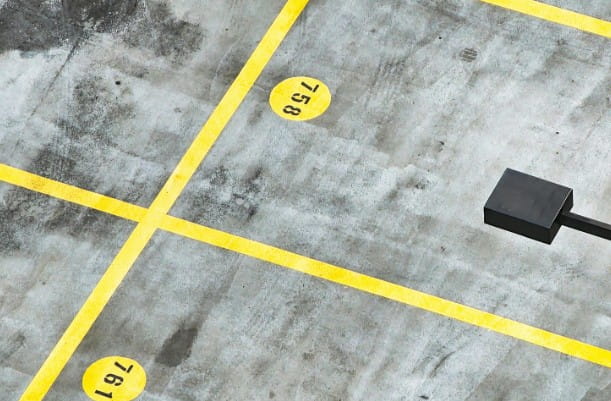
A single solid yellow line indicates a part-time controlled waiting restriction where parking is banned during specific hours of the day. Unlike double yellow lines, the restrictions are not permanent and rely on local timing windows determined by the highway authority.
Highway Code Rules and Legal Boundaries
According to Highway Code Section 238, these lines are placed by local highway authorities to improve road safety, prevent urban congestion, and keep traffic flowing smoothly at critical times of the day.
Waiting restrictions do not just apply to the main road surface. Legally, the restriction extends from the centre of the road all the way to the back of the highway boundary. This means you cannot bypass the rule by parking a commercial van or car on the pavement, verge, or footway next to the line.
Can You Park on a Single Yellow Line?
Yes, you can park on a thin single yellow line under the exact same operational hours and rules as a standard line, as line thickness carries no legal difference. Local authorities utilise slightly narrower markings in conservation areas or historic town centres to reduce visual pollution, but the legal restrictions, operational powers, and potential fines remain identical.
What Is the Difference Between Single and Double Yellows?
The primary difference is that single yellow lines enforce waiting restrictions during specific, timed windows, whereas double yellow lines enforce a strict 24/7 parking ban.
Single yellow lines require nearby roadside signs to explain their rules, while double yellow lines act as a universal warning requiring no upright signage.
| Feature | Single Yellow Line | Double Yellow Line |
| Core Legal Meaning | Waiting restrictions apply during specific, timed operational hours. | Waiting restrictions apply at all times (24/7, 365 days a year). |
| Signage Requirement | Must have a nearby small yellow time plate (unless inside a dense CPZ). | No upright signs required; the lines themselves act as a constant warning. |
| Evening & Weekend Rules | Usually open for free parking, subject to local time plate signs. | Strictly prohibited unless local seasonal variations are signposted. |
| Commercial Loading | Permitted during restricted hours unless kerb chevrons ban it. | Permitted unless kerb chevrons explicitly prohibit loading. |
The Double Yellow Line Rule Explained
The Double Yellow Line on the road represents a near-universal prohibition on parking. The statutory rule for double yellow lines dictates that they apply 24 hours a day, seven days a week, regardless of whether it is a Sunday or a Bank Holiday.
Can you sit in your car on double yellow lines?
No, you cannot sit in your car on double yellow lines, as sitting in the driver’s seat with the engine running still constitutes waiting under UK traffic law. Unless you are actively performing a continuous commercial loading operation or dropping off a passenger with mobility issues, a Civil Enforcement Officer can issue a fine immediately.
Similarly, you cannot legally wait for a client or passenger on double yellows.
When Can You Park on a Single Yellow Line Legally?
You can park on a single yellow line legally overnight, on weekends, or during public holidays, provided the local roadside time plate indicates the restricted hours are currently inactive. Outside of these controlled windows, the line defaults to an open, free parking zone.
The Signpost Rule and Time Plates
To determine the rules around parking on single yellow lines, you must locate the nearest upright yellow warning sign, known legally as a time plate. This sign specifies the exact hours and days when waiting is restricted.
For example, if a sign reads Mon–Fri 8am–6.30pm, the single yellow line functions exactly like a double yellow line during those hours. Outside of that window, it is perfectly legal to park there for free.
The Evening, Weekend, and Capital Rules
A common assumption among regional delivery drivers is whether they can park on a single yellow line after 6pm or after 7pm safely. While many councils run restrictions that end at 6:00 PM or 6:30 PM, this is not a blanket national rule.
In busy urban centres, high streets, or near entertainment venues, restrictions can easily run until 10:00 PM or even midnight.
Things get trickier when you drive into a Controlled Parking Zone (CPZ), which is common in dense residential areas and large cities like London.
In a CPZ, individual single yellow lines do not require their own standalone time plates. Instead, the operational hours are detailed on large entry signs at the boundary of the zone.
If you pass an entry sign for a CPZ that applies 8 AM to Midnight, every single yellow line within that zone inherits those exact operational hours.
Bank Holidays and Sundays
Can you park on a single yellow line on a Saturday, a Sunday, or a Bank Holiday in the UK? As a general rule, if the time plate specifies Mon–Fri, weekend parking is permitted. However, if the sign states All days or Mon–Sat, you must follow those instructions.
On public holidays and Bank Holidays, many drivers assume restrictions are lifted. In practice, local authorities treat Bank Holidays as normal working days unless the time plate explicitly states otherwise.
Unless the sign uses phrasing like Except Bank Holidays, always assume the standard weekday restrictions apply.

How Long Can You Sit or Park on a Single Yellow Line?
There is no specific statutory time limit when parking outside of controlled hours, but during active operational windows, the permitted stay for a non-exempt vehicle is zero minutes.
Civil Enforcement Officers can issue a fine the instant they witness a non-exempt vehicle stationary on an active line.
Parking vs. Waiting Definitions
A huge number of successful council penalties happen simply because drivers confuse parking with waiting. If you stop your vehicle to run an errand, check an address, or buy lunch during operational hours, you are in breach of the restriction immediately.
Civil Enforcement Officers do not need to observe your vehicle for a specific period before logging an offence. Outside of the signposted operational hours, there is no specific statutory time limit.
You can park your vehicle for the entire evening or weekend, provided you are not causing an obstruction, blocking a driveway, or violating separate local overnight commercial vehicle weight bans.
For businesses operating regional transport fleets, understanding vehicle capabilities is just as critical as parking compliance; exploring the main benefit of driving a four-wheel-drive vehicle can help you choose the right fleet assets to handle tough regional terrains safely alongside these urban parking restrictions.
Commercial Loading and Unloading Rules on Single Yellow Lines
Commercial vehicles are permitted to stop on an active single yellow line to load or unload heavy, bulky, or high-value business items, provided there is no active loading ban on the kerb. This exemption only lasts for the duration of continuous, visible loading activity.

The Delivery Driver Compliance Checklist
To keep your deliveries running smoothly and avoid a fine, use this step-by-step check whenever you need to stop on a restricted road:
-
Check the Kerb for Loading Blips: Look closely at the granite or concrete kerb edge for painted yellow lines running vertically over the kerb, known as chevrons or blips. If you see two vertical blips, loading is banned 24/7. If you see one blip, loading is restricted during specific times shown on a nearby white time plate. If there are no blips, proceed to the next step.
-
Verify the Nature of the Cargo: Ensure the items being moved genuinely require proximity to the destination. The exemption covers heavy, bulky, or high-value business goods like commercial stock, large power tools, or building materials that cannot be easily carried from a legal parking bay down the street. It does not cover picking up small items like documents or lunch.
-
Maintain Continuous Activity: Begin the physical process of moving goods immediately. Civil Enforcement Officers typically grant a standard observation window of 5 to 20 minutes, depending on the local council. However, this observation requires visible activity. If the vehicle is left unattended with no signs of loading for several minutes, the officer will log a violation.
-
Display proof of delivery: Place a clear delivery note, manifest, or job sheet visibly on your dashboard. While not a legal permit, this transparently communicates your business intent to the officer, confirming that the stop is operational rather than casual parking.
-
Move the Vehicle Post-Delivery: The moment the final item is safely inside the property or logged on your handheld device, the loading exemption ceases. You must move the vehicle to a standard parking bay immediately. You cannot legally leave the van on the line while completing paperwork, taking a break, or collecting payment.
Deciphering Kerb Markings
Kerb markings, or vertical yellow blips, explicitly dictate loading allowances and completely override standard single yellow line parking permissions.
-
Two Vertical Blips: No loading or unloading at any time. Standard loading exemptions do not apply here, regardless of the vehicle type or business urgency.
-
One Vertical Blip: Loading and unloading are prohibited during specific times. Drivers must check the adjacent white sign for the exact restricted hours.
-
No Vertical Blips: Continuous loading and unloading of commercial goods are permitted even when the single yellow line parking restriction is active.
Can You Park on a Single Yellow Line with a Blue Badge?
Yes, Blue Badge holders can legally park on a single yellow line for up to three hours during active operational hours, provided there is no active loading ban in place. The vehicle must clearly display the badge alongside an accurately set blue parking clock.
Blue Badge Compliance Checklist
-
The 3-Hour Allowance: Blue Badge holders can legally park on a single yellow line for up to three hours, even during active operational hours.
-
The Parking Clock Requirement: You must clearly display both the blue badge and the blue parking clock on the dashboard. The clock must be set to the precise time you arrived on the line.
-
The Loading Ban Limitation: This concession applies only if the road does not have an active loading ban in place (indicated by vertical kerb blips and white signs).
-
Obstruction Laws: The vehicle must not be parked in a manner that causes a dangerous obstruction to traffic flow or blocks emergency vehicle access.
What Happens When You Park on a Single Yellow Line Illegally?
Parking illegally on a single yellow line results in a Penalty Charge Notice (PCN) issued by the local council, which ranges from £50 to £130 depending on your location severity. Severe obstructions or parking on red routes can also result in immediate vehicle towing.
| Location Category | Standard PCN Cost (Lower / Higher Band) | Discounted Cost (Paid within 14 Days) |
| Greater London (TfL / Boroughs) | £80.00 to £130.00 | £40.00 to £65.00 |
| Regional UK Councils (Outside London) | £50.00 to £70.00 | £25.00 to £35.00 |
Fine thresholds and enforcement bands are statutory limits set by the Department for Transport under the Traffic Management Act 2004, with specific operational bands managed directly by London Councils and regional highway authorities.
Parking fines are categorised by severity. Parking on a single or unbroken double yellow line falls into the higher band bracket because it directly impacts urban traffic management and road safety.
How to Appeal an Unfair Parking Fine?
If your business receives an unfair ticket, for instance, if the painted single yellow line was heavily faded, obscured by overgrown mud, or lacked proper CPZ entry signs, you have the legal right to challenge it.
Details on how to pay a parking fine or log an official challenge are printed clearly on the back of the PCN itself.
Keeping your fleet legally compliant extends beyond handling fines to managing core vehicle administration; if you prefer traditional filing methods for your company fleet, knowing what I need to tax my car at the Post Office ensures your commercial vehicles remain fully taxed and road-legal alongside your daily parking management routines.
You must lodge an informal challenge online via the issuing council’s web portal within 14 days to freeze the 50% early-payment discount while the authority reviews your case.
Clearing the Confusion (Yellow Boxes, White Lines, and Zig-Zags)
Yellow boxes, white lines, and road zig-zags carry completely different traffic laws and far more severe penalties, including mandatory license points, than standard yellow lines. Yellow lines manage parking flow, whereas markings like zig-zags dictate critical pedestrian safety zones.
Yellow Box Junctions
Yellow boxes are criss-cross hatchings painted on junctions to prevent gridlock. Drivers often wonder when they can go into a yellow box legally. You should only enter a box junction if your exit path is completely clear.
The single exception is if you want to turn right and are prevented from doing so by oncoming traffic or other vehicles waiting to turn right.
If you enter a box junction without a clear exit and get stuck, you risk being caught on camera and fined.
Do you get points for sitting in a yellow box?
No, box junction violations are enforced via roadside cameras and carry a civil financial penalty, but they do not result in penalty points on your driving licence.
White Lines and Curb Markings
White lines serve entirely different purposes than yellow lines. A single solid white line along the edge of the road often indicates the edge of the official carriageway or highlights an area where parking is discouraged due to a lack of street lighting.
Can you park next to a white line?
Generally, yes, provided there are no accompanying yellow lines, upright signs, or local clearway orders. However, if the white line forms part of a dedicated cycle lane or an urban clearway, parking is strictly illegal.
Pedestrian and School Zig-Zags
The difference between double yellow lines and single white or yellow zig-zags is absolute. Yellow lines regulate parking and waiting for traffic flow reasons. White or yellow zig-zag lines, found outside school gates, hospitals, and pedestrian crossings, are strict safety zones.
Parking or stopping on zig-zags is an offence that is frequently enforced by police or camera cars. Unlike a standard yellow line PCN, stopping on pedestrian crossing zig-zags can land you an immediate fine and mandatory penalty points on your licence.
Summary and Action Checklist
To keep your journeys stress-free and avoid unexpected parking penalties, build this quick compliance check into your daily delivery routine:
-
Locate the Zone Sign: Never assume a single yellow line is free to use without looking for an upright time plate or checking the local CPZ entry boards.
-
Monitor the Clock: Keep track of active restricted windows in busy city centres, particularly during transition times like 8:00 AM and 6:00 PM.
-
Prove Active Loading: If your drivers must use a yellow line for deliveries, ensure they move heavy items continuously and display professional delivery notes on the dashboard.
-
Respect the Kerb Blips: Train your team to instantly spot single and double vertical kerb marks to avoid loading violations.
-
Act Quickly on Fines: If you receive a PCN due to obscured signs or faded lines, submit an online informal appeal within 14 days to protect your right to the 50% discount rate.
FAQ
Can you park on a Single Yellow line on a Sunday in London?
Yes, but only if the specific Controlled Parking Zone (CPZ) or local time plate allows it. While many London zones operate Monday to Saturday, dense commercial areas, high streets, and entertainment hubs frequently enforce single yellow lines on Sundays. Always check the perimeter CPZ entry signs.
Can I leave my hazard lights on while parked on a single yellow line?
No. Flashing hazard lights do not grant immunity from parking laws and do not make an illegal stop valid. Turning them on alerts enforcement officers to your stationary vehicle, which can lead to a fine if you don’t qualify for a loading exemption.
How do I report an illegally parked car blocking my business driveway or parking space?
If a vehicle is blocking a dropped kerb access point to your commercial property, contact your local council’s parking enforcement team directly. They can dispatch a Civil Enforcement Officer to issue a PCN and, in some jurisdictions, arrange for the vehicle to be towed.
Can I park if there is no line at all on a public road?
Yes, you can generally park on roads without lines, provided the vehicle is not causing a dangerous obstruction, blocking emergency services, stopping near a junction, or violating local restrictions like a pavement parking ban or an urban clearway order.
Can I leave my car parked on the road for several days?
On a single yellow line, you can only leave it during the unrestricted hours (typically overnight or over weekends). If you leave a vehicle unattended when the operational hours restart on Monday morning, you will receive a daily fine and risk impoundment.
What is Rule 3 of the parking place rules?
Rule 3 in typical local authority parking orders dictates that vehicles must be parked entirely within the marked white bays. If any part of your tyres rests on an adjacent single yellow line or outside the bay line, the vehicle is subject to enforcement.
What is the rule 12 1 of parking places rules?
This standard clause clarifies that parking exemptions (such as loading or unloading) only remain valid while the physical act of moving goods is actively taking place. The moment the activity stops, standard waiting restrictions apply instantly to the vehicle.
Disclaimer: The information provided in this article is for general educational purposes only and does not constitute formal legal advice; always check local roadside signage and council guidelines before parking.