B1 test UK Guide: Approved Providers, Costs, Booking Steps & ILR Rules Explained
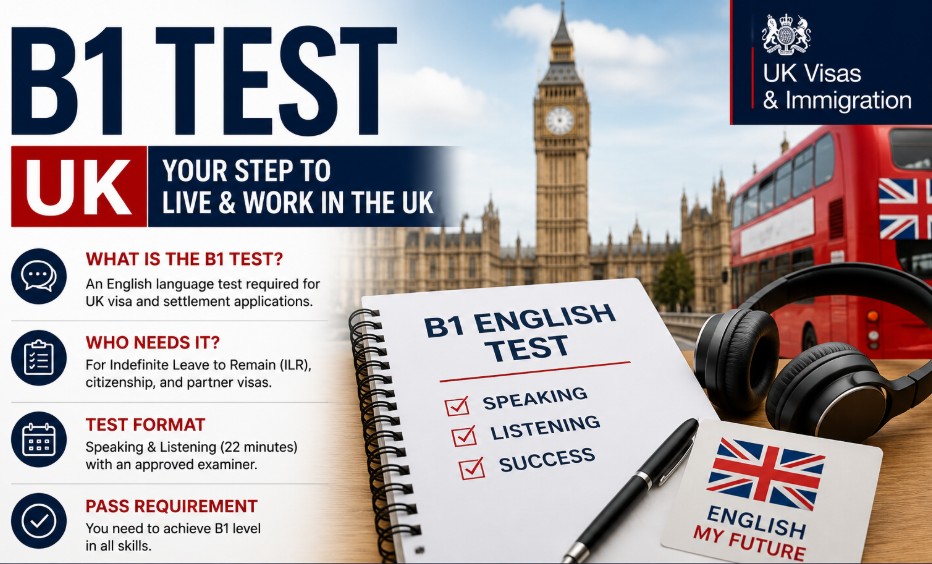
The B1 test UK is a Home Office-approved Secure English Language Test (SELT) required for Indefinite Leave to Remain (ILR), British citizenship, and specific UK immigration visas.
Candidates must demonstrate Intermediate English proficiency at CEFR Level B1 in speaking and listening through an accredited test provider.
Key Takeaways
-
The Home Office mandates a B1 level Secure English Language Test for candidates applying for UK settlement and British citizenship.
-
Approved SELT providers in the UK charge between £150 and £250, with test results remaining valid for visa applications for two years.
-
Candidates applying for Indefinite Leave to Remain must pass speaking and listening modules but do not require reading and writing.
-
Applicants aged 65 and over or those with certified long-term medical conditions are exempt from taking the English language exam.
What is the B1 test UK?
The B1 test UK is a Home Office-approved Secure English Language Test (SELT) that evaluates intermediate English proficiency in speaking and listening in accordance with the Common European Framework of Reference for Languages (CEFR).
Designed to measure practical communication skills, it ensures candidates can converse comfortably, express opinions, and handle everyday situations in British society.
An intermediate standard means you can express opinions, talk about familiar topics such as work or family life, and handle unexpected situations when traveling. Passing this assessment fulfills the Knowledge of Language and Life (KOLL) requirement set by UK Visas and Immigration (UKVI).
CEFR Proficiency Level Breakdown
| CEFR Proficiency Level Breakdown | Details |
| Level A1 – A2 | Basic User (Required for initial Spouse and Extension Visas) |
| Level B1 (TARGET) | Intermediate User (Required for Settlement / Citizenship) |
| Level B2 – C2 | Independent / Proficient User (Required for Work / Study) |

Why is the B1 test required?
The Home Office mandates the B1 SELT to fulfill the Knowledge of Language and Life (KOLL) requirement for individuals seeking permanent settlement and integration into the UK.
It serves as a standardized, objective measure to prove that applicants possess the necessary language skills to live independently and participate fully in daily British life without relying on external translation assistance.
Do I Need to Give the B1 Test for British Citizenship and ILR?
Yes, passing a SELT at B1 level is mandatory for both Indefinite Leave to Remain (ILR) and British citizenship (naturalisation) applications, unless an exemption applies.
For settlement and naturalisation, the Home Office specifically evaluates speaking and listening skills. Unlike work or academic visas, you do not need to take reading and writing units if you choose a 2-skill examination option like the Trinity GESE Grade 5 or IELTS Life Skills B1.
What is the B1 test UK used for?
The B1 test UK is primarily used for official immigration and citizenship applications regulated by UK Visas and Immigration (UKVI). Specifically, it is required for:
-
Indefinite Leave to Remain (ILR) / Settlement: Proving permanent residence eligibility.
-
British Citizenship (Naturalisation): Satisfying language requirements when applying for a British passport.
-
Specific UK Visas: Fulfilling intermediate-level English mandates for designated visa categories.
Which Home Office-Approved B1 Tests Can You Take?
To satisfy UKVI rules, you must book your assessment with a certified SELT board. Taking an unapproved exam from an independent language school will lead to a rejected visa application.
The table below outlines the primary parameters across all approved test awarding bodies in the UK:
| Provider & Test Name | Format | Duration | Skills Assessed | Average Cost |
| Trinity College London (GESE Grade 5) | 1-on-1 with Examiner (In-person or Online Video at Centre) | 10 Minutes | Speaking & Listening | £150 |
| IELTS Life Skills (B1) | Paired Candidate Discussion with Examiner | 22 Minutes | Speaking & Listening | £155 |
| Pearson PTE Home (B1) | Computer-based with Headset | 22 Minutes | Speaking & Listening | £150 |
| LanguageCert (SELT B1) | Computer-based / Interlocutor | 11–13 Minutes | Speaking & Listening | £150 |
GESE Grade 5 (B1 Test) by Trinity College London
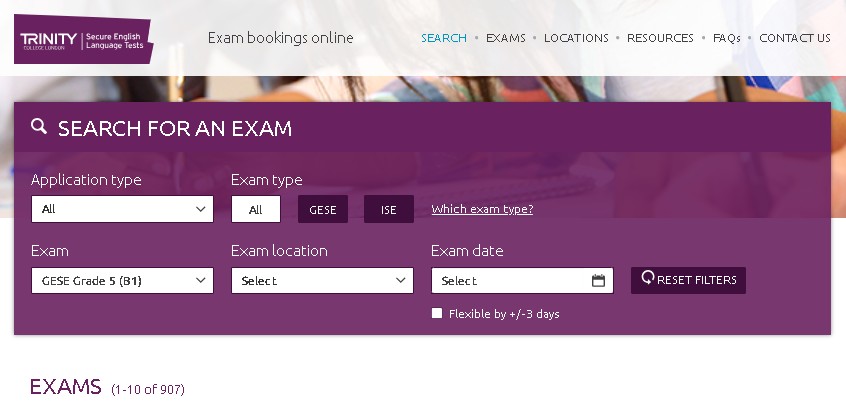
Trinity’s B1 test UK Trinity College option, known as Grade 5 GESE (Graded Examinations in Spoken English), is a 10-minute one-to-one conversation with a live examiner.
Before entering the room, you prepare a B1 test UK topic form listing four discussion points about a subject of your choice, such as a holiday, hobby, or past job experience. The exam consists of two parts:
-
Topic Discussion (5 minutes): You discuss your chosen topic using your completed form as a guide.
-
General Conversation (5 minutes): The examiner leads a discussion covering two areas chosen from subjects like festival celebrations, transport, personal events, or future plans.
IELTS Life Skills B1 and PTE Home B1
The IELTS B1 test UK (IELTS Life Skills B1) involves two candidates taking the exam simultaneously with one examiner. You listen to short audio clips, answer direct questions, and discuss everyday subjects with the other candidate.
Alternatively, the Pearson B1 test (PTE Home B1) is fully automated. You sit at a computer terminal inside an official exam centre, wearing a headset to respond to recorded prompts.
Tasks include repeating sentences, responding to short scenarios, and summarizing brief conversations.
How Much Does a B1 Test Cost in the UK?
The standard B1 test UK cost ranges between £150 and £185 across all certified test organizations, with official fees remaining fixed by the provider network.
Official fees are fixed, but candidates should watch for optional add-on charges:
-
Study Guides & Sample Packs: £10–£30 (optional).
-
Cancellation & Rescheduling Cover: £10–£20 (allows date changes on short notice).
-
Certificate Express Delivery: £15–£25 (for physical paper copies, though UKVI accepts digital SELT unique reference numbers).
How to Book Your B1 Test in the UK Safely?
Follow this procedure to complete your B1 test UK booking securely without falling for third-party agency markups.
-
Navigate to the official UK government portal for UKVI English language tests.
-
Select your preferred Home Office-approved SELT provider (Trinity, IELTS, Pearson, or LanguageCert).
-
Choose an official exam centre located within the UK.
-
Select an available date and time slot.
-
Enter your full name and passport details exactly as they appear on your official identity documents.
-
Pay the test fee of £150–£155 via a credit or debit card.
-
Save your booking confirmation email and note your SELT Candidate Number.
How to prepare for the B1 test UK?
Preparation relies on understanding the exam structure and practicing natural, fluent communication rather than memorizing rigid scripts. Effective preparation steps include:
-
Utilizing Free Official Resources: Download sample topic forms, mock listening tasks, and practice apps directly from certified providers like Trinity College London, IELTS, and Pearson PTE.
-
Practicing Target Tenses: Focus on confidently using past, present, and future tenses, and connecting thoughts using conjunctions (because, but, so).
-
Expanding Answers: Avoid monosyllabic or one-word replies during mock questions; instead, elaborate with supporting reasons and examples.
-
Preparing Topic Sheets (if applicable): For tests like Trinity GESE Grade 5, carefully outline your four personal discussion points beforehand.
B1 Test UK Free Resources and Practice Materials
You do not need expensive training packages to pass. Access B1 test UK free study resources directly from the official websites of test providers:
-
Trinity College London: Free downloadable sample topic forms, audio samples of real candidate tests, and topic selection guides.
-
IELTS: Free sample tasks covering listening materials and candidate interaction sheets.
-
Pearson PTE: Access to free practice apps and mock spoken questions online.
What Questions to Expect in the B1 Test UK?
Examiners evaluate your ability to connect thoughts using conjunctions (because, but, so), speak in past, present, and future tenses, and request clarification when you do not understand.
Common B1 test UK questions include:
-
What did you do during your last holiday?
-
How has your local area changed over the past few years?
-
What kind of job would you like to do in the future, and why?
-
Could you explain how to celebrate a popular festival in your home country?
When responding to B1 test UK questions and answers, avoid single-word replies. Expand on your thoughts by giving reasons.
For instance, if asked, Do you prefer living in a city or a town?, reply: I prefer living in a town because it is quieter than a big city, although commuting to work can take longer.
What is required during the B1 test UK?
To successfully sit and pass the B1 test UK, candidates must meet specific administrative and performance requirements on exam day, including bringing valid physical identification and attending an approved physical center.
-
Valid Identification: Bring the exact original, unexpired passport or national identity document used during the online booking process.
-
In-Person Attendance: Travel to an official, secure UKVI-approved SELT test centre (online tests taken from home are not accepted by the Home Office).
-
Targeted Skill Demonstration: Actively engage in speaking and listening modules—such as a one-to-one conversation, a paired candidate discussion, or computer-based audio responses, depending on your chosen approved provider.
Is It Easy to Pass the B1 Test?
Passing is straightforward if you hold an intermediate command of spoken English, but simple errors can lead to a fail result.
Common candidate mistakes to avoid:
- Script Recitation: Leads to lower scores due to unnatural delivery.
- Monosyllabic Answers: Prevents the examiner from assessing complex grammar.
- Unclear ID Details: Results in exam disqualification on test day.
When reviewing candidate performance, examiners frequently note that applicants fail when they memorize pre-scripted speeches rather than engaging in fluid conversation. Practice speaking naturally with native speakers or fellow learners using diverse vocabulary.
What Happens If You Fail the B1 Test UK?
If you do not pass, there is no forced waiting period before booking another attempt. You can rebook a test as soon as an open slot becomes available at a local examination centre.
Your score report outlines performance across test criteria. Review these details with an instructor to address areas where your marks fell short before attempting the exam again at a local examination centre.
How Long Is a B1 Test Certificate Valid for UK Immigration?
A SELT certificate possesses a formal B1 test UK validity period of two years from the date of issue.
However, a key Home Office exception applies: if you submitted a B1 certificate for an earlier visa application (such as an extension or ILR) and it was accepted, the Home Office will generally accept that same certificate for a later naturalisation application, even if the two-year window has lapsed, provided the awarding body remains on the approved list.
Who Is Exempt from Taking the B1 Test in the UK?
You do not need to take a B1 language test UK if you meet official Home Office exemption criteria covering age thresholds, medical impediments, nationality, or high-level academic qualifications.
-
Age: You are under 18 years old or aged 65 and over at the time of application.
-
Medical Exemption: You have a long-term physical or mental condition that prevents you from learning English or sitting an exam, supported by a formal doctor’s waiver (Form WA01).
-
Nationality: You hold a passport from a majority English-speaking country (such as Australia, Canada, Jamaica, New Zealand, or the USA).
-
Academic Qualifications: You hold a degree taught in English that is formally certified by ECCTIS (formerly UK NARIC) as equivalent to a UK Bachelor’s, Master’s, or PhD degree.
What to Do After 2 Years of Validity?
While standard Home Office Secure English Language Test (SELT) certificates expire after two years, you can often reuse an expired B1 test certificate if it was previously accepted for a successful UK settlement (ILR) application or if you are transitioning directly to a British citizenship application.
-
If your certificate has expired and cannot be carried forward, you must either retake an approved B1 test, substitute it with a recognized degree taught in English, or qualify for a legal exemption.
-
Timing is critical: the certificate must be officially valid on the exact date your online immigration or visa application is submitted.
Can You Use an Expired B1 Certificate?
Yes, under UK Visas and Immigration (UKVI) guidelines, you are permitted to use a B1, B2, C1, or C2 level qualification that has passed its two-year validity window, provided it meets specific historical application criteria.
Scenario A: Applying for British Citizenship (Naturalisation)
If you are applying for British citizenship, you can reuse an expired B1 certificate as long as two conditions are met:
- It was officially accepted by the Home Office for your previous successful settlement application (Indefinite Leave to Remain).
- The awarding body remains on the current list of Home Office-approved test providers.
(Note: It does not matter if the specific test format is no longer active, as long as it was valid and accepted during your ILR stage.)
Scenario B: Applying for Indefinite Leave to Remain (ILR) or Other Visas
If you are applying for ILR and your initial test was taken at the beginning of a 5-year route (meaning the 2-year window has lapsed before your settlement application), the expired certificate generally cannot be used.
The Home Office strictly mandates that a SELT certificate must be active and valid on the date you submit your settlement application.

Your Options If Your Certificate Has Fully Expired
If your previous test cannot be carried forward or reused, you have three primary pathways to satisfy the UKVI English language mandate:
-
Retake the B1 SELT Test: The most direct route is booking a new speaking and listening exam through an approved provider (such as Trinity College London, IELTS Life Skills, or Pearson PTE). Because you have lived in and navigated daily life in the UK, a retake is typically straightforward.
-
Use a UK ENIC-Certified Degree: If you hold a Bachelor’s, Master’s, or PhD degree taught or researched in English, you can submit your degree certificate along with an official confirmation statement from ECCTIS (formerly UK NARIC). Degree qualifications do not expire.
-
Check for Exemptions: Review if your circumstances have changed to grant you a permanent waiver. Common exemptions include turning 65 years of age or acquiring a certified long-term physical or mental medical condition supported by official documentation (Form WA01).
How to Avoid Expiry Traps?
-
Align Your Timeline: Always map out your 5-year qualifying period so that you take your initial test close enough to your target ILR window, or anticipate the need to re-test before submitting paperwork.
-
Verify Status Before Submitting: Double-check your unique reference number (URN) and issuance date on the official portal to ensure no technicality triggers an automatic visa refusal.
Conclusion
Securing your B1 English test UK certificate is an important milestone on your path to permanent residence or naturalisation in the United Kingdom.
Begin by checking if you qualify for any legal exemptions. If required to take the exam, choose a convenient Home Office-approved SELT provider, download free sample papers, compile your personal topic points, and schedule your appointment through official government channels.
Disclaimer: This guide is for informational purposes only and does not constitute official legal or immigration advice; always verify current Home Office and UKVI requirements before booking.
FAQ
Can I take a B1 English test online from home?
No, the Home Office does not accept online B1 tests taken from home. You must attend an official, in-person SELT centre to verify your identity and take the examination under strict invigilation conditions.
Do I need to take reading and writing tests for ILR?
No, Indefinite Leave to Remain (ILR) applications only require proof of speaking and listening proficiency at B1 level. You do not need to sit reading and writing modules unless applying under specific work visa routes.
What is the passing grade for the B1 test?
SELT tests do not use letter grades. You receive a final result of Pass or Fail. To achieve a pass, you must demonstrate consistent control of simple and complex sentence structures during the assessment.
Is the B1 test harder than the A2 test?
Yes, B1 requires broader vocabulary and an ability to use past, present, and future tenses comfortably. While A2 focuses on basic routine tasks, B1 requires expressing personal opinions and explaining future plans.
How long does it take to get B1 test results?
Results are delivered quickly. Trinity College London and Pearson PTE typically issue digital results within 1 to 7 working days, while IELTS Life Skills results take roughly 7 days to process.
Can I use an old B1 certificate for British citizenship?
Yes, if you previously submitted that B1 certificate for your successful ILR application, the Home Office allows you to reuse it for British citizenship, even if the original two-year date has passed.
What identity documents must I bring on exam day?
You must bring the original, unexpired passport or national identity document that you used during your online booking. Arriving with a copy or incorrect document results in immediate entry refusal without a refund.