Cheapest Card Reader for UK Small Businesses: How to Compare Real Costs and Choose Wisely
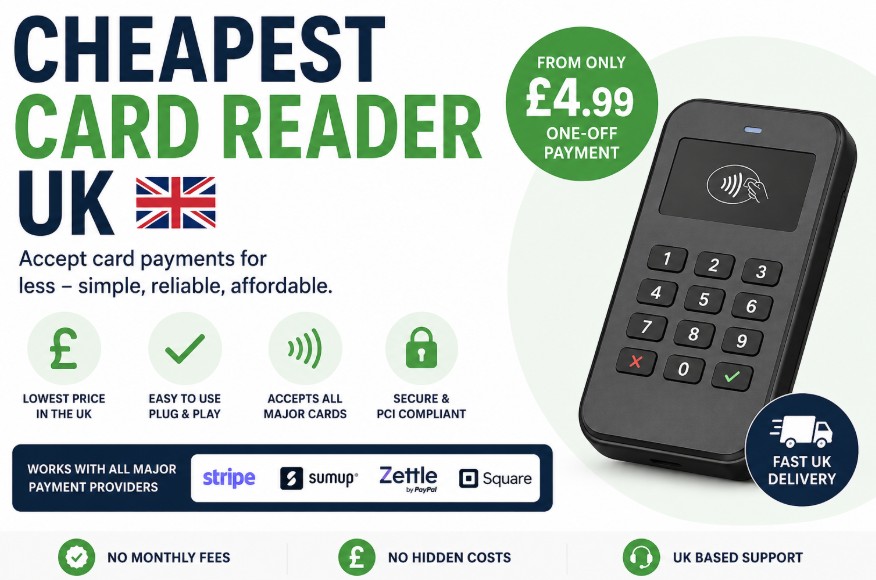
Determining the cheapest card reader for a UK business depends on your total monthly processing volume rather than the device purchase price.
Low-turnover traders taking under £2,000 monthly keep costs lowest using non-contract, flat-rate readers like SumUp or Square.
High-turnover operations taking over £10,000 monthly save more by paying fixed monthly machine rentals to secure lower transaction percentages.
Key Takeaway
-
Upfront card reader prices range from £0 for smartphone Tap to Pay up to £149 for standalone smart terminals.
-
Pay-as-you-go processing rates average 1.69% to 1.75%, whereas dynamic contract pricing drops transaction fees below 0.80%.
-
Transaction fees compound over time and quickly exceed initial reader hardware savings within a few months of active trading.
-
Hidden costs like PCI-DSS non-compliance charges, authorization fees, and refund processing costs significantly alter total processing expenses.
How to Choose the Cheapest Card Reader for Small Businesses?
Finding the cheapest card reader isn’t about picking the device with the lowest purchase price. The real expense lies in long-term processing fees, which roll on continuously for as long as you take card payments.
To protect your profits, follow this step-by-step evaluation process to calculate your true 12-Month Total Cost of Ownership (TCO).
Step 1: Calculate Monthly Sales and Average Transaction Value (ATV)
Audit 3 to 6 months of processing data before looking at hardware options:
-
Monthly Card Volume: Total revenue taken strictly via debit cards, credit cards, and mobile wallets (Apple Pay/Google Pay).
-
Average Transaction Value (ATV): Divide your total monthly card sales by the overall number of transactions.
ATV =Total Monthly Card Sales ⁄ Total Transaction Count
Why ATV matters: Fixed pence-per-transaction charges (e.g., 5p per tap) destroy profit margins on small basket sizes (such as a £3.50 coffee). Conversely, flat percentage rates (like 1.75%) become heavily expensive on large-ticket sales (such as a £200 retail item).
Step 2: Match Sales Volume to Provider Pricing Tiers
Card payment processors generally split their pricing models into three core tiers based on turnover volume, making it essential to understand how different UK payment processing systems handle volume scaling:
| Processing Model | Monthly Turnover Target | Standard Rate Structure | Best Fitted Providers |
| Flat-Rate PAYG | Under £2,000 / month | 1.69% – 1.75% flat fee; £0 monthly subscriptions | Square, SumUp, Zettle |
| Low-Rate PAYG | £2,000 – £5,000 / month | 0.79% – 0.99% variable fee; £0 monthly subscriptions | Lopay, Revolut Reader |
| Merchant Contracts | Over £5,000 – £10,000+ / month | 0.30% – 0.60% + IFR; ~£15 – £25/month machine rental | Dojo, Tyl by NatWest, Worldpay |
Step 3: Select Equipment Tailored to Your Business Setup
Keep upfront equipment expenses low by purchasing only the hardware features your day-to-day operations require:
-
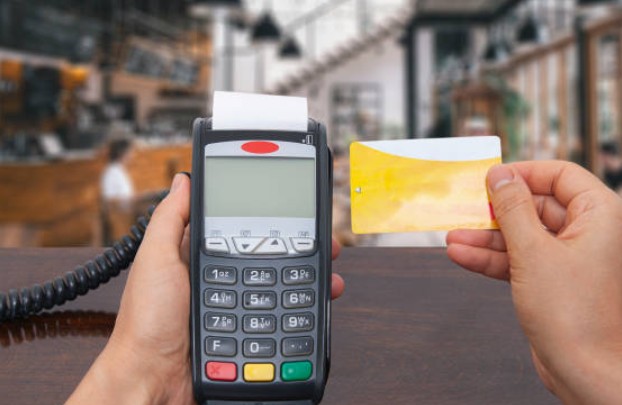
Tap to Pay on Smartphone (£0 Upfront): Turn an iOS or Android device into a payment reader via an app. Ideal for mobile trades, market stalls, and low-cost setups.
-
Bluetooth Card Readers (£19 – £49): Compact readers that pair with a smartphone or tablet. Best for standard counter checkouts.
-
Standalone 4G/Wi-Fi Terminals (£79 – £169 or Rental): Devices featuring integrated screens, built-in SIM cards, and receipt printers. Recommended for busy retail spaces or table service where transaction speed is critical.
Step 4: Audit Fine Print and Hidden Charges
Headline rates rarely cover secondary administrative costs. Always verify potential background fees:
-
PCI-DSS Compliance Charges: Check if the processor charges £5 to £15 monthly for PCI management, or up to £30 monthly in non-compliance penalties if paperwork lapses.
-
Non-Standard Card Surcharges: Many low-rate providers add a 1.00% fee for American Express, business/commercial cards, or non-UK payment cards.
-
Minimum Monthly Service Charges (MMSC): Contract-based providers often enforce a minimum fee floor (e.g., £20/month). If your generated fees fall short, the processor charges you the difference.
-
Payout Acceleration Charges: Standard payouts require 1 to 3 business days. Getting instant fund access often triggers flat transfer fees or higher percentage rates.
- Non-Refunded Original Fees: When issuing customer refunds, payment processors retain original processing transaction charges while deducting funds from account balances.
- Authorisation Fees: Fixed charges per transaction (ranging from 1p to 5p) levied alongside percentage rates. On low average transaction values, authorization fees significantly increase effective rates.
Step 5: Run a 12-Month Total Cost of Ownership (TCO) Formula
12-Month Cost =Upfront Reader Cost + (Monthly Subscriptions× 12) + Annual Processing Fees + Auxiliary Charges
Plug your sales numbers into the master TCO equation to see true annual costs. Comparing setup options over 12 months immediately highlights whether a flat-rate reader, low-rate app, or fixed contract terminal will save your business money as your volume grows.
Step 6: Review UK Surcharging Regulations
Under the Consumer Rights (Payment Surcharges) Regulations 2018, UK businesses cannot legally add card fees to customer bills. Because processing costs cannot be passed directly to buyers, choosing a lower variable processing rate directly protects your net profit margins.
Comparing Popular UK Card Reader Providers
Choosing the right card reader comes down to matching standard provider rates against your total monthly card sales and transaction patterns.
While flat-rate readers keep early costs low for micro-traders, growing businesses save significantly by transitioning to low-rate app models or contract terminals.
| Provider and Model | Upfront Device Cost (excl. VAT) | Standard In-Person Rate | Monthly Account / Rental Fee | Payout Settlement Time | Amex Support |
| Square Reader | £19.00 | 1.75% | £0.00 | Next business day | Yes (1.75% standard) |
| SumUp Air | £39.00 | 1.69% | £0.00 | 1 – 3 business days | Yes (1.69% standard) |
| Zettle by PayPal | £29.00 | 1.75% | £0.00 | 1 – 2 business days | Yes (1.75% standard) |
| Revolut Reader | £49.00 | 0.80% + 2p | From £10.00 / month (Basic) | Same day (to Revolut account) | Yes (1.70% + 2p) |
| myPOS Go 2 | £29.00 | 1.10% + 7p | £0.00 | Instant (to myPOS account) | Yes (1.10% + 7p standard) |
| Lopay (Low Rate) | £35.00 | 0.79% – 0.99% | £0.00 | Weekly (0.79%) / Next-Day (0.99%) | Yes (+1.00% surcharge) |
| Tide Card Reader | £99.00 | 0.79% + 3p | £17.99 / month (Sell In-Person Plan) | 3 business days (£2.99/mo for Next-Day) | No |
| Tyl by NatWest | £0.00 (Rent) | ~1.39% + 5p | ~£13.99 / month | Next business day | Yes (Custom rate) |
| Dojo Go | Free setup | ~0.30% – 0.60% + IFR | ~£20.00 / month | Next day (standard) | Yes (Custom contract) |
| Worldpay Terminal | £0.00 (Rent) | Custom / ~1.50% | ~£15.00 – £19.00 / month | 1 – 3 business days | Yes (Custom rate) |
NOTE: Figures provided in this table are approximate 12-month estimates subject to provider fee changes, bespoke quotes, and specific business card processing volumes.
A common pattern for new pop-up businesses is starting on flat-rate providers like SumUp or Square to minimize upfront exposure. Once monthly turnover stabilizes above £3,000, migrating to lower variable rate models yields immediate savings.
Why the Cheapest Card Reader Isn’t Always the Cheapest Option?
As a small business owner, looking strictly at the upfront price of a card reader is a trap. A £19 machine seems like a bargain compared to a £149 terminal, but the reader itself is a one-off capital expense.
The real cost comes from variable processing fees, which roll on endlessly every time a customer taps their card.
When you run a business, transaction fees compound over time. A cheaper machine often carries higher per-transaction percentage rates.
Within just a few months of active trading, those higher transaction fees will completely erase any initial savings you made on the hardware.
The 12-Month Reality Check
Imagine your small shop turns over £5,000 per month in card payments (£60,000 annually):
-
Option A (Cheap Reader): You pay £19 + VAT upfront for a basic reader with a 1.75% flat rate. Over 12 months, your hardware costs £19, but your transaction fees cost £1,050. Total outlay: £1,069.
-
Option B (Higher-Cost Reader): You pay £35 + VAT upfront for a reader with a 0.99% fee rate. Over 12 months, your hardware costs £35, while your processing fees total £499. Total outlay: £534.
Even though Option B costs nearly double upfront for the reader, it puts £535 back into your business bank account in year one. Your variable rate, not your hardware price, dictates your true operational costs.
Which physical machine features actually matter for a budget reader?
Selecting a budget reader requires identifying essential operational hardware while skipping expensive add-ons that bloat setup costs.
Core hardware considerations for small business owners include:
-
Connectivity (Wi-Fi vs 4G SIM): Basic card readers depend on active Bluetooth connections to smartphones running mobile apps. Portable sellers, pop-up traders, and mobile services need integrated 4G SIM connectivity or standalone readers to prevent dropped transactions.
-
Battery Capacity: Mobile trading requires hardware rated for 8 to 12 hours of continuous operation or at least 500 individual transactions per charge.
-
Physical Display vs. Blind Readers: Readers with integrated screens allow customers to inspect payment amounts before tapping. Screenless units require buyers to check transaction totals on smartphone screens, slowing throughput during busy periods.
-
Contactless and NFC Compatibility: Systems must support physical EMV chip-and-PIN cards along with contactless mobile wallets (Apple Pay, Google Pay).
Avoid paying extra for thermal receipt printers or built-in point-of-sale displays unless retail volumes require them. Digital e-receipts sent via SMS or email save paper costs and reduce reader pricing.
How does payout settlement speed affect your business cash flow?
Settlement speed measures the time required for card payments to move from customer accounts into business bank accounts.
For small businesses operating on narrow cash buffers, payout timing directly impacts supplier payments, stock replenishment, and operational liquidity.
Standard payment processing settlement schedules run on a 2 to 3 business day cycle. High-volume contract providers like Dojo and challenger services like Lopay offer automatic next-day or weekend payouts as standard features.
However, rapid payout upgrades often incur hidden surcharge fees. Payment platforms may charge flat fees (e.g., £2 per manual instant transfer) or add percentage surcharges (e.g., increasing rates to 1.79% for instant access).
Verify payout terms to ensure fast transfers do not undermine original card reader cost savings.
Most card processing platforms require a dedicated UK business bank account to clear funds under FCA regulations. Setting up clear payout routes ensures smooth account settlements and avoids operational holds.
Common Mistakes Small Business Owners Make When Choosing a Cheap Card Reader
Navigating merchant services is tricky, and early-stage owners frequently fall into a few costly traps:
-
Ignoring Turnover Milestones: Sticking with simple flat-rate providers (like SumUp or Square) long after your business has grown. Flat rates are great when starting out, but once your card sales pass £3,000 to £5,000 a month, staying on a ~1.75% fee drains your daily profit margins.
-
Assuming All Cards Cost the Same: Forgetting that premium reward cards, commercial business cards, and international cards carry higher non-capped scheme fees than standard UK debit cards.
-
Overlooking Instant Payout Surcharges: Choosing a provider with standard 2- to 3-day payouts, then paying unexpected 1% to 2% extra charges or £2 transfer fees just to access your own money quickly for stock replenishment.
-
Buying Unnecessary Hardware Add-ons: Paying extra for built-in thermal receipt printers or large secondary display screens when your sales volume doesn’t require them. E-receipts sent via SMS or email are free and lower your upfront equipment costs.
Conclusion
Selecting the most cost-effective card reader requires matching provider fee structures to your operational turnover.
Micro-traders taking under £2,000 per month reduce initial risk with pay-as-you-go hardware options like Square or SumUp. Mobile service providers and low-margin businesses cut overhead by utilizing low-rate app models like Lopay.
Once monthly card sales move past £5,000, audit transaction fee totals every six months. Transitioning from basic pay-as-you-go readers to custom contract rates secures processing savings as your business grows.
Disclaimer: Pricing models, transaction rates, and hardware costs are subject to change by payment providers; verify current terms with processors before purchasing.
FAQs
What is the absolute cheapest card reader with no monthly fees?
Square Reader (£19 + VAT) and SumUp Air (£39 + VAT) offer low upfront hardware prices with zero monthly subscription costs. For businesses taking payments on smartphones, Tap to Pay software options eliminate hardware costs entirely.
Can a business process card payments for free in the UK?
No. UK businesses cannot process card payments completely free of charge. Under the Consumer Rights (Payment Surcharges) Regulations 2018, passing card processing fees to retail customers is illegal.
Do I need a business bank account to get a card reader?
Yes. FCA-regulated card payment processors require funds to settle into business bank accounts registered under the operating business name.
What happens if a card transaction fails or is declined?
Standard card reader providers do not charge transaction processing fees on declined or failed payments. Transaction fees apply exclusively to successfully settled transactions.
Are contract card machines always more expensive than pay-as-you-go readers?
Contract card terminals carry fixed monthly rental costs but offer significantly lower transaction rates. Once monthly card sales exceed £10,000, contract options prove cheaper overall than flat-rate readers.