
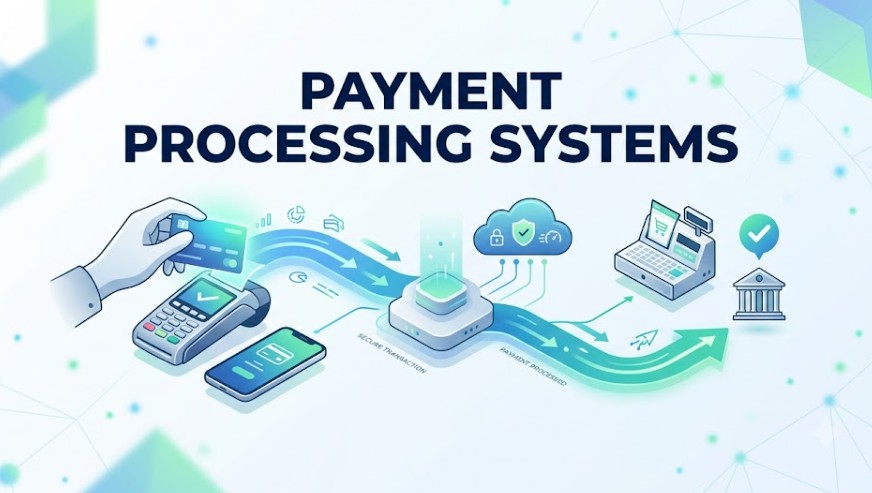
UK Payment Processing Systems: Complete 2026 Guide to Fees, Gateways, Providers, FCA Rules
Payment processing systems in the UK are secure financial networks that enable businesses to accept card payments, digital wallets, and direct bank transfers across physical stores, mobile apps, and e-commerce websites.
They act as the digital bridge connecting merchants, customers, card schemes, and UK banking institutions.
Key Takeaways
-
Payment processing systems securely route funds from a customer bank account to a merchant account through encrypted digital payment rails.
-
UK transaction models typically rely on either flat-rate aggregator fees or variable Interchange++ pricing structures based on monthly trading volumes.
-
Regulatory compliance requires strict adherence to PCI DSS security standards, FCA oversight guidelines, and mandatory 3D Secure customer authentication.
-
Choosing the correct provider depends directly on sales channel distribution, average basket sizes, integration requirements, and cross-border needs.
What is a Payment Processing Systems?
A payment processing systems is an integrated ecosystem of software applications, payment gateways, card networks, and merchant banking facilities. Together, these technologies automate, authenticate, and execute the transfer of monetary value from a buyer to a seller.
Instead of handling physical cash, payment processing systems convert transactional data into encrypted digital requests.
They verify that the buyer holds sufficient funds or a credit line, check for fraud signals, and settle the approved funds into the merchant’s business account.
How Do Payment Processing Systems Work?
The mechanics of payment processing rely on a rapid, multi-step electronic chain that executes within seconds:
-
Transaction Initiation: The customer presents card details, taps a contactless terminal, or selects a digital wallet (e.g., Apple Pay, Google Pay) at checkout.
-
Encryption & Capture (Payment Gateway): The payment gateway captures the sensitive payment data, encrypts it to ensure security compliance (PCI DSS), and forwards it to the payment processor.
-
Data Routing (Payment Processor): The payment processor routes the encrypted transaction data through card networks (such as Visa or Mastercard) or direct bank rails (such as BACS or Faster Payments).
-
Authorization (Issuing Bank): The customer’s bank (issuing bank) runs real-time security checks, checks account balances, validates 3D Secure / SCA protocols, and sends back an Approved or Declined response.
-
Settlement (Acquiring Bank & Merchant Account): Once authorized, the acquiring bank collects the cleared funds from the card network and transfers them into the merchant’s holding account.
What are the types of Payment Processing Systems in the UK?
The primary types of payment processing systems in the UK are Payment Service Providers (PSPs/Aggregators), Direct Merchant Acquiring Accounts, and Bank-to-Bank Rails (Direct Debit and Open Banking).
Each structure varies significantly in setup complexity, underwriting, and overall transaction cost.
- Payment Service Providers (PSPs / Aggregators): Pool multiple merchants under a single master merchant account for instant setup and flat-rate transaction pricing (e.g., Stripe, Square).
- Direct Merchant Acquirers: Provide dedicated merchant accounts tailored for enterprise-volume businesses with custom Interchange++ rate structures (e.g., Worldpay, Barclaycard).
- Bank-to-Bank & Open Banking Networks: Bypass traditional card schemes entirely to transfer funds directly between UK bank accounts via Bacs Direct Debit or Faster Payments (e.g., GoCardless, Pay by Bank).
What Are the Best Payment Processing Systems and Gateways in the UK?
The best payment processing systems in the UK include Stripe for developer API customization, Worldpay for enterprise retail, Square for physical POS terminals, and GoCardless for direct debit subscriptions.
Selecting the optimal gateway depends on fees, settlement speeds, and business sales channels.
Top UK Payment Processing Systems
| Provider | Primary Focus / Use Case | Typical UK Transaction Fees | Settlement Speed | Setup Complexity |
| Stripe | Developer-first e-commerce, SaaS & global platforms | 1.5% + 20p (UK standard cards) | 2 business days | Low (Plug-and-play / API) |
| Worldpay | High-volume retail, enterprise & omnichannel | Custom / Interchange++ (or ~1.3% + 20p) | 1–2 business days | Medium (Underwriting required) |
| Square | In-person retail, cafes & hybrid POS setups | 1.75% (In-person) / 1.9% + 20p (Online) | Next day or instant | Low (Instant setup) |
| PayPal / Braintree | Alternative wallet checkout & brand trust | 1.2% to 2.9% + fixed fee | Instant to 1 business day | Low to Medium |
| GoCardless | Recurring subscriptions, invoices & direct debit | 1% + 20p (Capped at £4) | 3–5 business days | Low (Pay-as-you-go) |
| Adyen | Enterprise omnichannel & large scale international | 11p + Interchange++ (+0.60%) | 1–3 business days | High (Enterprise API) |
| Opayo (Elavon) | Mid-market businesses & flexible merchant integration | Custom / Tiered plans (from ~1.75%) | 1–2 business days | Medium |
| SumUp | Micro-merchants, pop-ups & mobile card readers | 1.69% flat rate (In-person) | 1–3 business days | Very Low |
| Checkout.com | Fast-growing scale-ups & digital enterprises | Custom / Interchange++ | 1–3 business days | High |
| Revolut Business | Multi-currency businesses & quick payouts | 1% + 20p (UK cards) | 24 hours (including weekends) | Low |
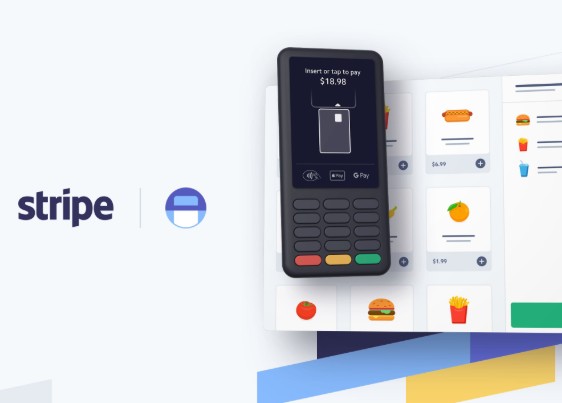
1. Stripe
Stripe is the leading payment processing system for UK developers and e-commerce businesses, offering complete checkout customization via robust APIs alongside flat UK rates of 1.5% + 20p with zero monthly ongoing fees.
-
Core Capabilities: End-to-end payment processing supporting 135+ currencies, pre-built hosted checkout pages, and advanced subscription tools.
-
Pricing Model: Pay-as-you-go flat rate. 1.5% + 20p for standard UK cards; 2.5% + 20p for EEA cards.
-
Key Advantages: Instant setup, extensive documentation, built-in fraud prevention (Stripe Radar), and platform marketplace payouts (Stripe Connect).
-
Best Suited For: Custom e-commerce builds, subscription models, app developers, and tech-led scale-ups.
2. Worldpay
Worldpay is the UK’s largest merchant acquirer by volume, serving enterprise retailers and high-street businesses with custom Interchange++ pricing structures and dedicated direct merchant accounts.
-
Core Capabilities: Enterprise card machines, integrated EPOS terminals, virtual phone terminals, and omnichannel processing.
-
Pricing Model: Custom quotes tailored to trading volume. Options include fixed monthly gateway tiers or variable Interchange++ pricing.
-
Key Advantages: Deep liquidity, dedicated individual merchant accounts, direct acquiring status, and high-volume fee discounts.
-
Best Suited For: High-street retail chains, enterprise e-commerce, and merchants processing over £20,000 monthly.
3. Square
Square is the top UK payment processor for in-person retail and hospitality, offering flat-rate 1.75% card processing fees for point-of-sale terminals without long-term monthly hardware contracts.
-
Core Capabilities: Turnkey Point of Sale (POS) ecosystem, mobile card readers, digital invoicing, and built-in inventory tracking.
-
Pricing Model: Flat rate. 1.75% for chip & PIN or contactless; 1.9% + 20p for online checkout.
-
Key Advantages: Free hardware app setup, fast next-day payouts, integrated free e-commerce site builder, and no long-term lock-in.
-
Best Suited For: Cafes, boutiques, pop-up shops, market stalls, and hybrid brick-and-mortar stores.
4. PayPal / Braintree
PayPal and Braintree provide trust-driven payment gateway solutions for UK e-commerce sites, leveraging high brand recognition to reduce cart abandonment with transaction rates ranging from 1.2% to 2.9% + fixed fees.
-
Core Capabilities: One-click wallet payments, Pay in 3 BNPL (Buy Now, Pay Later) options, and unified card handling via Braintree API.
-
Pricing Model: Tiered consumer wallet rates alongside developer-focused payment gateway pricing via Braintree.
-
Key Advantages: High brand trust reduces cart abandonment; includes buyer protection and instant account transfers.
-
Best Suited For: Direct-to-consumer (D2C) e-commerce sites looking to capture impulse buyers and international shoppers.
5. GoCardless
GoCardless is the premier UK payment processing system for recurring billing and B2B invoices, bypassing card networks to collect payments directly via Bacs Direct Debit for a low 1% + 20p fee (capped at £4).
-
Core Capabilities: UK Direct Debit automation, Instant Bank Pay powered by Open Banking, and recurring invoice collection.
-
Pricing Model: Capped transaction fee model (1% + 20p, max £4 per domestic transaction), making large payments significantly cheaper.
-
Key Advantages: Eliminates expired card drop-offs, reduces payment processing costs by up to 56%, and virtually eliminates chargebacks.
-
Best Suited For: SaaS subscriptions, B2B wholesale invoicing, membership clubs, and utility billing.
6. Adyen
Adyen is a global enterprise payment engine for multi-channel UK businesses, offering transparent Interchange++ pricing (+0.60% + 11p), global acquiring, and end-to-end multi-currency tokenization.
-
Core Capabilities: Unified global commerce engine connecting online, mobile, and in-store point-of-sale systems on a single backend infrastructure.
-
Pricing Model: Transparent Interchange++ pricing per transaction plus a small fixed processing fee (11p).
-
Key Advantages: Directly linked to global card schemes, native multi-currency settlement, and cross-border risk management.
-
Best Suited For: Rapidly scaling international platforms, multinational retail brands, and high-volume global merchants.
7. Opayo (formerly Sage Pay)
Opayo is an established mid-market UK payment gateway backed by Elavon, renowned for 99.99% infrastructure uptime, seamless Sage accounting integration, and 24/7 UK-based telephone support.
-
Core Capabilities: Hosted payment pages, phone virtual terminals (MOTO), and physical card machine integrations.
-
Pricing Model: Fixed monthly subscription packages (with bundled transaction allowances) or custom corporate plans.
-
Key Advantages: Top-tier reliability, direct UK-based telephone support, and seamless integration with Sage accounting software.
-
Best Suited For: Established mid-sized UK businesses, telephone ordering desks, and traditional e-commerce stores.
8. SumUp
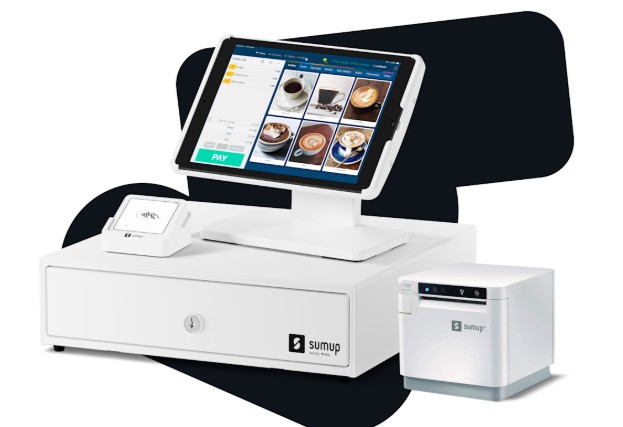
SumUp is an entry-level card processing system for mobile sole traders in the UK, offering ultra-portable card readers with a simple 1.69% flat rate and zero monthly contract obligations.
-
Core Capabilities: Pocket-sized card terminals (Solo / Air), payment links, simple mobile POS app, and business bank accounts.
-
Pricing Model: Pure pay-as-you-go. 1.69% in-person transaction fee with low upfront hardware costs and £0 monthly fees.
-
Key Advantages: Extremely low entry barrier, zero ongoing fixed costs, instant hardware setup, and payout flexibility.
-
Best Suited For: Sole traders, freelancers, taxi drivers, mobile beauty services, and micro-merchants.
9. Checkout.com
Checkout.com is a specialized enterprise payment processor for fast-growing UK scale-ups, delivering granular transaction analytics, custom checkout flows, and tailored Interchange++ rate plans.
-
Core Capabilities: End-to-end payment gateway and acquiring platform with real-time data analytics, intelligent payment routing, and fraud protection.
-
Pricing Model: Tailored enterprise Interchange++ pricing based on processed volume and business model risk.
-
Key Advantages: Superior authorization approval rates, granular transaction data insights, and direct acquiring in major global markets.
-
Best Suited For: High-growth fintechs, large e-commerce platforms, marketplaces, and digital content businesses.
10. Revolut Business
Revolut Business is a UK payment processor tailored for multi-currency trade, offering competitive 1% + 20p UK card processing fees and instant 24-hour payouts 365 days a year.
-
Core Capabilities: In-person card readers, online checkout widgets, payment links, and integrated multi-currency business accounts.
-
Pricing Model: 1% + 20p for domestic UK cards; 2.8% + 20p for international/commercial cards, paired with monthly account tiers.
-
Key Advantages: Next-day payouts seven days a week (including weekends), low FX exchange fees, and holding balances in 25+ currencies.
-
Best Suited For: Cross-border businesses, companies with international suppliers, and merchants wanting rapid cash-flow access.
How Do UK Payment Processing Fees Work?
UK payment processing fees work by combining three structural charges: issuing bank interchange fees, card network scheme fees, and processor markups. Merchants pay these via either flat-rate aggregator fees or transparent Interchange++ pricing models.
- Flat-Rate Models: Charge a fixed percentage plus a pence fee per transaction regardless of card type (e.g., 1.5% + 20p). This predictable structure makes it an ideal option for SMEs seeking straightforward credit card payment processing without complex pricing tiers.
- Interchange++ Pricing: Separates the underlying card scheme fee (Mastercard/Visa), the interchange fee paid to the issuing bank, and the processor markup. This transparent structure is most cost-effective for high-volume traders processing over £20,000 monthly.
- Additional/Hidden Charges to Monitor:
- International Card Surcharges: Premium markups applied when handling non-UK/non-EEA cards.
- Cross-Border FX Fees: Currency conversion markups on international sales.
- PCI Compliance & Gateway Monthly Fees: Fixed operational fees billed monthly.
- Chargeback Dispute Fees: Penalty charges levied when a customer disputes a transaction.
How to Evaluate and Choose the Right Payment Processor?
Choosing an infrastructure provider demands a structured internal audit of your business model, customer payment habits, and technical capabilities.
-
Map your primary sales channels across online ecommerce stores, physical retail POS terminals, and manual telephone or invoice billing.
-
Calculate your anticipated monthly transaction volume and average basket size to determine whether flat-rate or Interchange++ pricing yields lower costs.
-
Verify native platform integrations with your existing content management system, such as Shopify, WooCommerce, or custom API environments.
-
Assess payout speeds to ensure your business maintains healthy cash flow, noting whether funds clear next day or require several business days.
-
Review multi-currency support and regional acquiring capabilities if your target market extends beyond the United Kingdom.
-
Check fraud prevention tools, including built-in machine learning risk scoring and 3D Secure authentication workflows.
-
Examine customer support availability, contract lock-in periods, and early termination fees before signing long-term merchant agreements.
When reviewing decisions regarding contract terms, ensure you avoid long exclusivity windows that prevent migration if your transaction volume scales past your current provider’s optimal tier.
What Are the Compliance and Security Standards for UK Payments?
Compliance and security standards for UK payments require mandatory adherence to Payment Card Industry Data Security Standards (PCI DSS), Strong Customer Authentication (SCA / 3D Secure 2.0), and Financial Conduct Authority (FCA) operational guidelines to prevent card fraud and protect sensitive financial data.
-
PCI DSS (Payment Card Industry Data Security Standard): Mandatory security rules for any merchant handling, processing, or transmitting card details. Non-compliance can lead to hefty monthly fines and card acceptance revocation.
-
Strong Customer Authentication (SCA / 3D Secure 2.0): Mandatory multi-factor authentication protocol requiring identity verification (e.g., SMS OTP, biometrics) during online checkout to reduce fraudulent transactions.
-
FCA Supervision: Payment institutions operating in the UK must maintain operational resilience and customer protection standards outlined by the Financial Conduct Authority (FCA).
What is the Difference Between a Payment Gateway and a Payment Processor?
The primary difference between a payment gateway and a payment processor is that a payment gateway is the customer-facing software that captures and encrypts payment data at checkout, whereas a payment processor is the background infrastructure that routes transaction data across banks and scheme networks to settle funds.
| Dimension | Payment Gateway | Payment Processor |
| Primary Function | Captures, encrypts, and transmits payment data securely from checkout to the processor. | Routes transaction data across card schemes and banks to authorize and settle funds. |
| Point of Contact | Customer-facing (Checkout UI, hosted payment page, contactless POS terminal). | Background infrastructure (Connects acquiring bank, card networks, and issuing bank). |
| Core Role | Data security, encryption, 3D Secure authentication, and user experience. | Fund movement, card network routing, risk authorization, and bank settlement. |
| Analogy | The digital card terminal/checkout register. | The bank courier and clearinghouse handling the money movement. |
Conclusion
Implementing a robust transaction infrastructure requires aligning your chosen platform with your exact sales volume, customer checkout preferences, and technical stack.
By auditing fee structures, enforcing strict security compliance, and optimising checkout flows, businesses can reduce friction and safeguard revenue.
Review your current gateway performance metrics today to identify potential savings and upgrade your payment architecture for scalable growth.
Disclaimer: Content is for informational purposes only; verify rates and terms directly with providers.
FAQ
What are the 4 major payment processors globally?
The four primary payment card networks governing global transaction flows are Visa, Mastercard, American Express, and the Discover network, which includes international partnerships like UnionPay.
What is the most used payment method in the UK?
Debit cards remain the dominant payment method across the UK, heavily supplemented by the rapid consumer adoption of mobile digital wallets like Apple Pay and Google Pay.
Which payment gateway is the cheapest for UK small businesses?
Flat-rate aggregators like Stripe and Square offer the lowest friction and overhead for low volumes, whereas Interchange++ providers become cheaper once monthly processing exceeds high thresholds.
How long do payouts take to reach a UK business bank account?
Standard payout windows range from next-business-day settlements to two working days, depending on the chosen provider, risk profile, and whether weekend clearing applies.
Do I need a dedicated merchant account to set up online payments?
Not necessarily. Payment aggregators pool merchant transactions into a master account, allowing businesses to accept cards instantly without underwriting an individual merchant account.
What is 3D Secure and why is it mandatory in the UK?
Three-Domain Secure is a security protocol requiring cardholders to complete additional identity verification steps during online checkout, satisfying UK Strong Customer Authentication rules.
How do chargebacks affect UK merchant accounts?
High volumes of customer chargebacks can signal fraudulent activity to acquiring banks, potentially leading to increased transaction fees, reserve account holds, or account termination.





One Comment