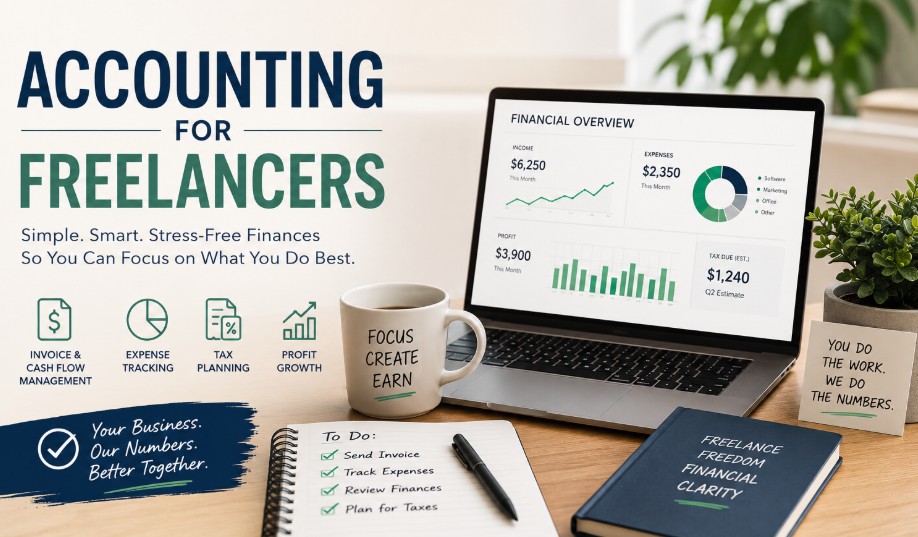
The Complete Guide To Accountants For Freelancers: UK Costs, Top Apps, Tax Strategies
Hiring specialist accountants for freelancers is one of the most critical structural decisions you will make when operating a self-employed business in the United Kingdom.
Managing variable monthly cash flow, tracking allowable expenses, and ensuring absolute compliance with HM Revenue and Customs (HMRC) requires precise technical execution.
Doing this paperwork alone frequently leads to admin overstretch and expensive mistakes on your tax return. A qualified professional acts as a strategic financial partner. They shift your focus from baseline regulatory survival to proactive tax optimization.
Key Takeaways
-
UK freelancers must prepare for the April 2026 Making Tax Digital phase-in, which legally requires digital record-keeping and quarterly submission updates.
-
Utilizing a qualified accountant ensures all eligible home-office, travel, and equipment costs are fully optimized to minimize your ultimate Self Assessment bill.
-
Typical monthly retainers for specialist UK sole trader accountancy services range between £25 and £60 depending on your overall transaction volume.
-
Limited company freelance structures incur higher accounting fees averaging £90 to £150 monthly due to corporation tax and statutory filing tasks.
Do Freelancers Need an Accountant in the UK
No, freelancers in the UK are not legally required to hire an accountant and can file their own taxes. However, hiring an accountant is highly recommended to avoid expensive computational mistakes, navigate complex HMRC codes, and maximize allowable deductions.
However, operational data indicates that attempting to navigate complex tax codes without formal training regularly results in missed deductions and computational mistakes.
In practice, many independent professionals lose more money in unclaimed allowable business expenses and late-filing penalties than the actual annual cost of hiring a dedicated accounting professional.
Do I need an accountant if I’m a limited company vs a sole trader?
If you are a sole trader, you do not strictly need an accountant as your filings are limited to a single annual Self Assessment return.
If you run a limited company, an accountant is vital because you must submit statutory accounts, corporate tax returns (CT600), an annual Companies House confirmation statement, and payroll schedules to regulatory bodies under strict penalty laws.
This admin burden has become even heavier following the recent Companies House company crackdown aimed at cleaning up corporate registers.
| Entity Type | Mandatory Statutory Filings | Typical Software Integration Requirements | Reporting Frequency |
| Sole Trader | Self Assessment Tax Return (SA100) | Basic Cloud Ledger (Xero/FreeAgent) | Annual (Transitioning to Quarterly under MTD) |
| Limited Company | Form CT600, Statutory Accounts, Confirmation Statement | Full Double-Entry Cloud Platform + Payroll Modules | Continuous / Annual Filings |
What Do Accountants for Freelancers Do?
Freelance accountants manage core financial operations for self-employed professionals, including preparing and submitting tax returns (SA100 and CT600), ensuring Making Tax Digital (MTD) compliance, reconciling bank statements, managing company payroll and dividends, and filing digital VAT returns.
Common Services They Provide
- Tax Return Preparation & Submission: Your accountant compiles and securely files your annual Self Assessment (SA100) or Company Tax Return (CT600) directly to HMRC.
- Making Tax Digital (MTD) Compliance: They handle mandatory digital record-keeping to process your required quarterly updates smoothly.
- Real-Time Bookkeeping & Reconciliation: This involves categorising business transactions, matching invoices, and keeping your monthly bank feeds balanced.
- Payroll & Dividend Administration: For limited companies, they set up director payroll runs, handle PAYE schemes, and issue formal dividend vouchers.
- VAT Returns: They monitor whether your turnover breaches the registration threshold and submit regular digital returns to HMRC if you register.

How Can an Accountant for Freelancers Support a Business?
An accountant supports a freelance business by building a protective audit trail to minimize the risk of HMRC tax enquiries, optimizing drawing strategies between salary and dividends, and evaluating compliance under complex legislation like IR35.
Beyond basic data entry, they provide an airtight audit trail by building structured cost allocations that align directly with statutory definitions.
Because HMRC heavily relies on automated risk-profiling systems that flag anomalous expense ratios, having an accountant manage your books significantly reduces the probability of triggering an invasive, time-consuming compliance enquiry.
Is it Worth Hiring Accountants for Freelancers?
Yes, hiring an accountant for freelancers is highly worth it because their service fees are 100% tax-deductible as an allowable business expense. The immediate financial savings from optimized write-offs and avoided late fees typically outweigh the cost of the professional retainer.
If a freelance contractor pays £600 per year for accountancy services, that £600 is deducted directly from their taxable profit, lowering their overall Income Tax and National Insurance liabilities.
When you offset this tax deductibility against the dozens of hours saved on administrative tasks and the peace of mind that you won’t face steep late-filing fines, the financial return is immediately clear.
How Much Do Accountants for Freelancers Charge?
On average, accountants for sole trader freelancers charge £25 to £60 per month, while limited company packages range from £90 to £150 per month. One-off Self Assessment tax filings typically cost between £150 and £350, whereas specialized tax consultation rates run from £60 to £250+ per hour.
-
Standard Sole Trader Retainer: £25 to £60 per month. This base tier typically guarantees access to dedicated cloud accounting platforms, ongoing email guidance, and year-end filing support.
-
Limited Company Package: £90 to £150+ per month. This higher investment covers complex corporate accounts, corporation tax, director payroll, and continuous VAT filing.
-
One-Off Self Assessment Filing: Fixed fees typically range from £150 to £350 for clean digital ledgers. For disorganised records or emergency end-of-year rush filings, fees can scale from £400 to £600.
Bespoke Hourly Advisory Work
When you require specialized advice (such as IR35 contract reviews or complex corporate tax structuring), rates vary dynamically by professional tier:
-
-
Junior Bookkeepers / Accounts Assistants: £25 to £45 per hour.
-
Qualified General Accountants (AAT / ACCA): £60 to £120 per hour.
-
Senior Partners / Specialist Tax Consultants: £150 to £300+ per hour.
-
| Service Tier / Structure | Typical Sole Trader Cost (Annualized) | Typical Limited Company Cost (Annualized) | Target Output Deliverables |
| Basic One-Off Filing | £150 – £350 | £500 – £900 | Self Assessment (SA100) or standalone Company Tax Return (CT600). |
| Standard Monthly Retainer | £300 – £720 | £1,080 – £1,800+ | Year-round bookkeeping support, software licenses, MTD compliance, and year-end submissions. |
| Bespoke Hourly Advisory | £60 – £120 / hour | £120 – £250+ / hour | Complex IR35 reviews, corporate restructuring, contract analysis, or formal audit representation. |

Who Are the Best Online Accountants for Freelancers?
The best online accountants for UK freelancers include specialized platforms like Crunch, The Accountancy Partnership, Accounting Wise, and DNS Accountants, as well as boutique independent firms leveraging standard software platforms like FreeAgent, Xero, and QuickBooks.
1. Crunch
- Fully ACCA-regulated chartered certified accounting service combined with their own proprietary cloud software.
- Offers dynamic mobile receipt scanning, real-time tax optimization tracking, and dedicated account manager access.
- Key Features:
- Free basic software tier available alongside paid human support packages.
- Dedicated client success managers and open banking feeds.
- Specialized expertise in IR35 compliance assessments.
2. The Accountancy Partnership
- A nationwide online accountancy firm supporting over 15,000 UK small businesses with low-cost fixed fees.
- Includes their own built-in MTD-ready bookkeeping platform called Pandle as standard.
- Key Features:
- Packages start at highly competitive rates from £24.50 per month.
- Provides every client with a dedicated, named accountant accessible directly via phone or email.
- Strictly no long-term contracts or hidden setup/termination penalties.
3. Accounting Wise
- Tech-forward specialists offering heavily tailored packages specifically optimized for micro-businesses and independent contractors.
- Features highly flexible build-your-own package options so you only pay for the exact filings you need.
- Key Features:
- Ultra-low entry pricing tiers starting from just £10 per month for foundational services.
- Full setup support including free limited company formations with their pre-built packages.
- Standard access to qualified accountants holding recognized AAT, ACCA, or ICAEW credentials.
4. DNS Accountants
- An award-winning, nationwide accounting practice that offers a virtual finance office approach for fast-growing freelancers.
- Utilizes the Nomi all-in-one small business cloud software platform.
- Key Features:
- Combines automated software bookkeeping with high-level corporate tax planning advice.
- Provides a dedicated app for instant receipt capture and automatic bank reconciliations.
- Offers expanded access to specialist services like fractional CFO support and R&D tax credit claims.
5. Independent Firms Utilizing Industry-Standard Software
Many elite freelance accountants operate boutique online practices built entirely around external cloud suites like FreeAgent, Xero, or QuickBooks Online.
Choosing a professional who aligns with the right small business accounting software is critical, as they pass wholesale software licenses and integrated cloud workflows directly down to the freelancer.
- FreeAgent: Exceptional for independent UK sole traders due to its automated, real-time Self Assessment tax forecasting engine.
- Xero: Provides a deeply scalable system with robust multi-currency tracking and a massive ecosystem of business apps.
- QuickBooks Online: Famous for its intuitive dashboard and quick automated bank-feed transaction matching.
How to Choose the Best Accountants for Freelancers?
To choose the best online accountants for freelancers, prioritize firms specializing in micro-businesses, evaluate independent Trustpilot ratings, confirm clear service level agreements (SLAs), and check for explicit monthly pricing matrices that lack hidden onboarding fees.
Finding the ideal online accountant requires focusing on tech-forward firms that build their service delivery around automated digital workflows. Start your search by checking specialized UK business directories and verified independent review platforms like Trustpilot.
Look specifically for firms that specialize exclusively in microscopic micro-businesses and freelance contractors rather than traditional brick-and-mortar operations.

Things to Look at Before Choosing Accountants for Freelancers
- Professional Accreditations: Ensure the individuals handling your money hold verified qualifications from recognized UK bodies such as the Association of Accounting Technicians (AAT), the Association of Chartered Certified Accountants (ACCA), or the Institute of Chartered Accountants in England and Wales (ICAEW).
- Software Alignment: Verify if the firm integrates seamlessly with the tools you like using, or if their proprietary software is fully recognized by HMRC for MTD submissions.
- Communication Access: Clarify upfront how often you can speak directly to a qualified human professional and what their standard response turnarounds are.
- Hidden Costs: Review the terms to make sure key annual obligations like your personal Self Assessment, annual confirmation statements, or software licenses are wrapped into the quoted price rather than billed as surprise add-ons.
Final Summary and Actionable Next Steps
Successfully navigating your tax liabilities as an independent professional requires proactive management.
As the UK tax landscape moves toward mandatory digital reporting under the Making Tax Digital (MTD) framework, using spreadsheets or disorganized paper records is no longer viable.
To secure your business finances, first aggregate your current financial files and accurately calculate your rolling 12-month revenue.
Next, determine whether your business structure is best suited for a sole trader or limited company setup.
Finally, interview qualified accountants who hold recognized accreditations (such as AAT, ACCA, or ICAEW) and secure a transparent, fixed-fee monthly retainer contract that includes an MTD-compliant cloud software license.
Disclaimer: The information in this article is for educational purposes only and does not constitute formal financial, tax, or legal advice; always consult a certified professional regarding your specific business circumstances.
FAQ
Can a free accountants for freelancers UK option exist safely?
No completely free professional accountancy service exists safely in the UK. Free options are typically limited to basic software tiers or automated freemium ledger apps. To secure genuine, qualified professional support, filing compliance, and strategic tax advice, you must budget for a certified human professional.
How much is a one-off accountant for an end-of-year emergency?
For an end-of-year emergency involving an unsubmitted sole trader Self Assessment return, a fixed fee between £150 and £350 is standard. If your records are incomplete or late, expect premium rush charges ranging from £400 to £600 to avoid HMRC late-filing penalties.
How to invoice as a freelancer UK style to keep your accountant happy?
Ensure every invoice displays a unique sequential number, your full business name, address, explicit payment terms, an itemized breakdown of services rendered, the date of issue, and your active VAT number if registered. Using cloud software creates an automated matching trail that streamlines year-end accounts.
What is the exact impact of Making Tax Digital on accountants for sole traders in 2026?
As of April 2026, Making Tax Digital (MTD) requires sole traders with qualifying income above £50,000 to keep digital records and submit quarterly summaries to HMRC. Your accountant will use MTD-compliant software to submit these regular updates, replacing the traditional single annual filing.
Can an accountant do freelancing?
Yes. Many qualified accounting professionals operate as independent freelancers or sole traders themselves, offering virtual bookkeeping and tax compliance services to small businesses via remote freelance marketplaces and independent consulting networks.
Do freelancers pay taxes in the UK?
Yes. Freelancers operating in the United Kingdom are legally required to pay Income Tax and National Insurance contributions on their net business profits once their total annual income exceeds the standard statutory personal allowance threshold.
Is it worth having a personal accountant?
Yes. For most self-employed professionals, hiring a dedicated accountant is highly beneficial. The financial investment is regularly offset by recovered tax write-offs, avoided penalty assessments, time savings, and expert guidance during official HMRC compliance reviews.