
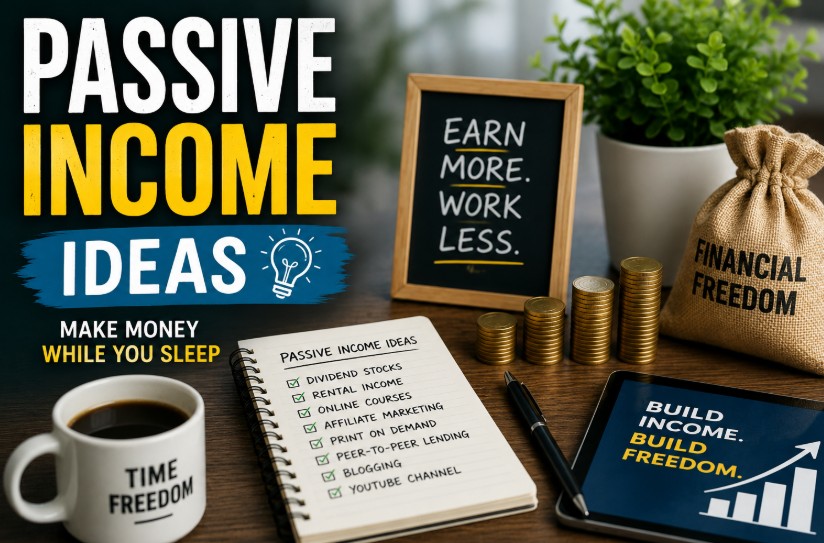
Passive Income Ideas UK: Best Legitimate Ways to Earn
Generating passive income ideas in the UK requires a strategic combination of upfront financial investment or targeted time equity to establish automated revenue streams.
Legitimate passive income is never entirely effortless; it involves deploying capital into yield-generating assets or building digital systems that separate time from financial compensation while operating within HMRC tax frameworks.
What Counts as Passive Income in the UK?
In the UK, passive income refers to money earned from ventures in which you are not actively or materially involved on a day-to-day basis.
Legitimate passive income ideas UK residents can pursue include earnings from yield-generating assets like stock dividends, savings interest, and rental properties, alongside automated revenue from intellectual property, digital downloads, or affiliate websites.
These streams generate ongoing revenue with minimal daily operational maintenance after initial setup.
Top Passive Income Ideas UK
The table below evaluates 10 of the most effective passive income strategies available in the UK based on capital, setup effort, risk, and realistic monthly earning potential, mapped against historical FTSE All-Share dividend yields and average UK provider cash rates.
| Passive Income Stream | Upfront Capital Needed | Time/Effort to Set Up | Risk Profile | Realistic Earnings per Month |
| Stocks & Shares ISAs | Low (£25–£100/mo) | Low | Medium to High | £50 – £1,000+ (Capital dependent) |
| High-Yield Savings | Low (£1+) | Low | Very Low | £10 – £400 (Capital dependent) |
| Real Estate REITs | Medium (£100+) | Low | Medium | £20 – £500+ |
| Digital Templates | £0 (Time Heavy) | High | Low | £100 – £1,500 |
| Affiliate Content Hubs | Low (£50–£200) | High | Medium | £200 – £2,000+ |
| Online Courses / E-Books | £0 (Time Heavy) | High | Low | £50 – £1,000 |
| Peer-to-Peer (P2P) Lending | Medium (£100+) | Low | High | £30 – £300 |
| Renting Out a Room (Rent a Room Scheme) | £0 (If space owned) | Low | Low to Medium | £300 – £625 (Tax-free limit) |
| Stock Photography & Assets | Low (Camera/Software) | Medium to High | Low | £20 – £300 |
| Creating a Print-on-Demand Store | Low (£20–£50) | High | Low | £50 – £600 |
1. Stocks & Shares ISAs
Stocks and Shares ISAs allow UK residents to invest up to £20,000 annually into equities and funds, shielding all capital gains and dividend income from HMRC taxes for reliable, compounding wealth building.
-
What is needed to start: An account with an online brokerage platform and an initial deposit or monthly commitment.
-
How to start: Open a Stocks & Shares ISA, select a mixture of global index funds or dividend aristocrats, and set up an automatic monthly investment.
-
Investment required: Very low to start (£25–£100 per month minimums on most platforms).

2. High-Yield Savings & Notice Accounts
Utilizing cash savings accounts or notice accounts protected by the FSCS offers the safest passive income method, providing guaranteed interest payouts on cash balances with zero risk to your principal capital.
-
What is needed to start: A valid UK bank account and capital to deposit.
-
How to start: Compare neobanks and building societies for the highest AER (Annual Equivalent Rate), open the account, and transfer your funds.
-
Investment required: Low (£1 minimum deposit).
3. Real Estate Investment Trusts (REITs)
REITs allow everyday UK investors to gain exposure to large-scale, income-producing commercial and residential property portfolios, bypassing active landlord duties while securing mandatory 90% rental profit dividend distributions.
-
What is needed to start: Access to a retail investment platform or brokerage app that trades publicly listed property shares.
-
How to start: Research UK-focused REITs specializing in high-growth sectors (like logistics or healthcare) and purchase fractional shares through your brokerage.
-
Investment required: Medium (£100+ recommended to scale effectively).
4. Digital Templates & Printables
Designing downloadable digital files like PDF workbooks, specialized budget trackers, or Notion layouts creates a scalable asset class with zero reproduction costs, generating passive, lifetime royalties through automated marketplace downloads.
-
What is needed to start: Graphic design proficiency and access to accessible software or design suites.
-
How to start: Identify user pain points, design structured templates or layout packages, and list them on platforms like Creative Market or Etsy with automated digital delivery.
-
Investment required: £0 upfront capital (relies strictly on time equity).
5. Affiliate Content Hubs
Building niche review blogs, comparison sites, or educational content hubs allows creators to monetize web traffic by embedding specialized tracking links that yield consistent commissions when readers complete external purchases.
-
What is needed to start: A content management system (CMS), a custom domain name, and robust SEO or content planning knowledge.
-
How to start: Secure your website hosting, publish highly targeted informational content, and partner with major retail affiliate programmes or networks.
-
Investment required: Low (£50–£200 for domain, hosting, and professional theme configurations).

6. Online Courses & E-Books
Packaging niche professional expertise into downloadable e-books or structured e-learning modules allows creators to sell educational blueprints an infinite number of times worldwide.
This setup scales similarly to other creative digital routes, such as learning how to make money as a YouTuber, without ongoing shipping or manufacturing logistics.
-
What is needed to start: Deep subject-matter expertise and an online course hosting platform or digital library account.
-
How to start: Outline your syllabus, record standard instructional assets or draft your guide, and publish onto automated platforms that process instant digital delivery.
-
Investment required: £0 upfront capital (primarily time heavy during development).
7. Peer-to-Peer (P2P) Lending
Peer-to-peer platforms enable individuals to act like a traditional bank, directly loaning capital to vetted UK businesses or property developers in exchange for regular monthly interest repayments at highly competitive rates.
-
What is needed to start: An account with an FCA-regulated peer-to-peer lending platform and clear risk mitigation strategies.
-
How to start: Create a platform profile, complete mandatory risk assessments, deposit funds, and use auto-invest parameters to spread your capital across multiple loans.
-
Investment required: Medium (£100+ initial allocation).
8. Renting Out a Spare Room (Rent a Room Scheme)
The UK government’s Rent a Room Scheme provides a highly lucrative, localized income stream, allowing homeowners to earn thousands of pounds completely tax-free every year by letting furnished residential accommodation.
-
What is needed to start: A spare, fully furnished room within your primary residential property.
-
How to start: Prepare the room to a high standard, advertise on local housing platforms, vet prospective lodgers, and draft a standard lodger agreement.
-
Investment required: £0 upfront capital if the property is already owned and furnished.

9. Stock Photography & Digital Assets
Uploading vector graphics, b-roll footage, or audio sound effects to global asset repositories converts creative skill into an automated licensing asset, yielding recurring royalties whenever companies download your work.
-
What is needed to start: High-quality capture equipment (camera/microphone), editing software, and access to major stock asset distribution networks.
-
How to start: Capture niche assets that serve standard business marketing demands, add precise search keywords, and upload them to stock marketplace contributor panels.
-
Investment required: Low (assuming existing ownership of necessary camera gear or design tools).
10. Print-on-Demand E-Commerce
Print-on-demand allows creators to launch e-commerce storefronts without stocking physical inventory, leveraging automated third-party suppliers who print and ship merchandise directly to customers only after a sale occurs.
-
What is needed to start: Graphic design concepts, an e-commerce platform integration, and an account with a specialized print fulfillment supplier.
-
How to start: Create eye-catching text or graphic designs, sync your storefront to a print supplier, and let automation handle printing, packaging, and shipping.
-
Investment required: Low (£20–£50 for storefront tools or basic advertising configurations).
Is Passive Income Taxable in the UK?
Yes, all passive income generated within the UK is legally subject to taxation once it exceeds your standard personal allowances or specific asset-class tax thresholds.
HMRC distinguishes between active trading revenue, investment dividends, savings interest, and property rental returns. Each individual stream carries its own distinct tax bands and regulatory exemptions.
When Will Passive Income Become Taxable?
Your passive income shifts from tax-free to taxable the moment it crosses individual allowance thresholds set by HMRC within a single financial year:
-
The Trading Allowance: Digital asset sales or affiliate marketing income becomes taxable once your gross annual revenue exceeds £1,000, keeping in mind the recent HMRC side hustle tax limit changes.
-
The Personal Savings Allowance (PSA): Basic rate taxpayers can earn up to £1,000 in savings interest tax-free; higher rate taxpayers are limited to £500. Any interest above this is fully taxable.
-
The Dividend Allowance: Dividend returns from stocks held outside of an ISA wrapper become fully taxable once they surpass the annual £500 tax-free limit.
-
The Rent a Room Scheme: Residential rental earnings from letting a room inside your primary home become taxable once gross earnings cross £7,500 annually.
HMRC requires you to report any gross income over £1,000 from casual online sales or affiliate links via a Self Assessment tax return, even if you consider it a casual side hustle.
Important Things to Look at Before Starting Passive Income
Before deploying capital or time equity into building passive revenue streams, you must rigorously evaluate several core risk vectors:
-
Upfront Allocation Requirements: Quantify whether a stream demands heavy financial capital (e.g., REITs, dividend portfolios) or high upfront time investments (e.g., digital template creation, blogs).
-
Regulatory & Tax Compliance: Assess how the earnings integrate into your current tax bracket, ensuring strict alignment with HMRC reporting structures and ASA disclosure rules.
-
Platform Dependency and Platform Risk: Analyze whether your income depends on third-party digital marketplaces (like Etsy or Amazon) that can change search algorithms or payout fee percentages overnight.
-
System Automation Capabilities: Verify that the infrastructure can truly operate on automation; if a system requires daily maintenance or active client fulfillment, it remains an active side hustle rather than passive income.
Final Summary
Building real momentum with passive revenue streams requires matching your available resources, whether cash capital or available time, to the right asset class.
If you find you don’t currently have the surplus resources to invest in passive setups, exploring well-paid jobs without qualifications can provide an alternative way to boost your primary active earnings first.
Beginners should first make full use of the £1,000 HMRC Trading Allowance via simple digital creations, or maximize tax-free investment wrappers like a Stocks and Shares ISA.
Avoid falling for overhyped online strategies; instead, pick one specific method, focus on creating high-quality assets, and set up reliable automated systems to manage them over the long term.
FAQ
Can ChatGPT make me money or create truly passive streams?
No, AI tools cannot directly generate passive income independently. They function as efficiency software to accelerate content planning, template coding, or product drafting, but human strategic oversight, editing, branding, and system setup remain mandatory to build a compliant asset.
What is the highest paying passive income?
Historically, direct equity ownership in successful business enterprises and prime commercial real estate investments offer the highest payouts, though they require significant upfront capital.
If you lack the funds to invest heavily, focusing on active high-earning corporate paths like jobs that pay £100k a year without a degree can help you build the initial capital required to fund these yields.
Is passive income taxed in the UK, and do I need to register with HMRC?
Yes, all income above personal allowances is taxable. Financial interest, dividends, and property rentals have specific tax thresholds, while digital product sales exceeding the £1,000 annual Trading Allowance must be declared via an official HMRC Self Assessment tax return.
What is the safest stream for beginners?
High-yield savings accounts and cash notice accounts held with institutions protected by the Financial Services Compensation Scheme (FSCS) provide the safest option, guaranteeing capital protection up to £85,000 per person, per institution.
Can a limited company hold passive investments?
Yes, UK business directors frequently utilise corporate structures to hold property assets or investment portfolios, which can offer corporate tax planning efficiencies depending on individual financial circumstances.
Do I need an advisor to buy REITs or index funds?
No, individuals can access these assets directly via online investment platforms or DIY brokerage accounts, though seeking independent financial advice remains beneficial for complex setups.
How long does it take to build a passive stream from digital products?
It typically takes three to nine months of upfront research, creation, and search optimization before an automated digital asset begins generating consistent, hands-off monthly sales.






One Comment