Unoccupied House Insurance: A Complete UK Guide to Protecting Empty Property
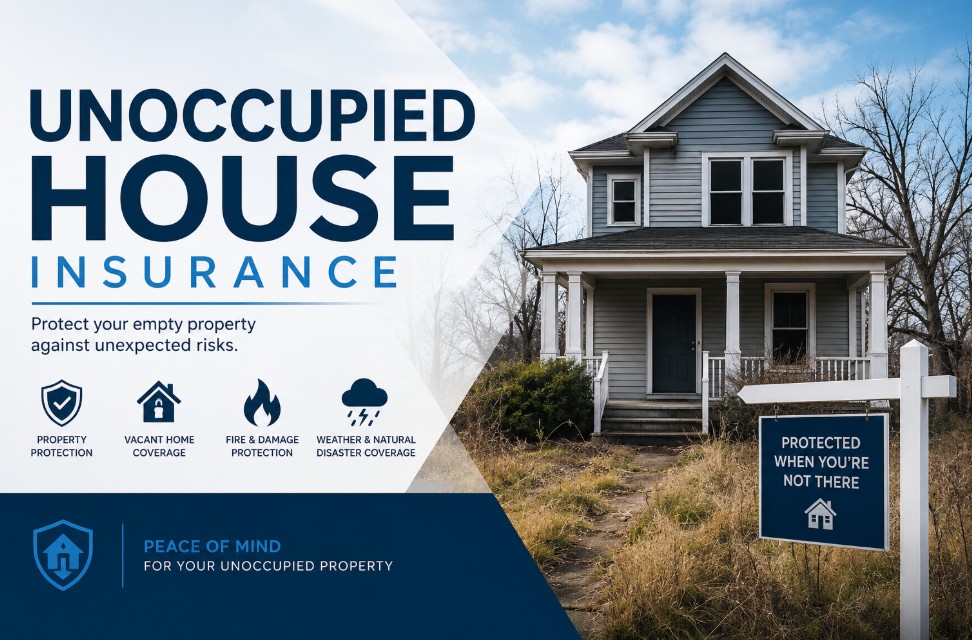
Unoccupied house insurance is a specialist UK property policy designed to protect an empty home left vacant for longer than 30 or 60 consecutive days.
Because standard home cover is typically invalidated during extended vacancies, this dedicated policy safeguards the bricks and mortar against risks like unmonitored water leaks or break-ins.
What is Unoccupied House Insurance in the UK?
Unoccupied house insurance is a dedicated property policy that protects UK homes left empty for over 30 to 60 consecutive days.
It replaces standard home insurance, which underwriters invalidate during extended vacancies due to increased risks of unmonitored damage.
When a home sits empty, standard consumer property policies fail to provide adequate protection.
Specialist unoccupied policies step in as an alternative contractual framework to secure the structural asset, ensuring compliance with UK financial regulations.
What qualifies a home as unoccupied in the UK?
A property qualifies as unoccupied when the registered residents move out, leaving the home without daily domestic activity.
Loss adjusters verify this status during claims by assessing utility consumption records, Council Tax registrations, and the absence of everyday essentials.
Occasional daytime visits to clear post or tend the garden do not reset the unoccupancy clock; insurers strictly measure continuous overnight stays.
When do you need unoccupied home insurance?
You need unoccupied home insurance whenever a UK property sits completely empty without regular, overnight human habitation for more than 30 consecutive days (or 60 days for select premium accounts) due to probate, travel, or renovations.
While standard homeowner policies assume a property serves as a main, active residence, real-world transitions often leave structures empty for months.
Underwriters regulated by the Financial Conduct Authority (FCA) consider a house a higher risk the moment daily maintenance pauses. You must transition to a specialist unoccupied policy during the following milestones:
-
Estate Probate Proceedings: Following the death of a property owner, legal management of an inherited estate commonly takes several months to settle.
-
Major Property Renovations: If structural adaptations, extensions, or extensive interior strip-outs require you to move out of the dwelling temporarily.
-
The Property Sales Gap: When moving into a new home before completing the legal sale or transfer of your previous asset.
-
Extended Travel or Care Placements: Embarking on holidays or occupational assignments abroad lasting over a month, or entering long-term residential medical care.
-
Landlord Tenancy Transitions: Periods when a buy-to-let investment property sits fully empty while marketing to find new occupants.
Vacant vs unoccupied
While often used interchangeably in casual conversation, insurers draw a sharp distinction in their policy wordings between these two states:
-
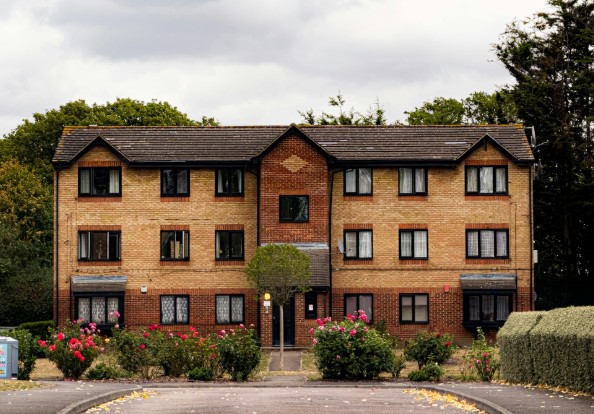
Unoccupied Dwelling: The property contains sufficient furniture, appliances, and amenities for immediate human habitation, but no one is actively living there. Examples include a home stuck in a lengthy probate process or a property waiting for new tenants to move in.
-
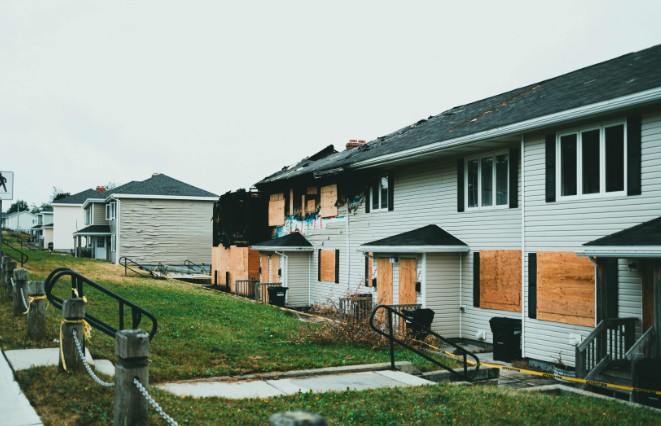
Vacant Property: The structure is completely stripped bare of furniture, personal belongings, and standard fixtures. This usually occurs when a building is undergoing major structural works, has been repossessed, or is completely abandoned. Vacant properties carry a significantly higher risk profile.
What does occupied mean in insurance terms?
In an insurance policy, occupied means the dwelling serves as a primary or regular residence where individuals sleep, cook, and reside overnight.
To legally interrupt a consecutive unoccupancy countdown, most UK underwriters require a person to reside in the property for a minimum of two to seven consecutive nights, rather than making a brief, single-night appearance.
How much does unoccupied house insurance cost in the UK?
The average cost of insuring an empty property is notably higher than a standard owner-occupied home insurance policy.
According to UK market premium data from the British Insurance Brokers’ Association (BIBA), a standard occupied UK home costs roughly £150 to £300 annually.
Conversely, specialist unoccupied cover typically ranges from £400 to £1,200 per year, even for short-term 3 or 6-month terms. Insurers price these policies higher because nobody is on-site to mitigate risks immediately when they occur.
Key factors driving the cost of empty property cover
| Risk Factor | Impact on Premium Price | Mitigation Strategy |
| Geographic Postcode | High (areas with high crime rates) | Install monitored alarm systems |
| Length of Vacancy | Medium (pro-rata costs scale up) | Secure shorter, extendable policy terms |
| Security Hardware | High (substandard locks penalised) | Fit BS3621 mortice locks on all doors |
| Property Rebuild Valuation | High (large or listed properties) | Obtain an accurate professional RICS survey valuation |
How to buy the best unoccupied house insurance?
To buy the best unoccupied house insurance, use a BIBA-registered specialist broker rather than mainstream comparison sites, match your policy length to your exact timeline, and check your existing underwriter for policy riders.
| Strategic Objective | Action Plan | Financial Outcome |
| Leverage Current Underwriter | Call current provider first to request an unoccupancy rider | Avoids cancellation fees and new setup costs |
| Navigate Niche Marketplaces | Use BIBA (British Insurance Brokers’ Association) brokers instead of generic comparison sites | Accesses non-standard underwriters not listed on mainstream engines |
| Optimise Contract Length | Match term closely to probate or renovation timelines | Saves money compared to paying for a full annual policy |
To secure the right cover at the best price, you can follow this step-by-step checklist:
-
Audit the Existing Policy: Read your current home insurance policy booklet to find the exact clause specifying the unoccupancy day limit.
-
Request a Mid-Term Adjustment: Contact your current provider to ask if they can extend the unoccupancy limit for a small additional premium.
-
Establish the Rebuild Cost: Ensure you are using the actual structural rebuild cost from the building’s survey, not the market value, to avoid over-paying.
-
Engage Specialist Brokers: Consult dedicated brokers registered with the British Insurance Brokers’ Association (BIBA) who specialise in non-standard risks.
-
Compare Tiers of Peril Cover: Evaluate whether you need basic FLEEA cover or full comprehensive protection based on the property’s condition.
-
Confirm Inspection Feasibility: Verify that you can realistically complete the mandatory physical property inspections required by the underwriter’s terms.
What does unoccupied house insurance typically cover and not cover?
Unoccupied house insurance covers unexpected structural perils like fire, storm damage, flooding, and public liability. It strictly excludes gradual wear and tear, unforced entry thefts, and unauthorised structural renovations.
Understanding the fine boundaries of your policy wording is vital to ensure claims are approved by a loss adjuster. These policies serve as financial safety nets for catastrophic events, not as a shortcut for active asset upkeep.
What is typically covered under a specialist policy?
-
Property Damage Tiers (FLEEA): Protection against core perils such as Fire, Lightning, Earthquake, Explosion, and Aircraft. Higher premium tiers can reinstate cover for storm, flood, and theft.
-
Public Liability Protection: Covers legal defence costs and compensation payouts (typically up to £2 million, scaling up to £5 million on premium policies) if a third party, a contractor, or even an unlawful trespasser suffers bodily injury or property damage while on the empty premises.
-
Trace and Access Cover: Pays for the cost of removing floors or breaking through walls to locate the source of a hidden, leaking pipe that threatens the structural integrity of the building. In the UK, this is frequently capped at a standard limit of £5,000.
What is strictly excluded from cover?
-
Theft via Unforced Entry: If a burglary occurs while external doors or windows are left unbolted or unlatched, insurers consider this a basic security failure and will refuse payouts.
-
Gradual Wear and Tear: Slow, predictable deterioration such as rising damp, wet rot, or roof tiles naturally slipping over time due to age.
-
Deliberate Maintenance Neglect: Damage caused by a failure to clear gutters, remove overhanging dead trees, or repair known minor leaks.
-
Insect and Pest Infestations: The cost of eradicating mice, wasps, or birds that nest in an unmonitored attic space.
What insurance do I need for an empty property?
To protect an empty property, you need specialist unoccupied buildings and contents insurance. This non-standard cover ensures the physical structure and remaining internal assets stay protected against major risks after standard coverage limits expire.
Is building insurance the same as home insurance?
No, building insurance is a specific component of a broader home insurance package. Home insurance typically serves as an umbrella term encompassing two distinct types of household insurance:
-
Buildings Insurance: Covers the physical structure, including walls, roofs, windows, floors, and permanent outbuildings.
-
Contents Insurance: Covers the moveable possessions kept inside the property, such as furniture, freestanding appliances, and personal items.
While home insurance is not legally compulsory in the UK, mortgage lenders almost universally mandate active buildings insurance as a non-negotiable condition of the loan agreement to secure their capital.
| Feature / Cover Element | Standard Home Insurance | Specialist Unoccupied Property Insurance |
| Standard Vacancy Limit | Strict 30-day maximum | Flexible (3, 6, 9, or 12-month terms) |
| Public Liability Cover | Included (usually £2m) | Included (essential for trespassers) |
| Escape of Water (EoW) | Fully covered as standard | Restrictive (requires heating or drain) |
| Malicious Damage & Theft | Fully covered | Often restricted unless security met |
| Premium Risk Pricing | Baseline consumer rates | Higher premiums due to the increased risk of undetected damage |
Unoccupied House Insurance Provider Comparison
Mainstream UK insurance companies handle property unoccupancy through distinctly different underwriting guidelines, policy extensions, and specialist rules.
| Insurance Provider | Standard Unoccupancy Limit | Short-Term Extension Options / Workarounds | Long-Term Vacancy Strategy & Terms | Target Demographics & Core Policies |
| Saga | 60 consecutive days | Not usually required for short trips due to a generous standard allowance. | Policyholders are moved to a specialist tier that requires documented physical property inspections. | Specifically caters to the over-50 market, making it ideal for retirees travelling abroad. |
| AXA | 30 consecutive days | Offers short-term extensions through a dedicated probate team for inherited estates awaiting a Grant of Probate. | Cover is often restricted to basic FLEEA perils (Fire, Lightning, Earthquake, Explosion, Aircraft) unless stringent security criteria are met. | Standard mainstream consumer property lines with strict automated threshold tracking. |
| Aviva | 30 consecutive days | Provides specialised short-term vacancy extensions specifically managed by dedicated, in-house probate teams. | Policies switch over to non-standard baseline terms with elevated excesses and strict mandatory inspection frequencies. | Comprehensive consumer and commercial portfolios utilising rigid policy schedules. |
| Admiral | 30 consecutive days | Might offer a brief, temporary extension for an extra premium if a house sits empty specifically during an active move or renovation. | Standalone empty home insurance is not sold on comparison sites; the provider refers long-term vacancies to a non-standard specialist partner. | Aggressive mass-market provider that relies on third-party specialist syndicates for out-of-scope property risks. |
What is the unoccupied excess on home insurance?
An unoccupied excess is an increased financial contribution that the policyholder must pay toward a claim when a loss occurs while the property is empty.
When analysing policy schedules, owners frequently discover that standard policy excesses increase sharply once a property crosses the 30-day unoccupancy threshold.
Industry data from the Association of British Insurers (ABI) highlights a common pattern during claims: standard policy excesses spike sharply to between £1,000 and £2,500 for Escape of Water (EoW) the moment a property crosses the 30-day empty threshold.
Because a small pipe leak can run uninterrupted for weeks in an empty home, the resulting damage to flooring, joists, and ceilings can easily run into thousands of pounds to repair. Insurers use elevated excesses to share this financial risk with the property owner.
Unoccupied house insurance during renovation
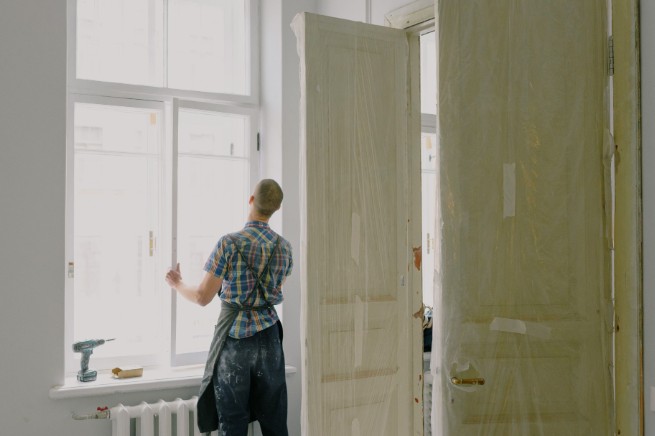
Unoccupied house insurance during renovation protects properties undergoing building works. Standard insurance becomes invalid when structural changes occur, requiring a specialist policy that covers existing structures, works in progress, and building materials.
When arranging cover for a property undergoing renovations, owners must look for specialised building works insurance or an unoccupied policy tailored for structural alterations. This covers the existing structure, the new works in progress, and the building materials stored on site.
To avoid common pitfalls, property owners should ask their insurance provider several key questions before work begins:
-
Does my public liability coverage extend to accidents caused directly by hired independent contractors?
-
What specific value limit applies to building materials and tools stored overnight within the unhabitated structure?
-
Will the policy remain active if the property is left without functioning utilities or secure doors during the renovation phase?
How to keep your cover valid?
Securing an empty property policy is only the first step. To ensure a future claim is approved, owners must strictly comply with the policy’s conditions and warranties.
When reviewing decisions on disputed claims, loss adjusters frequently reject payouts because the property owner failed to follow basic risk-mitigation terms outlined in the policy wording.
Unmonitored properties can suffer from rapid water damage, structural issues from temperature shifts, and an increased risk of targeted burglary.
The Property Monitoring Routine
To keep coverage valid, property owners must implement a rigorous maintenance and monitoring routine:
-
Log Frequent Physical Inspections: Most underwriters require a designated person to perform a comprehensive internal and external property inspection every 7 to 14 days.
-
Keep a clear paper trail: Document every single inspection visit with a physical logbook kept on-site, dated smartphone photos, or smart lock entry timestamps to provide clear proof to your insurer if you ever need to claim.
-
Enforce Strict Winter Heating Rules: Between the months of October and April, insurers usually mandate that the central heating system be kept at a continuous baseline temperature (typically 15°C) or that the entire water mains system be completely isolated and drained to prevent frozen, burst pipes.
-
Upgrade Locking Mechanisms: Ensure all accessible windows have functioning key-operated locks and that external doors feature five-lever mortice deadlocks conforming to BS3621 standards.
-
Manage External Appearances: Keep the property looking lived-in by arranging for regular garden maintenance, removing accumulated post from behind the front door, and setting internal lamps on timers.
Property owners should be completely transparent with their provider. Attempting to hide a vacancy or misrepresenting an empty home as occupied can lead to cancelled policies, unpaid claims, and a permanent record on the central Insurance Fraud Register (IFR).
Summary and Next Steps
Managing an empty property requires careful attention to avoid standard insurance exclusions. To protect your investment, check your current policy documents to see exactly when your standard coverage ends.
If your vacancy will pass that limit, contact a specialist broker to set up an unoccupied property policy. Pairing the right policy with regular property checks and winter weather protection will help keep your asset safe and secure throughout its empty period.
FAQ about Unoccupied House Insurance
How long can I leave my house unoccupied before my insurance is invalid?
Under standard UK home insurance terms, your policy becomes invalid if the property is left unoccupied for more than 30 consecutive days. Some specialist or premium providers offer an extended baseline allowance of 60 days before requiring you to switch to a dedicated empty property policy.
What is not covered by home insurance when a house is empty?
Standard home insurance typically excludes escape of water, frozen pipe bursts, malicious damage, theft, and glass breakage once the property passes its consecutive unoccupancy limit. Additionally, policies do not cover gradual wear and tear, damp, or pest infestations.
Is it illegal to not have building insurance in the UK?
No. It is not illegal under UK law to go without cover. However, if the property has an active mortgage, your lender will contractually require you to maintain valid buildings insurance to protect their loan.
Does empty house insurance cover legal fees for evicting squatters?
Basic unoccupied property policies do not cover squatter eviction costs. To protect against this risk, property owners must specifically purchase a legal expenses insurance add-on or choose a comprehensive policy that explicitly includes squatter eviction assistance.
Can I buy short-term unoccupied house insurance for just 3 months?
Yes. Many specialist UK underwriters offer flexible short-term policies lasting 3, 6, or 9 months. These are ideal for homes going through probate or awaiting a sale completion.