
The Definitive Guide to Business Ideas from Home in the UK
Last Updated on
The best business ideas from home in the UK span digital services (virtual assistance, copywriting, SEO, design) and hands-on local services (ironing, meal prep, alterations, pet sitting).
Most can launch for under £50, but you must register with HMRC once gross income passes £1,000, check your tenancy or mortgage terms, and hold the right insurance before trading.
Setting up a sustainable venture from your own property remains one of the most accessible routes to extra income in the UK, and as of 2026 the rules for doing it properly are more codified than ever, from tighter Companies House address requirements to the rollout of Making Tax Digital.
Key takeaways
- You can earn up to £1,000 gross per tax year tax-free under HMRC’s trading allowance before you must register as self-employed.
- Once gross income passes £1,000, register with HMRC by 5 October following the end of that tax year, or face penalties.
- From April 2026, sole traders and landlords earning over £50,000 must use Making Tax Digital for Income Tax, not annual Self Assessment alone.
- Companies House registered offices can no longer be a PO Box; you need a physical UK address that can receive and acknowledge post.
15 Best Business Ideas from Home UK
1. Virtual Assistance (VA)
A Virtual Assistant provides remote administrative, organisational, and technical support to business owners, executives, or busy agencies.
Daily tasks generally include managing chaotic email inboxes, coordinating calendars across multiple time zones, booking travel, entering data, and handling basic customer support inquiries.
- Study & Training Details: No formal university degree is required. Focus your study on Business Administration, Digital Communication, or Project Management. Acquiring proficiency in project management methodologies (like Agile or Scrum) can elevate you to an Executive VA level.
- Key Skills to Master: Google Workspace (Docs, Sheets, Calendar), Slack, Trello/Asana, basic bookkeeping tools, and time-management frameworks across multiple time zones.
- Setup Cost: £0. You only need your existing smartphone, laptop, and a reliable home internet connection. Operations can be run entirely using free digital tools like Google Workspace (Docs, Sheets, Calendar) and Slack.
-
Expected Income: £20 – £35 per hour for general administrative tasks. Specialised tech VAs or executive project managers can command £40 – £60+ per hour.
2. SEO Consulting & Content Writing
This role combines structural search engine optimisation with strategic content creation. You write high-authority blog posts, informative guides, and landing pages optimised for search engines and modern AI discovery engines (Generative Engine Optimisation).
Beyond writing, you audit website architectures, perform targeted keyword research, and fix broken links to help brands increase their organic online visibility.
-
Study & Training Details: Excellent for individuals with backgrounds in English, Journalism, Marketing, or Media & Communications. To master modern search environments, dedicate study time to Search Engine Optimisation (SEO) principles and emerging Generative Engine Optimisation (GEO), understanding how AI engines (like Google AI Overviews) pull and cite digital information.
-
Key Skills to Master: Keyword research tools (Semrush, Ahrefs, Moz), technical website auditing (fixing broken links, redirect maps), data analytics (Google Analytics 4, Google Search Console), and persuasive on-page optimisation.
-
Setup Cost: £0 – £50. You can start utilising free keyword research tools, Google Analytics, and open-source writing platforms. Initial capital can later be used to invest in premium SEO auditing suites.
-
Expected Income: Content writing typically yields £50 – £150 per article for beginners, scaling to £300 – £800+ per piece for high-end technical niches. Structural SEO consultants charge £500 – £1,500+ per month per client on ongoing retainers.

3. Online Academic Tutoring
This involves leveraging your academic background or subject matter expertise to teach school-aged students, university applicants, or working professionals.
You deliver personalised educational sessions via remote interactive video platforms, design tailored homework assignments, and provide structured exam-preparation strategies for standardised tests like GCSEs, A-Levels, or language proficiency certifications.
-
Study & Training Details: Requires strong academic credentials or a degree in the specific field you wish to teach (e.g., a BSc in Mathematics, BA in English Literature, or Modern Foreign Languages). Studying the current UK National Curriculum frameworks for GCSEs and A-Levels is critical to structuring effective lessons.
- Key Skills to Master: Pedagogy and lesson planning, interactive whiteboard software (Miro, BitPaper), remote delivery platforms (Zoom, Google Meet), and standard exam-preparation strategies.
- Setup Cost: £0. Requires an integrated or external webcam, a clear microphone, a quiet room, and a steady internet connection. You can use free video conferencing tiers like Zoom, Google Meet, or Skype alongside digital whiteboards.
-
Expected Income: £20 – £40 per hour for standard school subjects. Highly specialised university-level topics, entrance exam prep, or corporate professional coaching routinely fetch £50 – £90+ per hour.
4. Social Media Management
A Social Media Manager handles the complete public digital footprint for a business across platforms like Instagram, LinkedIn, TikTok, and Facebook.
The day-to-day work involves conceptualising and curating content calendars, filming short-form video content, writing engaging captions, replying to direct messages and comments to build community, and managing organic visibility campaigns.
-
Study & Training Details: Useful fields of study include Digital Marketing, Creative Media, Graphic Design, or Public Relations. You must study algorithm mechanics across different platforms, short-form video storyboarding, and community management psychology.
- Key Skills to Master: Video editing applications (CapCut, Adobe Premiere Rush), design suites (Canva Pro), analytics reporting, and platform-native publishing tools (Meta Business Suite, LinkedIn Scheduler).
- Setup Cost: £0. Managed entirely via your smartphone and laptop. Content can be designed using the free tiers of graphic design platforms like Canva, and scheduled using free built-in social media publishing dashboards.
- Expected Income: £300 – £600 per month per client for basic management (e.g., 3 posts a week and minor community engagement). Experienced multi-platform managers handle comprehensive strategies for £1,000 – £2,500+ per month per client.
5. Digital Template Design
This business relies on building a downloadable digital asset once and selling it infinitely to a global market.
You design highly structured, functional, and reusable digital layouts, such as advanced budgeting spreadsheets, custom business organisation workspaces in Notion, or curated social media graphics and presentation decks in Canva, that solve specific organisational bottlenecks for buyers.
-
Study & Training Details: Independent study in UI/UX Design, Functional Systems Architecture, and Graphic Design is highly beneficial. Study how businesses suffer from organizational bottlenecks to design assets that directly solve workflow inefficiencies.
- Key Skills to Master: Advanced spreadsheet formulas (Google Sheets/Excel), complete workspace architectural design in Notion, vector graphic design, presentation design, and e-commerce listing optimisation (Etsy SEO, Gumroad structuring).
- Setup Cost: £0. Created entirely on free tiers of productivity and design software. Digital files can be hosted and sold through free-to-list online marketplaces (like Etsy) or digital e-commerce platforms (like Gumroad) that only take a small percentage fee per transaction.
-
Expected Income: Individual templates generally retail for £5 – £30 each. Because the product is infinitely replicable with zero inventory costs, scaling this to thousands of downloads can yield anywhere from £500 to £4,000+ per month in highly passive net profit.
6. Freelance Copywriting
Unlike standard content writing, copywriting is the art of persuasive writing designed to drive an immediate, specific action.
Your job is to write high-converting sales letters, launch emails, digital advertising scripts, promotional newsletters, and corporate landing pages that compel the reader to purchase a product, sign up for a service, or download an asset.
- Study & Training Details: Deep study into Consumer Psychology, Behavioral Economics, and Marketing/Advertising History is vastly more important than standard creative writing. You must study how words trigger psychological buying impulses and drive conversion actions.
- Key Skills to Master: Clear data-driven writing, A/B split-testing concepts, email marketing mechanics, landing page architecture, and headline wireframing.
- Setup Cost: £0. A text editor, a laptop, and an analytical mind are the only requirements.
-
Expected Income: Beginner copywriters charge £25 – £40 per hour or project-equivalent flat fees. Experienced, conversion-focused copywriters charge thousands per sales page or command £2,000 – £5,000+ monthly retainers plus a percentage performance bonus on the sales revenue generated by their copy.
7. Remote Tech Support & Digital Systems Setup
This role involves acting as an on-demand IT department for non-technical individuals, solopreneurs, and small businesses.
You help clients securely set up cloud software integrations, configure professional email domains, troubleshoot software glitches, manage secure password architectures, and optimise hardware performance via secure remote-desktop connections.
- Study & Training Details: Highly suited for those studying Computer Science, Information Technology, or Network Administration. Acquiring certifications such as CompTIA A+, Google IT Support, or Cisco CCNA adds immediate corporate credibility.
- Key Skills to Master: Cloud software architecture and integrations, DNS and professional domain configuration, remote-desktop diagnostic software (TeamViewer, AnyDesk), password management systems, and cross-platform OS troubleshooting (Windows, macOS, Linux).
- Setup Cost: £0. Utilising a reliable internet connection, your existing computer, and free remote-access diagnostic tools.
-
Expected Income: £25 – £50 per hour for ad-hoc troubleshooting fixes. Monthly technical support and data maintenance contracts for small businesses typically range from £300 – £1,000+ per month.
8. Audio & Podcast Editing
As the audio industry expands, corporate brands and independent creators require clean audio assets.
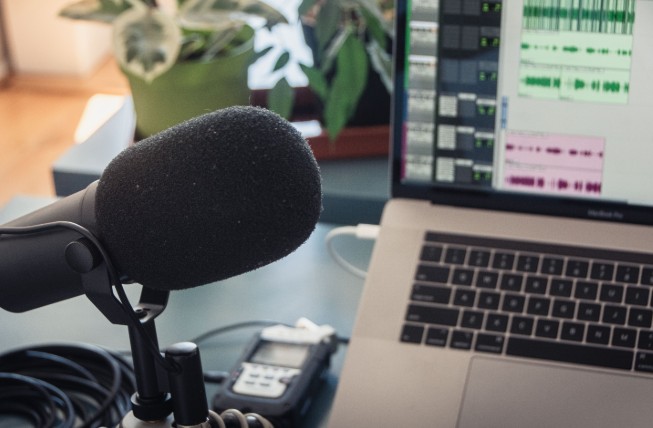
Your job is to take raw audio files, trim long pauses and filler words (like um and ah), eliminate ambient background noise or hiss, balance the volume levels across multiple speakers, and seamlessly blend in intro music, outro clips, and mid-roll sponsorships.
-
Study & Training Details: Focus study on Audio Engineering, Sound Design, or Media Production. You need to study the physics of sound (frequencies, decibel limits) to successfully repair compromised audio files recorded on poor consumer equipment.
- Key Skills to Master: Digital Audio Workstations (DAWs like Audacity, Adobe Audition, or Reaper), mastering tools (equalisers, compressors, limiters), metadata tagging, and podcast distribution platform RSS mechanics.
- Setup Cost: £0 – £40. You can edit files using high-quality, open-source audio editing software (such as Audacity) on your existing laptop. A decent pair of studio headphones is the only recommended physical investment as you grow.
-
Expected Income: £40 – £100 per podcast episode for basic editing. Comprehensive packages that include show note writing, audiogram creation for social media, and distribution platform management charge £400 – £1,200+ per month per show.
9. Transcription & Translation Services
Transcription involves listening to raw audio or video recordings (legal depositions, medical notes, corporate meetings, or media interviews) and converting them into highly accurate, correctly formatted text documents.
Translation requires taking official documentation, website pages, or marketing collateral from one language and accurately translating it into another while preserving cultural nuances, tone, and legal accuracy.
-
Study & Training Details: Translation requires native-level or certified Bi-lingual/Multi-lingual Fluency (often backed by a degree in Modern Languages or professional translation certifications). Transcription requires a deep grasp of local idioms and syntax, often benefiting from foundational study in Legal or Medical Terminology to access high-paying niches.
- Key Skills to Master: High-accuracy typing (aim for 70+ WPM), specialised media playback software, transcription foot-pedal coordination, and absolute mastery of formatting conventions and data confidentiality rules.
- Setup Cost: £0. Requires multi-lingual fluency for translation or excellent typing speed and accuracy for transcription. You use free media playback software and standard word processors.
-
Expected Income: Transcription usually pays £0.50 – £1.50 per audio minute. Translation is typically billed at £0.07 – £0.20+ per word, which easily translates to £30 – £60+ per hour for technical, medical, or legal documents.
10. Graphic Design & Branding
Graphic designers create visual concepts to communicate ideas that inspire, inform, and captivate consumers.
From home, you specialise in designing clean vector logos, comprehensive brand identity guidelines (colour palettes, typography rules), marketing flyers, social media banners, and pitch presentation decks for early-stage startups and small brands.
-
Study & Training Details: Formal study or intense self-education in Visual Arts, Fine Arts, Graphic Design, or Typography is essential. You must study the principles of design: balance, contrast, hierarchy, color theory, and vector asset creation.
- Key Skills to Master: Vector editing programs (Adobe Illustrator, Affinity Designer, Inkscape), brand guideline assembly, presentation pitch-deck configuration, and exporting files correctly across various print and web specifications.
- Setup Cost: £0 – £30. While advanced professionals use premium design ecosystems, beginners can build complete portfolios and execute high-quality vector designs using powerful free or low-cost digital design programs.
-
Expected Income: £25 – £50 per hour for ad-hoc asset creation. Full brand identity packages (logo, typography, business cards, social kits) range from £500 – £2,500+ per project.
5 High-Demand, Non-Tech Home Businesses
If you prefer a business model that does not require sitting in front of a screen, writing code, or managing digital software frameworks, these five highly successful, hands-on service businesses can be run from home with virtually zero upfront capital.
1. Residential Ironing Service
Instead of going out to clean or iron at a client’s property, you have clients drop off their clean, wrinkled laundry at your house (or you offer a doorstep collection if you choose).
You iron everything in your own home using your own iron and board, hanging them on a standard clothing rail ready for pickup.
-
Study & Training Details: Study textile heat thresholds, garment care labels, and industrial pressing techniques for complex items like pleated skirts, dress shirts, and delicate silk fabrics.
-
Key Skills to Master: High-efficiency vertical pressing, flawless collar and sleeve creasing, fabric identification, and organized garment storage.
-
The Zero-Capital Strategy: You use the standard iron, ironing board, and clothes hangers you already own in your home. You require clients to provide their own garment bags or hangers if they want specific storage.
-
Setup Cost: £0 (using your existing household iron).
-
Expected Income: £12 – £15 per hour, or commonly charged at £1.50 – £2.50 per shirt/garment. Ironing a standard basket of 20 shirts can yield £30–£50 in just a couple of hours.
2. Batch-Cooked Meal Preparation & Baking
If you love cooking, you can operate a micro-catering or meal prep service from your home kitchen.
Busy local working professionals or families pay you to cook healthy, home-style meals, healthy treats, or custom baked goods in bulk. They collect their weekly or daily food containers directly from your door.
-
Study & Training Details: You must study local food safety standards, kitchen sanitation practices, cross-contamination prevention, and proper food preservation/chilling methods.
-
Key Skills to Master: Precision ingredient portioning, batch-cooking time management, allergen management, and menu nutritional balancing.
-
The Zero-Capital Strategy: You structure your service on a pre-paid model. Clients pay for their order before you go shopping. You use your existing kitchen pots, pans, and oven, and clients provide or pay for their own reusable plastic meal-prep containers.
-
Setup Cost: £0 (leveraging your current kitchen setup and pre-paid client ingredients).
-
Expected Income: £15 – £25 per hour equivalent. Preparing a week’s worth of lunches and dinners for 3 local clients can easily bring in £150 – £250 per week for a few days of cooking.
3. Professional Home-Based Clothes Alterations & Tailoring
If you know how to sew, you can run a repair and alteration service from your living room. Neighbors drop off trousers that need hemming, dresses that need taking in, or broken zips that need replacing, and pick them up when finished.
-
Study & Training Details: Study advanced garment construction, structural sewing machine mechanics, and how different fabrics (denim, stretch fabrics, wool) behave under tension.
-
Key Skills to Master: Invisible stitching, precision pinning/measuring, rapid zip replacement, and fabric lining repairs.
-
The Zero-Capital Strategy: You use the sewing machine and basic sewing kit (needles, pins, existing thread colors) you already own from your personal hobby or training. You require clients to buy and provide any specialized matching zips or unique buttons needed for their repair.
-
Setup Cost: £0 (assuming you already own a standard sewing machine).
-
Expected Income: £10 – £20 per alteration job. Shortening three pairs of trousers or fixing a couple of broken dress zips in an afternoon easily generates £40 – £60.

4. Arts, Crafts, & Handmade Goods Production
You create physical, high-demand handmade items right at your kitchen table or a dedicated desk space.
This could include hand-poured wax candles, artisan soaps, hand-knit blankets, custom jewelry, or painted woodwork. Local customers buy them through neighborhood groups, word-of-mouth, or collect them directly from you.
-
Study & Training Details: Deeply study the chemistry or mechanics of your chosen craft (e.g., flashpoints of wax and fragrance oils for candles, or curing times and lye-safety for soap making).
-
Key Skills to Master: Material quality control, raw ingredient measurement, assembly line optimization, and unique product presentation.
-
The Zero-Capital Strategy: You launch by creating your first batch of products using the leftover craft supplies, tools, moulds, or materials you already have sitting in your cupboards. You reinvest the profit from your very first sales to buy your next round of raw materials.
-
Setup Cost: £0 (using your existing craft inventory).
-
Expected Income: Variable based on the item, but typically yields a 50% to 70% profit margin over material costs. Selling 20 handmade candles or soaps a week can bring in £100 – £200 of purely home-based profit.
5. Daytime Pet Sitting (Home Doggy Daycare)
Instead of walking dogs outside in groups, you let dog owners drop their pets off at your house in the morning on their way to work and pick them up in the evening.
The dogs care for the day in your house and garden, giving them companionship without you ever having to leave your property.
-
Study & Training Details: Study canine body language, dog separation anxiety management, and multi-dog socialization boundaries to ensure your home remains peaceful and safe.
-
Key Skills to Master: Creating a calm environment, managing pet behavior, and maintaining an organized, clean indoor pet zone.
-
The Zero-Capital Strategy: Owners are strictly required to drop off their dog with its own food, bowls, bed, favorite toys, and waste bags. You supply the physical home space, supervision, and attention.
-
Setup Cost: £0 (your house and secure garden act as the entire business setup).
-
Expected Income: £20 – £30 per dog, per day. Safely watching just two compatible local dogs while their owners are at the office can generate £40 – £60 per day without you stepping foot outside.
6. Home Childminding
Registered childminders care for other people’s children in their own home, typically on a regular schedule that fits around school runs and working parents’ hours.
Study & Training Details: You’ll need to complete an approved introductory childcare course and register with Ofsted (or the Care Inspectorate in Scotland, Care Inspectorate Wales, or the Health and Social Care Trust in Northern Ireland) before you can legally operate.
- Key Skills to Master: Safeguarding and child protection procedures, paediatric first aid, and behaviour management for mixed age groups.
- The Zero-Capital Strategy: Registration and DBS (Disclosure and Barring Service) checks carry unavoidable fees, but beyond that you’re largely using your existing home and garden.
- Setup Cost: £35–£65 for a DBS check plus Ofsted registration fees (typically £35–£103 depending on your income band), and a mandatory paediatric first aid certificate.
- Expected Income: £4 – £6 per hour per child is typical, and childminders caring for 3–4 children simultaneously can realistically earn £500 – £900 per week.
How to start a business in the UK with no money from home?
To start a UK business with zero money, identify a marketable skill, build a freelance platform profile, use free digital tools for operations, network organically to secure a client, and reinvest initial revenues into business bank accounts and legal protections.
-
Identify a single, highly marketable skill you already possess.
-
Create a professional profile on freelance networks like Upwork, Fiverr, or PeoplePerHour.
-
Utilise free tiers of digital tools such as Canva for design, Wave for basic invoicing, and Google Workspace for operations.
-
Network organically on LinkedIn or within local business forums to secure your first foundational client.
-
Reinvest 100% of your initial client revenues to fund subsequent business registrations, insurance, or hardware upgrades.
-
Open a free, dedicated business bank account with digital providers like Monzo Business, Starling, or Tide to keep your personal and commercial funds completely separate.
If you later incorporate as a limited company, budget for Companies House’s current fees: digital incorporation costs £50, rising to £100 from applications made from 1 February 2026, and the digital confirmation statement fee is rising from £34 to £50 from the same date.
Factors to Consider When Evaluating At-Home Business Ideas
Before choosing one of these models, you must assess how well it fits into your daily routine and residential environment. Consider the following criteria:
-
Property and Tenancy Constraints: Check your mortgage agreement or tenancy contract. Some residential leases strictly prohibit running a commercial business from the property, especially if it involves frequent visitors or structural changes.
-
Local Zoning and Council Regulations: Depending on your location, running a business from home may require approval from your local council. This is particularly important for businesses involving food preparation or animal care, which face strict local health and safety inspections.
-
Foot Traffic and Neighborhood Disruption: Consider how client drop-offs and pick-ups (such as laundry clients or pet owners) will affect your neighbors. Excessive traffic or noise can lead to council complaints and disrupt local community relations.
-
Impact on Household Utility Costs: Hands-on businesses can significantly increase your utility bills. Running an iron for hours, keeping an oven on for batch cooking, or operating a sewing machine daily will noticeably increase your electricity, gas, and water consumption.
-
Time Management and Spatial Boundaries: Working where you live requires clear boundaries. You must evaluate whether you have a dedicated, separate space (like a spare room, garage, or clean corner) to store client goods and work materials without encroaching on your personal living space.
-
Insurance Type Matters: Business insurance isn’t one product. Standard home insurance rarely covers business equipment or business-related liability at all, so most home businesses need one or more of the following:
Insurance type Covers Typical home businesses that need it Public liability Injury or property damage to clients/visitors Childminding, pet sitting, tutoring, hairdressing Professional indemnity Claims of financial loss from your advice or work Consulting, VA work, copywriting, bookkeeping Product liability Harm caused by something you made or sold Candles, soaps, baked goods, handmade goods Employer’s liability Legally required the moment you take on any staff, even part-time Any home business that hires help Home business insurance/endorsement Business equipment and stock at your home address Any business storing stock, tools, or equipment at home
Can I legally run a business from my home in the UK?
Yes, running a commercial venture from a residential property is entirely legal in the UK. Provided the overall character of your dwelling remains primarily residential, you won’t usually need to lodge a formal change of use application with your local council.
However, permissions are required if your daily operations cause noticeable noise, structural changes, or regular client foot traffic. Check first.
Tenancy agreements and mortgage clauses
Before launching, review your legal housing documents. Standard residential mortgage agreements and AST (Assured Shorthold Tenancy) agreements frequently contain restrictive covenants regarding commercial activities.
-
Property Owners: Check with your mortgage lender to ensure your home business does not breach your loan conditions.
-
Tenants: Under the Small Business, Enterprise and Employment Act, landlords cannot unreasonably withhold consent for a home business, but you must obtain written permission first.
-
Freeholders: Examine the property deeds for historic restrictive covenants that explicitly ban trade or business operations on the land.
The HMRC £1,000 Tax-Free Trading Allowance
The UK tax system provides a built-in buffer for micro-entrepreneurs. Under the HMRC trading allowance, you can earn up to £1,000 in gross income within a single tax year from casual home-based activities without declaring it or paying tax.
Once your gross turnover crosses this £1,000 threshold, formal registration becomes compulsory.
You must register as a sole trader through Self Assessment or incorporate a limited company via Companies House by the 5th of October following the end of the tax year in which you surpassed the limit.
Making Tax Digital for Income Tax: what changed in 2026
From 6 April 2026, sole traders and landlords with combined gross income over £50,000 from self-employment and property must use Making Tax Digital (MTD) for Income Tax instead of filing a single annual Self Assessment return.
This means:
- Keeping digital records of income and expenses using MTD-compatible software (a spreadsheet works only if paired with approved bridging software).
- Sending HMRC a quarterly update roughly every three months, rather than one return a year.
- Submitting a final year-end declaration by 31 January, as before.
The threshold drops to £30,000 from April 2027 and £20,000 from April 2028, so a home business that starts small on the £1,000 trading allowance can, if it scales, eventually fall inside MTD.
HMRC determines whether you’re in scope by looking at your gross income (not profit) on your most recent tax return, and combines income from multiple self-employed activities or rental income when calculating the threshold.
Businesses below the relevant threshold continue filing Self Assessment exactly as before.
Conclusion
Starting a business from home in the UK is straightforward at small scale: pick a service or product that fits your skills and space, stay under the £1,000 trading allowance if you’re testing the idea, then register with HMRC once you cross it.
From there, three things protect you as you grow, written permission from your landlord or lender, insurance matched to what you actually do (not just generic business cover), and, if you incorporate, a Companies House registered office that meets the current appropriate-address rules.
If your income later grows past £50,000, budget time to move onto Making Tax Digital for Income Tax rather than treating it as a future problem.
FAQ
What business can I start from home in the UK?
Popular options include virtual assistance, SEO and copywriting, online tutoring, social media management, digital template design, home childminding, and hands-on services like ironing or meal prep, most can launch for under £50 in setup costs.
How to make an extra £1000 a month in the UK?
Combine one or two flexible services, such as freelance writing, virtual assistance, or tutoring, charging £20–£40 an hour, with a handful of regular clients. Roughly 6–10 hours a week at typical rates covers £1,000 monthly.
What is the most profitable small business in the UK?
Digital products, such as templates, e-books, or online courses, tend to have the highest margins because you build the asset once and sell it repeatedly with minimal ongoing production cost.
What are 12 unique business ideas for the UK?
Beyond common freelancing routes, consider home childminding, audio/podcast editing, translation services, digital template design, batch-cooked meal prep, residential ironing, upholstery repair, medical billing, DJing, leaflet distribution, oven cleaning, and dog walking.
Do I need planning permission to run a business from home?
Usually not, provided your home’s overall character stays residential and the business doesn’t create significant extra traffic, noise, or structural change. Check with your local council if in doubt, especially for food or animal-related businesses.
What happens if I don’t register with HMRC after passing £1,000?
You risk a failure to notify penalty, calculated as a percentage of the tax owed based on how late and how deliberate the failure was. Registering promptly, even late, generally reduces the penalty compared with HMRC discovering it first.
Can I lose my home business income to tax if I’m also employed?
Yes, your trading profit is added to your employment income when working out which tax band you fall into, though the £1,000 trading allowance and your personal allowance both still apply first.