
Best Joint Account for Couples UK: Top Shared Bank Accounts
Last Updated on
Choosing the best joint account for couples UK balances fee-free accessibility, automated bill management, and shared reward optimisation.
For most UK couples, choosing between a digital challenger bank for seamless app-based budgeting and a traditional high-street institution for direct household bill cashback dictates the absolute financial value of the account.
What is the Joint Account?
A joint bank account is a shared current account co-owned legally by two individuals (such as cohabiting partners, married couples, or family members).
It acts as a central financial hub where both parties can pool income, pay joint household bills, and track mutual variable spending simultaneously.
If you are extending this collaborative household budgeting to younger family members, you might also consider setting up a dedicated free child bank account with a debit card to help them manage independent tracking early on.
How Do Joint Bank Accounts Work?
UK joint bank accounts operate under Financial Conduct Authority (FCA) regulations exactly like individual current accounts, but feature an Either to Sign mandate allowing either partner to independently withdraw money, spend via an individual debit card, or manage direct debits without secondary permission.
Because these structures operate inside standard British financial frameworks, they remain subject to automated regulatory checks, including potential UK government bank account tax collection mechanisms if individual tax or arrears issues cross-contaminate the shared asset.
-
The Either to Sign Mandate: By default, most UK joint accounts operate under an either to sign status. This means either partner can independently make withdrawals, set up direct debits, or spend funds using their dedicated debit card without needing formal approval or secondary authorisation from the other.
-
Mutual Liability: Co-owning an account means you share legal responsibility for any debt accumulated. If the account enters an unarranged overdraft or incurs banking fees, the provider can pursue either individual for 100% of the owed amount, regardless of who spent the money.
-
Unified Access: Both partners receive individual debit cards linked to the exact same balance. Each person gains separate mobile app logins and online banking credentials, providing complete, real-time transparency over all incoming and outgoing transactions.
Best Joint Account for Couples UK: Top 10 Banks Compared
The overall best joint account for UK couples is Starling Bank due to its lack of monthly fees, fee-free overseas spending, and built-in virtual Bills Manager.
For maximising financial returns on bills, Santander Edge is the top reward-focused high-street choice.
When reviewing decisions made by modern cohabiting partners, a common pattern is to deploy a dual-account strategy: utilising a digital-first joint account for everyday variable expenses alongside a traditional high-street account dedicated solely to fixed monthly bills to extract maximum reward values.
| Provider & Account | Monthly Fee | Account Type Focus | Core Reward / Standout Perk | Best For |
|
Starling Bank (Joint Current Account) |
£0 | Digital / App-Based | Built-in Bills Manager & fee-free spending worldwide | Digital All-Rounder & Overseas Travel |
|
Monzo (Joint Current Account) |
£0 | Digital / App-Based | Distinct white debit cards & customised shared Pots | Advanced App-Based Budgeting |
|
Santander (Santander Edge) |
£3 | High-Street Reward | 1% cashback on qualifying utility bills & groceries (capped) | Heavy Household Bills |
|
NatWest (Reward Account) |
£2 | High-Street Reward | £4 monthly cash for 2+ Direct Debits + £1 app log-in bonus | Direct Debit Rewards |
|
First Direct (1st Account) |
£0 | Customer Service | 24/7 UK-based human support & linked 7%, Regular Saver | 24/7 Human Support |
|
Lloyds Bank (Club Lloyds) |
£3 (waived) | High-Street Lifestyle | Choice of annual perk (Disney+, cinema tickets, magazines) | Entertainment Perks |
|
HSBC (Advance Joint) |
£0 | High-Street Core | Preferential lending rates & leader-board Regular Saver access | High-Street Core Banking |
|
Nationwide (FlexDirect) |
£0 | Building Society | 1% debit card cashback for 12 months & member-only rates | Building Society Stability |
|
Barclays (Blue Rewards) |
£5 | High-Street Ecosystem | Cash add-ons, partner tech perks, and ecosystem loyalty | Ecosystem Loyalist Couples |
|
TSB (Spend & Save Joint) |
£0 | High-Street Cashback | £5 monthly cashback for the first 6 months (20 card uses/mo) | Active Debit Card Spenders |
A Quick Tip on Monthly Fees: For accounts like Club Lloyds, the £3 monthly fee is completely waived if you collectively deposit £2,000 or more each month, a threshold most working couples easily clear when pooling their salaries into a shared space.
1. Starling Bank
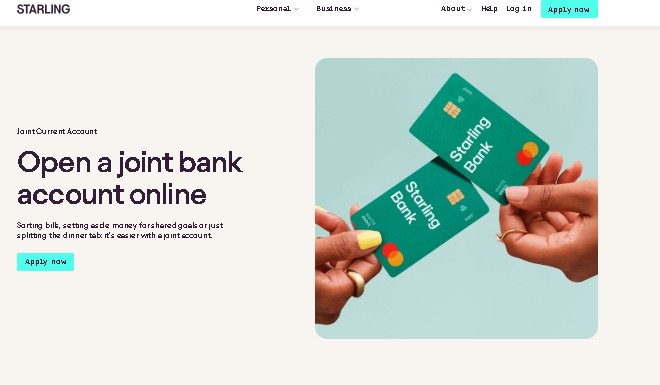
Starling Bank is the premier fee-free digital joint account for UK couples, best known for its Bills Manager feature, which isolates fixed bill money into separate spaces so direct debits never accidentally consume your daily spending cash.
-
Top Features: Fee-free spending and cash withdrawals worldwide, plus instant push notifications for both partners.
-
Bill Management: Features a built-in Bills Manager that automatically routes direct debits out of dedicated sub-saving spaces to prevent accidental overspending.
2. Monzo
Monzo is an app-centric joint account provider best for collaborative budgeting, offering eye-catching white joint debit cards and interest-paying Instant Access Savings Pots at 2.75% AER to hit collective financial goals.
-
Top Features: Distinct, eye-catching white joint cards to separate your personal card from shared household outgoings.
-
Bill Management: Allows couples to set up shared Pots with specific financial targets and automatic purchase categorisation.
3. Santander
The Santander Edge account is the most lucrative high-street joint account for active households, offering 1% cashback on fixed utility bills and 1% on supermarket spending, alongside access to a 6.00% AER linked savings account.
-
Top Features: Earns 1% cashback on eligible household bills (energy, water, council tax, broadband) and an additional 1% on supermarket and travel spending.
-
Caps & Limits: Cashback payouts are capped at £10 per month for each category, requiring a £500 minimum monthly deposit.
4. NatWest
The NatWest Reward account provides a guaranteed net profit of £3 per month after accounting for its £2 monthly fee, paid out to couples who establish two active direct debits and log into the mobile app once a month.
-
Top Features: Delivers a reliable £4 monthly cash return when you establish two active direct debits of £2 or more.
-
App Bonus: Provides an extra £1 monthly bonus simply for logging into the mobile banking app at least once.
5. First Direct
First Direct’s 1st Account is the gold standard for customer support in the UK, offering 24/7 access to live UK-based human agents and a market-leading 7% AER fixed Regular Saver linked directly to the joint balance.
-
Top Features: Consistently wins independent UK customer satisfaction surveys thanks to 24/7 access to UK-based human support staff.
-
Linked Perks: Grants exclusive access to a high-yield 7% AER regular saver account and charges no fee for overseas card usage.
6. Lloyds Bank
Club Lloyds is a lifestyle-first joint account that waives its £3 monthly fee if you pay in £2,000 or more each month, rewarding couples with a choice of annual entertainment perks such as a 12-month Disney+ subscription or cinema tickets.
-
Top Features: Offers a choice of an annual lifestyle benefit, such as a 12-month Disney+ subscription, 6 cinema tickets, or magazine subscriptions.
-
App Rewards: Grants entry into the 2026 Lloyds Rewards hub for personalised retail cashback and monthly prize draws.
7. HSBC
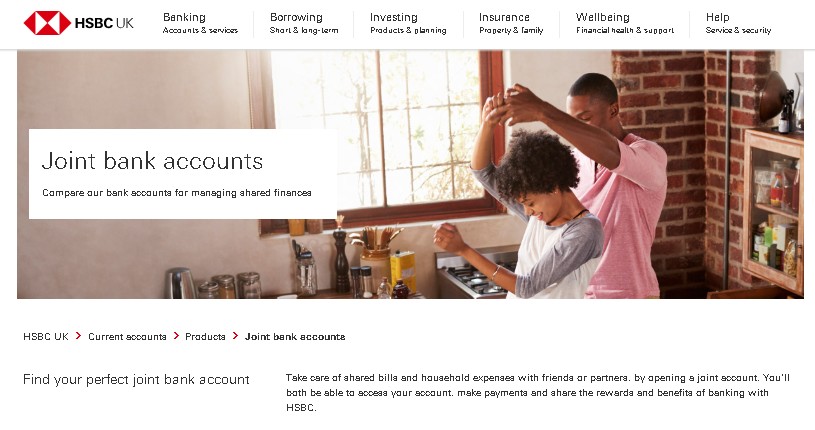
HSBC Advance Joint is an ideal structural bridge for couples looking to group traditional brick-and-mortar current banking alongside elite financial options, unlocking a 5% fixed regular saver facility and preferential interest rates on personal loans.
-
Top Features: Unlocks access to HSBC’s highly competitive fixed-rate Regular Saver facility for short-term cash goals.
-
Borrowing Perks: Provides preferential interest rates on personal loans and structured lines of credit if required.
8. Nationwide Building Society
Nationwide FlexDirect is a member-focused joint option offering 1% debit card cashback for the first 12 months, combined with eligibility for future annual financial distributions through Nationwide’s Fairer Share cash rewards.
-
Top Features: Frequently features competitive introductory interest rates on your primary balance for the first 12 months.
-
Member Benefits: Gives dual access to exclusive member-only savings accounts and potential annual Fairer Share cash distributions.
9. Barclays
Barclays Blue Rewards is a premium high-street framework that integrates joint balances into a broader digital ecosystem, offering tailored cash add-ons, partner tech perks, and discounts on subscriptions like Apple TV+ for a £5 monthly fee.
-
Top Features: Integrates with Barclays Blue Rewards to offer monthly cash add-ons and curated partner discounts.
-
Ecosystem Access: Grants access to premium savings vehicles and simplified multi-product tracking in one application dashboard.
10. TSB
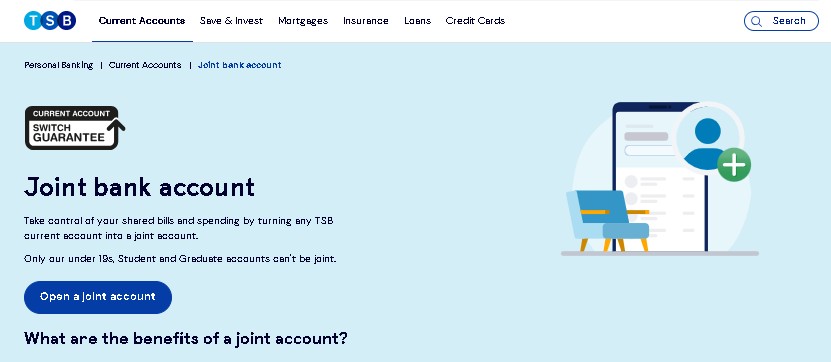
TSB Spend & Save is built for active debit card users, offering a guaranteed £5 monthly cashback payment for the first six months when both partners collectively hit 20 or more card transactions per month.
-
Top Features: Offers a guaranteed £5 monthly cashback payment for the first six months, provided you make at least 20 debit card payments.
-
Savings Integration: Includes Savings Pots that feature automated Save the Change micro-transfers to round up transaction values.
How FSCS Rules Apply to Joint Accounts?
Under Financial Services Compensation Scheme (FSCS) regulations, money in a UK joint current account is legally protected up to £170,000 total (£85,000 per eligible individual, per banking institution) if the provider collapses.
This is an essential addition for safety-conscious couples. If you hold personal accounts with the same bank, be aware that your individual balances share that same total institutional safety ceiling.
For example, if you hold a solo savings account and a joint account with the same bank group, your combined personal coverage cannot exceed £85,000.
Best Joint Account for Couples UK Martin Lewis Hacks
Maximising shared banking systems often involves executing optimised switching manoeuvres popularised across UK personal finance forums.
-
Audit All Current Outgoings: Sit down together and review all active individual direct debits to eliminate duplicate streaming, gym, or insurance subscriptions before combining lines.
-
Review Individual Eligibility: Ensure both partners meet the minimum monthly pay-in requirements (e.g., £500 to £1,250) of the target reward account.
-
Initiate the Current Account Switch Service: Apply for the chosen joint account and opt into the official switching framework to automatically migrate balances, direct debits, and standing orders within 7 working days.
-
Trigger the Dual Bonus Hack: If both partners hold redundant individual accounts, switch both independently into the same newly established joint account to capture double introductory cash incentives if terms allow.
-
Establish an Automated Funding Pipeline: Set up coordinated standing orders from your individual personal income accounts to hit the joint account on the exact same working day each month.
-
Deploy App-Based Bill Managers: Map fixed utility direct debits directly to protected sub-saving spaces so money is automatically locked away safely ahead of payment dates.
Benefits of a Joint Bank Account
Consolidating shared household bills into a single platform offers several powerful operational advantages:
-
Elimination of Transfer Friction: Stops the tedious routine of manually calculating split bills, sending payment links, or requesting monthly bank transfers for shared costs.
-
Complete Financial Transparency: Both partners can view transactions in real-time, sparking healthier, open communication regarding shared budgeting and long-term financial targets.
-
Streamlined Household Admin: All core direct debits (mortgage or rent, council tax, energy, and groceries) are processed from one central point, making annual cost tracking significantly simpler to audit.
-
Compounded Reward Optimisation: By pooling your income and utility bills, you easily clear the minimum pay-in and direct debit thresholds required to unlock premium high-street switching incentives and monthly cashback perks.
Disadvantages of a Joint Bank Account
While highly practical, sharing an account presents clear structural and legal risks that partners must weigh beforehand:
-
Permanent Credit Association: Opening a joint account creates a financial co-link on your credit files at Experian, Equifax, and TransUnion. If your partner has an adverse credit history, missed payments, or high utilisation ratios, it can immediately drag down your personal credit score.
-
Loss of Financial Autonomy: Because every transaction is visible on a shared statement, couples lose total privacy regarding individual discretionary purchases, which can occasionally trigger unnecessary friction.
-
Total Exposure to Asset Drain: Due to the either-to-sign mandate, either individual legally has the right to clear out 100% of the funds in the account without the other person’s knowledge or consent.
-
Complex Dispute Freezing: If a relationship breaks down and a dispute is formally logged with the bank, the institution will freeze the account entirely. Access to funds will then require written signature consent from both individuals, cutting off immediate liquidity during a stressful period.
Additionally, any legal liabilities or debts tied to one person can impact the co-owned pool, similar to how individual accounts can see mandatory adjustments, such as an HMRC pensioner bank deduction of £420 or other direct debt recovery orders levied against unearned income balances.
Final Summary
Selecting the right shared current account comes down to identifying your primary household budgeting goal. Ultimately, the best joint account for couples UK means finding a perfectly balanced shared hub for managing household bills for cohabiting partners in 2026.
Conversely, if your goal is reducing the net cost of fixed recurring utility liabilities, utilising a rewards-focused high-street option like the Santander Edge or NatWest Reward account provides the clear financial advantage of monthly cashback injections.
To proceed safely, review your partner’s current credit standing, pick the banking style that aligns with your shared routine, and consider using the free Current Account Switch Service to safely automate the migration of your household outgoings.
FAQ
Which bank is best for a joint account for couples?
Starling Bank is widely considered the best digital all-rounder due to its zero monthly fees, absence of foreign transaction charges, and advanced app-based bill-segregation tools that simplify everyday admin.
What is the best joint bank account for married couples?
The Santander Edge account is highly effective for married couples managing an entire household’s finances, providing direct 1% cashback rewards on standard utility, council tax, and communication bills.
Which bank gives zero balance joint account?
Starling Bank, Monzo, and NatWest (via its Select tier) all offer fully functional joint current accounts that require zero monthly maintenance fees and no minimum deposit thresholds.
Is a joint account better for couples?
It is excellent for reducing administrative hassle and building trust, but it requires complete financial transparency since both individuals retain total legal access to all the funds.
Can one person remove all the money in a joint account?
Yes, standard UK joint accounts operate under an either-to-sign mandate, meaning either partner can legally empty the account without needing the other’s consent.
What happens if one person dies in a joint account?
Under UK law, the right of survivorship applies automatically. This means the remaining balance and full ownership of the account pass straight to the surviving partner without going through probate, though the bank will need to see the death certificate to update the account into a single name.