
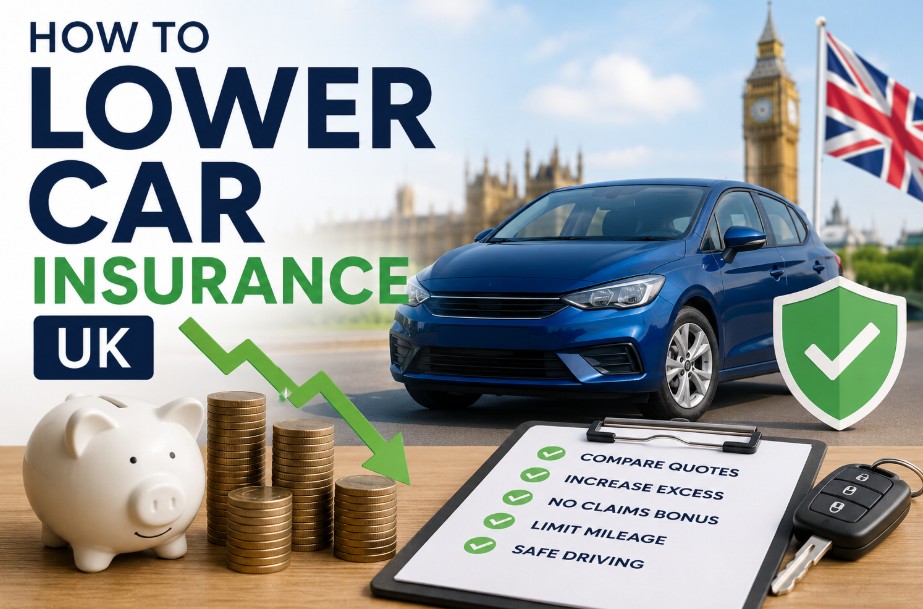
How to Lower Car Insurance in the UK: Proven Ways to Cut Quotes and Slash Renewal Bills
Learning how to lower car insurance bills is straightforward when you know the right levers to pull. To slash your costs right away, run comparison checks 20 to 26 days before your policy rolls over, pay for your cover upfront to dodge steep monthly finance charges, and fine-tune your job title accurately.
You can shave even more off your bill by boosting your voluntary excess and plugging in your exact mileage numbers.
Key Takeaways
-
Obtaining online car insurance comparison quotes precisely 20 to 26 days before renewal delivers the lowest risk algorithm pricing available.
-
Paying annual premiums up front eliminates APR credit finance charges that add 20 to 35 percent to monthly direct debit installments.
-
Reclassifying your exact job title within legitimate bounds can lower insurance risk bandings without risking non-disclosure fraud penalties.
-
Assigning an experienced driver with a clean record as a secondary policyholder safely reduces overall policyholder risk scores.
Why Is Car Insurance So Expensive?
UK motor insurance costs have surged due to a combination of rising repair expenses, vehicle technology complexity, and inflationary pressures across the supply chain.
According to Association of British Insurers (ABI) data, insurers paid out record amounts following a sharp rise in the cost of motor claims.
Modern vehicles come equipped with complex Advanced Driver Assistance Systems (ADAS), including bumper cameras, embedded radar sensors, and specialized composite bodywork, which make minor collisions significantly more expensive to fix.
These systemic repair costs, combined with general economic inflation and insurance premium tax (IPT), are pooled across all policyholders, driving up baseline quotes even for motorists with completely clean driving records and a full No-Claims Discount.
How to Lower Car Insurance UK?
You can lower your UK car insurance by understanding automated algorithmic risk scoring, shopping in the 20–26 day renewal window, paying annually, adjusting job classifications truthfully, and optimizing your vehicle usage metrics.
Recent industry figures place the average UK car insurance premium between £560 and £619, drawn from Association of British Insurers (ABI) reports and the Quotezone Price Index.
However, actual quotes vary wildly between individual insurance brands for the exact same driver profile. Implementing strategic adjustments across your policy details allows you to lower risk scores legitimately and lock in substantial savings.
1. Optimize Your Quote Timing (The 20–26 Day Window)
Insurance algorithms use your application date as a behavioral indicator of risk. Shopping around precisely 20 to 26 days before your current policy expires flags you to underwriters as an organized, low-risk driver.
Waiting until the final week before renewal can cause your quoted premiums to surge by up to 40% due to algorithms classifying last-minute buyers as higher statistical risks.
2. Pay Annually Instead of Monthly Direct Debit
Opting to pay for your insurance in monthly installments is essentially taking out a short-term consumer credit loan. Insurers and credit providers typically tack on representative APR rates ranging from 20% to over 35% on top of your standard premium.
Paying your full balance as an annual lump sum instantly eliminates these added finance charges.
3. Legally Refine Your Job Classification Title
Insurers sort thousands of occupations into risk tiers using past claims history. Since many jobs fit under multiple valid descriptions on drop-down menus, switching your title, like moving from Construction Worker to Site Supervisor or Editor to Copywriter, can land you in a cheaper bracket.
Always ensure your chosen title remains a truthful description of your daily duties to prevent policy invalidation.
4. Adjust Voluntary Excess and Mileage Accurately
Agreeing to a higher voluntary excess reduces your insurer’s payout liability during a claim, which immediately lowers your base premium.
Additionally, calculating your actual yearly mileage using past MOT certificates rather than overestimating prevents you from paying for miles you do not drive.
5. Add an Experienced Named Driver (Without Fronting)
Adding a low-risk, experienced motorist (such as a parent with a clean record) as a secondary driver on your policy dilutes the overall risk calculation.
Crucially, the primary driver must always be the person who uses the vehicle most often; falsely naming an experienced driver as the main policyholder while a younger driver uses it daily constitutes illegal fronting and invalidates your cover.
Why Is My Car Insurance So High in the UK Even With a Clean Record?
Even with a clean record, your insurance can rise due to macro-level vehicle repair inflation, expensive ADAS sensor replacement costs, and passive auto-renewal price creep across underwriting pools.
Many motorists are surprised when their renewal quote increases despite having zero convictions, no fault claims, and a fully accumulated No-Claims Discount (NCD).
Macro Inflation and Vehicle Repair Complexity
The primary driver behind recent premium surges is the underlying cost of settling motor claims.
According to ABI industry reporting, UK motor insurers paid out £11.9 billion in total claims across 2025, driven largely by high repair costs.
Modern vehicles equipped with Advanced Driver Assistance Systems (ADAS), such as radar sensors, bumper cameras, and specialized bodywork, have pushed the average accidental damage claim to £3,699.
These systemic costs are spread across all policyholders regardless of individual driving histories.
The Limits of FCA Loyalty Regulations
While Financial Conduct Authority (FCA) rules prevent insurers from charging existing customers more than new customers for identical policies, auto-renewals still suffer from passive price creep.
Base rates across an entire underwriting pool often shift upward annually. Drivers who allow their policy to auto-renew miss out on competitive pricing updates that are actively pushed to comparison sites to win new business.
When Is the Best Time to Renew Your Car Insurance?
The absolute best time to buy or renew car insurance online is during the 20 to 26-day sweet spot before your current policy expires.
Timing your application correctly is one of the easiest ways to secure lower car insurance quotes. Insurance algorithms track when you request a quote as a behavioral indicator of risk.
The 20–26 Day Sweet Spot
Requesting quotes 20 to 26 days before your policy expiration date routinely yields the lowest prices.
Data from major comparison platforms shows that drivers requesting quotes during this window pay significantly less than those who wait until the final week.
- Day 30+ Before Renewal: Baseline Market Rates
- Day 20–26 Before Renewal: OPTIMAL PRICING WINDOW (Lowest Risk Score)
- Day 0–7 Before Renewal: HIGH RISK WINDOW (Premiums Surge Up To 40%)
Insurers view drivers who plan ahead as organized, lower-risk individuals. Conversely, requesting a quote 0 to 6 days before your current cover ends flags urgent intent; algorithms classify last-minute shoppers as higher statistical risks and increase the quoted premium accordingly.
What Are the Most Effective Tricks to Get Cheaper Car Insurance?
Effective tricks to lower car insurance include paying annually, raising voluntary excess to an affordable limit, giving accurate mileage data, and providing your MyDVLA licence summary code for verified checks.
Saving money on your motor policy does not mean cutting vital cover, such as opting for motor legal protection to shield yourself from unrecovered losses. Combining several targeted practical adjustments creates a compounding discount effect.
1. Pay Annually Instead of Monthly
Opting for monthly direct debits is essentially taking out a consumer credit loan. Insurers charge interest rates (APR) ranging from 20% to over 35% on top of your premium. Paying upfront as an annual lump sum instantly eliminates these finance charges.
2. Balance Voluntary and Compulsory Excess
Your total excess is the amount you pay out of pocket during a claim. It is made up of two parts:
-
Compulsory Excess: Set permanently by the insurer based on your profile and vehicle.
-
Voluntary Excess: Selected by you when applying.
Raising your voluntary excess lowers your overall premium. However, ensure your total combined excess remains an amount you can comfortably afford in the event of an accident.
3. Provide an Accurate Mileage Estimate
Overestimating your annual mileage inflates your risk exposure. A driver covering 6,000 miles a year carries a statistically lower accident risk than one driving 12,000 miles. Review past MOT certificates to calculate your actual yearly average rather than making a high estimate.
4. Provide Your DVLA Licence Number
Allowing insurers to verify your driving record via your MyDVLA licence summary code eliminates administrative uncertainty. Verified clean records reduce underwriter risk buffers, unlocking small direct discounts during checkout.

How Does Your Job Title Affect Your Insurance Rate?
Underwriters categorize thousands of job titles by historical claims data; selecting an alternative legitimate description of your daily responsibilities can successfully shift you into a cheaper insurance bracket.
Your occupation is one of the key factors underwriters use to evaluate how often and when you drive. Insurance systems group thousands of job titles into distinct risk categories based on historical claims data.
Finding the Cheapest Occupation Category for Car Insurance UK
Insurers view occupations like Teacher, Civil Servant, or Software Engineer as relatively low risk due to structured commuting schedules. Conversely, job titles linked to late-night travel, high stress, or frequent town center visits, such as Chef, Sales Executive, or Journalist, often carry higher baseline quotes.
| Current Job Title Listed | Alternative Legitimate Description | Typical Premium Direction |
| Construction Worker | Builder / Site Supervisor | Often Lower if Supervisory |
| Office Manager | Office Administrator | Frequently Lower Risk Rating |
| Chef | Kitchen Assistant / Catering Staff | Variable based on shift patterns |
| Editor / Writer | Copywriter / Content Manager | Often Lower Risk Category |
How to Legally Adjust Your Job Description?
Most job roles fit under several valid terms on comparison dropdown menus. You can select an alternative job title as long as it accurately reflects your real-world employment.
Important Boundary: Never misrepresent your job completely (e.g., listing Teacher when working as a delivery driver). Intentionally selecting an incorrect job title constitutes insurance fraud under UK law, which can invalidate your policy and lead to voided claims.
Can NHS Workers and Essential Staff Get Lower Car Insurance in the UK?
NHS workers and essential staff can access lower car insurance via Blue Light Card discounts, specialist public sector brokers, and favorable risk-tier classifications.
Healthcare professionals, emergency workers, and civil servants can take advantage of specific insurance benefits and discounts.
How to Lower Car Insurance UK NHS Options?
-
Blue Light Card Discounts: Many direct insurance providers and brokers offer exclusive cashback rates or percentage discounts for Blue Light Card holders.
-
Specialist Public Sector Brokers: Brokers specializing in public sector employees offer schemes tailored for shift workers, such as flexible parking arrangements or waived excess fees for work-site incidents.
-
Occupation Risk Grouping: NHS nurses and doctors are classified under established, predictable risk tiers by major underwriters, keeping baseline rates competitive relative to commercial roles.
How to Make Car Insurance Cheaper for Young Drivers and 17-Year-Olds?
Young drivers can lower expensive premiums by choosing vehicles in insurance groups 1 to 5, adding an experienced named driver legally, or installing a telematics black box.
1. Target Vehicles in Insurance Groups 1 to 5
Every vehicle in the UK falls into an insurance group rated from 1 (cheapest) to 50 (most expensive). Once you have selected a low-group vehicle, ensuring your paperwork is current, including knowing how to tax your car, keeps baseline ownership costs dramatically lower.
- Group 1–5: Volkswagen Up!, Hyundai i10 – Lowest Base Premium
- Group 10–20: Ford Focus 1.5, Golf TSI – Moderate Premium
- Group 30–50: BMW M3, Audi RS3, Range Rover – High / Unaffordable Premium
2. Add an Experienced Named Driver (Without Fronting)
Adding an older, experienced driver with a clean record, such as a parent, to a young driver’s policy spreads the overall risk calculation and lowers the quote.
3. Install Telematics (Black Box Technology)
Telematics policies track how you drive, keeping tabs on speed, braking smoothness, cornering, and late-night trips, using a discreet plug-in box or smartphone app.
Showing steady, safe driving habits can earn you cash rewards or cheaper renewal quotes, making it a solid option for younger motorists.

Who Gives the Cheapest Car Insurance in the UK?
There is no single cheapest insurer for every driver; every provider uses its own proprietary pricing model. A provider that offers the best rate for an experienced driver in rural Scotland may be uncompetitive for a urban commuter.
| Provider | Platform | Est. Premium Positioning | Key Features & Savings Potential | Best Suited For |
| Aviva Zero | Digital App / Web | Highly competitive digital-first rates | Carbon-neutral options; 10–20% savings via self-service and low-mileage profiles | Eco-conscious and tech-savvy drivers |
| Direct Line | Direct Web / Phone | Mid-to-high tier; excludes comparison sites | Guaranteed courtesy cars; up to 15% savings through direct policy bundles | Drivers prioritizing comprehensive all-inclusive service |
| Tesco Bank | Comparison Sites / Direct | Market average baseline | Clubcard points and fuel vouchers; £50–£150 savings via retail reward offsets | Regular supermarket shoppers and families |
| Churchill | Comparison Sites / App | Highly variable based on configuration | Flexible policy modularity; 10–25% savings by optimizing voluntary excess | Commuters seeking highly customizable policies |
| Admiral | Comparison Sites / Multi-Car | Market leader for multi-vehicle discounts | LittleBox telematics; 15–30% savings by bundling multiple cars on one policy | Multi-vehicle households and young/low-mileage drivers |
Summary Table of Actionable Savings Strategies
| Strategy | Estimated Savings Potential | Ease of Action | Key Considerations |
| Buy 20–26 Days Early | Up to 40% reduction | Very Easy | Requires setting a calendar reminder ahead of renewal. |
| Switch to Annual Payment | 20% – 35% interest saved | Easy | Requires upfront capital at checkout. |
| Select Group 1–5 Car | £500 – £1,200 annually | Medium | Applies when purchasing or changing your vehicle. |
| Refine Job Classification | £50 – £150 annually | Easy | Title must remain an accurate description of your job. |
| Add Experienced Named Driver | £100 – £400 annually | Easy | Secondary driver must actually use the vehicle occasionally. |
| Fit Approved Telematics | 15% – 30% discount | Medium | Driving performance is actively tracked. |
Conclusion
Lowering your car insurance premium comes down to managing how underwriters assess your risk profile.
You can maintain optimal pricing by running comparison searches 20 to 26 days before your policy expires, choosing cars in lower insurance groups, selecting an accurate job classification, and paying annually whenever possible.
Review your policy details yearly rather than relying on auto-renewals to ensure you continue paying competitive rates.
Disclaimer: This article is for informational purposes only and does not constitute formal financial, legal, or insurance advice.
FAQ
What is the best way to lower your car insurance?
The single most effective action is comparing quotes online across multiple sites 20 to 26 days before your renewal date, while opting for an annual lump-sum payment to avoid high APR credit charges.
Can I ask my insurance company to lower my premium?
Yes. Calling your existing provider with cheaper rival comparison quotes often prompts their retention department to match or beat the lower price to keep your business.
What should you not tell your insurance company?
Never lie about your main driver status, vehicle modifications, overnight parking, or claims history. Suppressing material facts is insurance fraud, which can lead to voided policies and unpaid claims.
Is Tesco Car Insurance cheaper than other providers?
Tesco Car Insurance can be highly competitive for families and daily commuters, particularly when combined with Clubcard discounts, though prices ultimately depend on your unique postcode and driving history.
What brings insurance quotes down for new drivers?
Choosing a low insurance group car (Group 1–3), installing a telematics black box, and adding a low-risk, experienced named driver are the fastest ways for new drivers to reduce quotes.